Begin beneath the objects
A row of coloured glass can make almost any shelf look special. The shelf itself, however, deserves attention before the arrangement. Check that it is level, appropriately supported and suitable for the intended contents. A shelf that was satisfactory for a few postcards may need a different assessment before receiving a group of substantial glass vessels.
Consider the cabinet or furniture around it as well. Doors should operate without shaking the display or striking the objects. Tall furniture needs appropriate securing arrangements for its construction and location. The glass collection's safety begins with the stability of the whole setting, not with the choice of decorative spacing.
Give each shape enough room
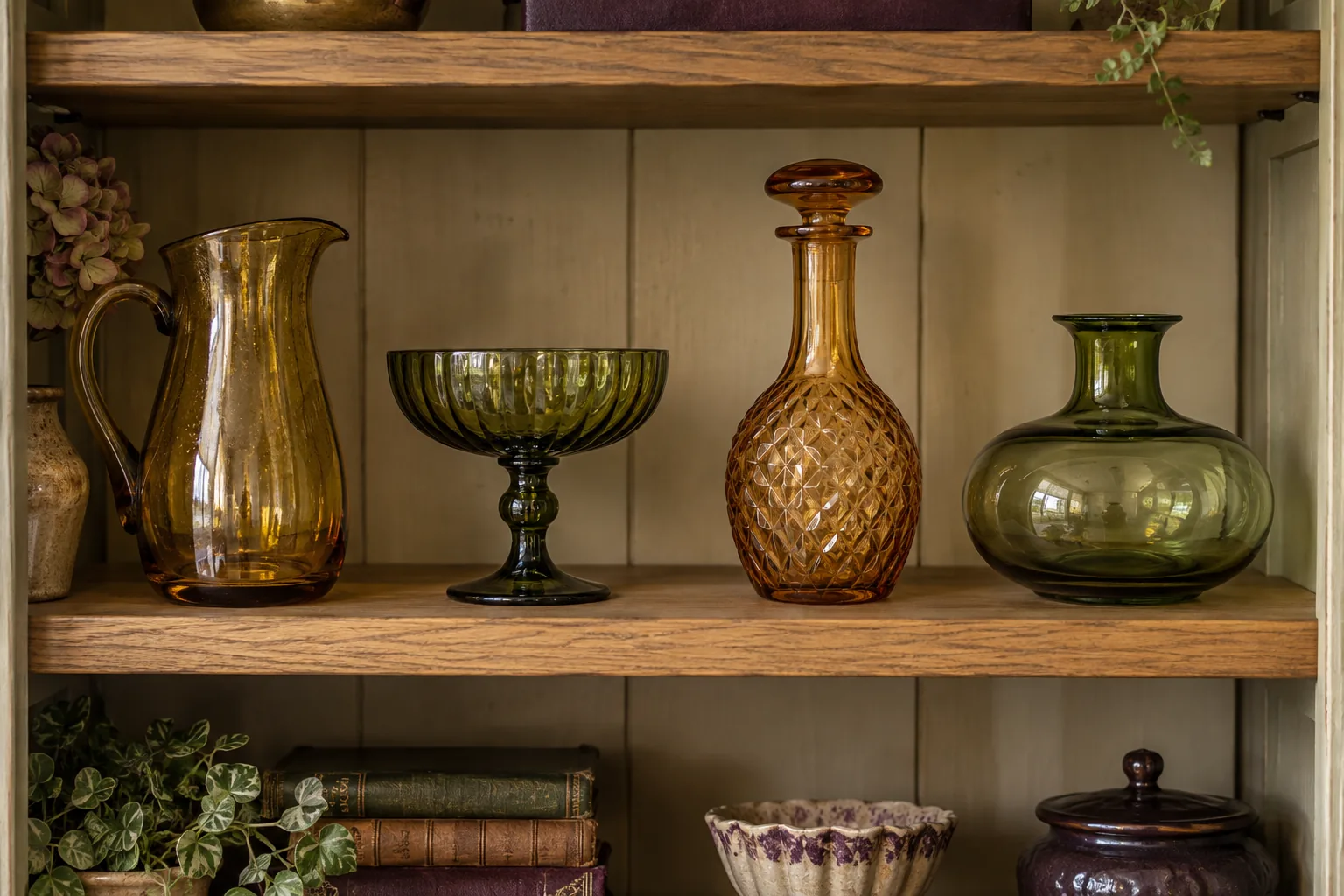
Tall stems, narrow feet, projecting handles and broad rims create different vulnerabilities. Allow enough space to lift an object without brushing against its neighbour. A tightly packed row may look abundant, but the arrangement becomes inconvenient as soon as you want the piece at the back.
Group objects so that frequently handled items are easy to reach. A display intended only for viewing can be planned differently from a shelf of glasses used at dinner. Do not let the prettiest arrangement require awkward handling every time you want an ordinary drink. The most useful display is one you can maintain without rehearsing a complicated sequence.
The Canadian Conservation Institute emphasises avoiding situations that can cause glass to break. In a home, that principle can be translated into a straightforward question: what might strike, move or overturn this object here? A nearby door, curtain, pet's route or bag dropped on the furniture can matter more than whether the colours are perfectly balanced.
Look through the display from several positions
Glass responds to light and background, so the arrangement may change dramatically as you move around the room. Check it while seated and while standing in the doorway. Reflections can hide smaller pieces or create the impression that objects overlap when they are actually separated.
Try a simpler background before adding more objects. A dark interior may bring out pale glass, while a lighter background can clarify a coloured silhouette. Avoid introducing improvised internal lights or anything that creates an unsuitable environment. If lighting is important, seek an appropriate installation and consider the cabinet and its contents together.
Make cleaning possible without a scramble
Prepare a suitable place for objects before moving them to clean the shelf. The kitchen worktop may already hold washing-up, appliances and other things that make it a poor temporary display area. A clear, stable surface chosen in advance removes the need to improvise while holding a fragile piece.
Handle only objects whose condition and appropriate handling are understood. Old repairs or unfamiliar surface decoration can complicate what appears to be ordinary glass. If you notice cracking, an unstable component or a changing surface, leave treatment to a specialist. Display planning should not quietly become a cleaning experiment because a piece looks cloudy.
Keep room for the next decision
When a new object arrives, reconsider the group rather than fitting it into the last available gap. You may decide to put another piece into suitable storage or to create a second display. A collection can grow while the visible arrangement remains spacious. That choice often makes the individual shapes more enjoyable.
Photograph successful arrangements if you like returning to them after cleaning, but allow practical use to revise the plan. A piece repeatedly moved aside is telling you something about its position. Listen to that small inconvenience before it becomes a breakage.
Finally, remember that transparent does not mean visually weightless. Several elaborate glass forms can fill a shelf as strongly as opaque ceramics. Leaving an open patch allows the eye to distinguish one outline from the next. The reward is not simply a safer display; it is a collection whose details remain visible instead of merging into a glittering, difficult-to-handle crowd.