Begin with a useful question
A drawer that feels different in winter can prompt an immediate search for a remedy. Before changing the furniture or buying a device, ask what you actually know. When did the change appear? Does it affect one drawer or several? Has the room's heating, ventilation or use altered? A short record can turn a vague concern into something a specialist can assess.
The purpose is observation, not diagnosing every movement yourself. Furniture may have several contributing problems, including past repairs or wear. Seasonal timing is a clue rather than proof. Keeping that distinction in mind helps avoid an enthusiastic treatment aimed at the wrong cause.
Record the room as well as the object
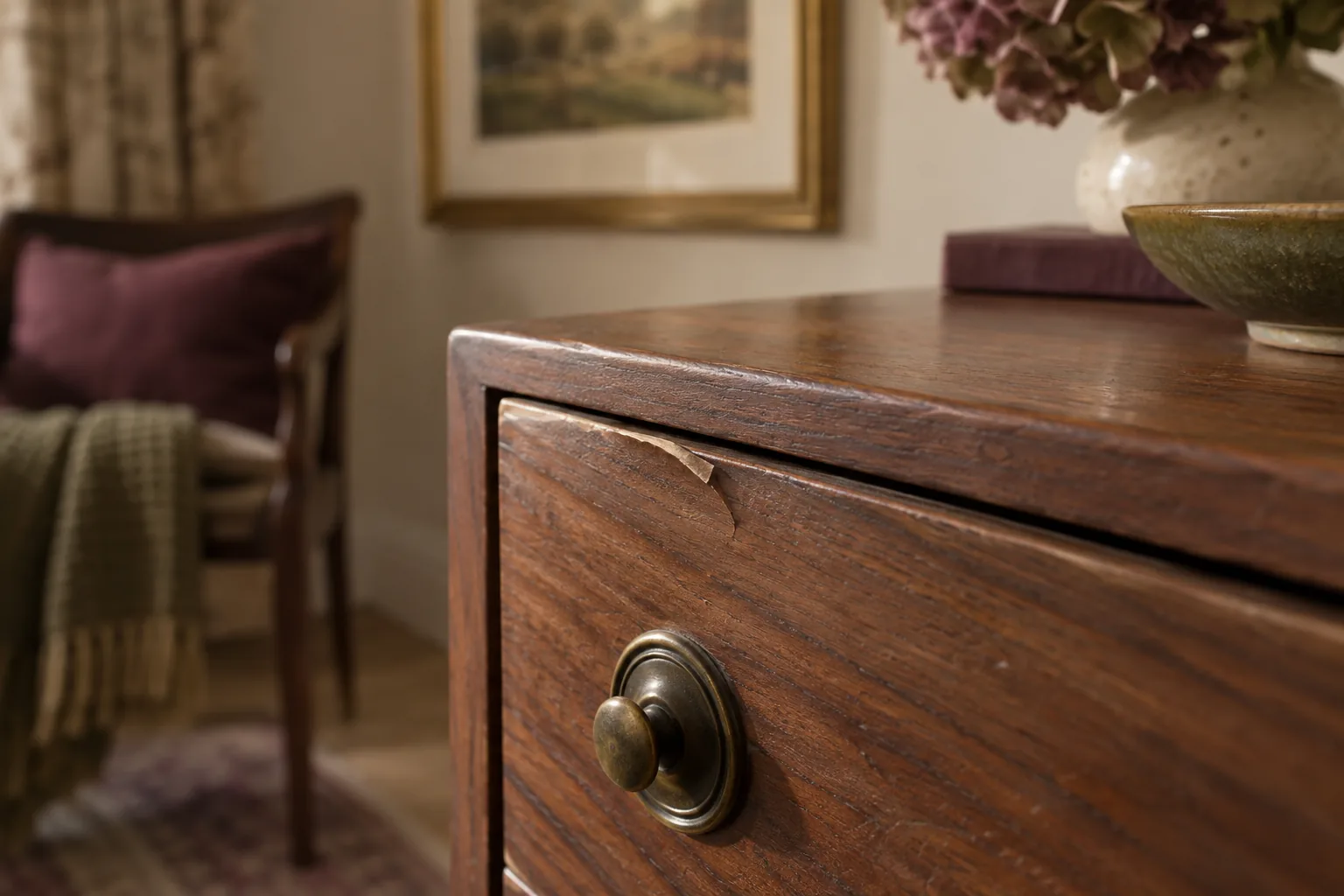
Note the date, the position of the furniture and the change you can see or feel without forcing anything. A clear photograph of a gap or lifted area is useful. Add relevant events such as a heating change, a leak, building work or moving the piece from another room. Keep the wording factual: drawer catches near the front is better than wood has dried out.
If you use a humidity monitor, follow its instructions and understand its limitations. Consistent placement and dated readings are more useful than occasional numbers taken in unrelated parts of the house. A single reading does not establish what conditions were like overnight or during a week when the room was unoccupied.
Avoid chasing a universal target
Conservation guidance considers the material, condition and history of an object when evaluating environmental needs. The Canadian Conservation Institute's preventive framework treats care as a response to risks, rather than one isolated action. For a domestic collection, that means understanding the problem before trying to control it with a borrowed numerical target.
Do not rapidly change heating or add humidifying equipment simply because an online chart suggests a different reading. Those choices can affect the building and its occupants as well as the furniture. Discuss persistent dampness with a suitable building professional and vulnerable objects with a conservator. The two conversations may need to inform one another.
Choose a manageable routine
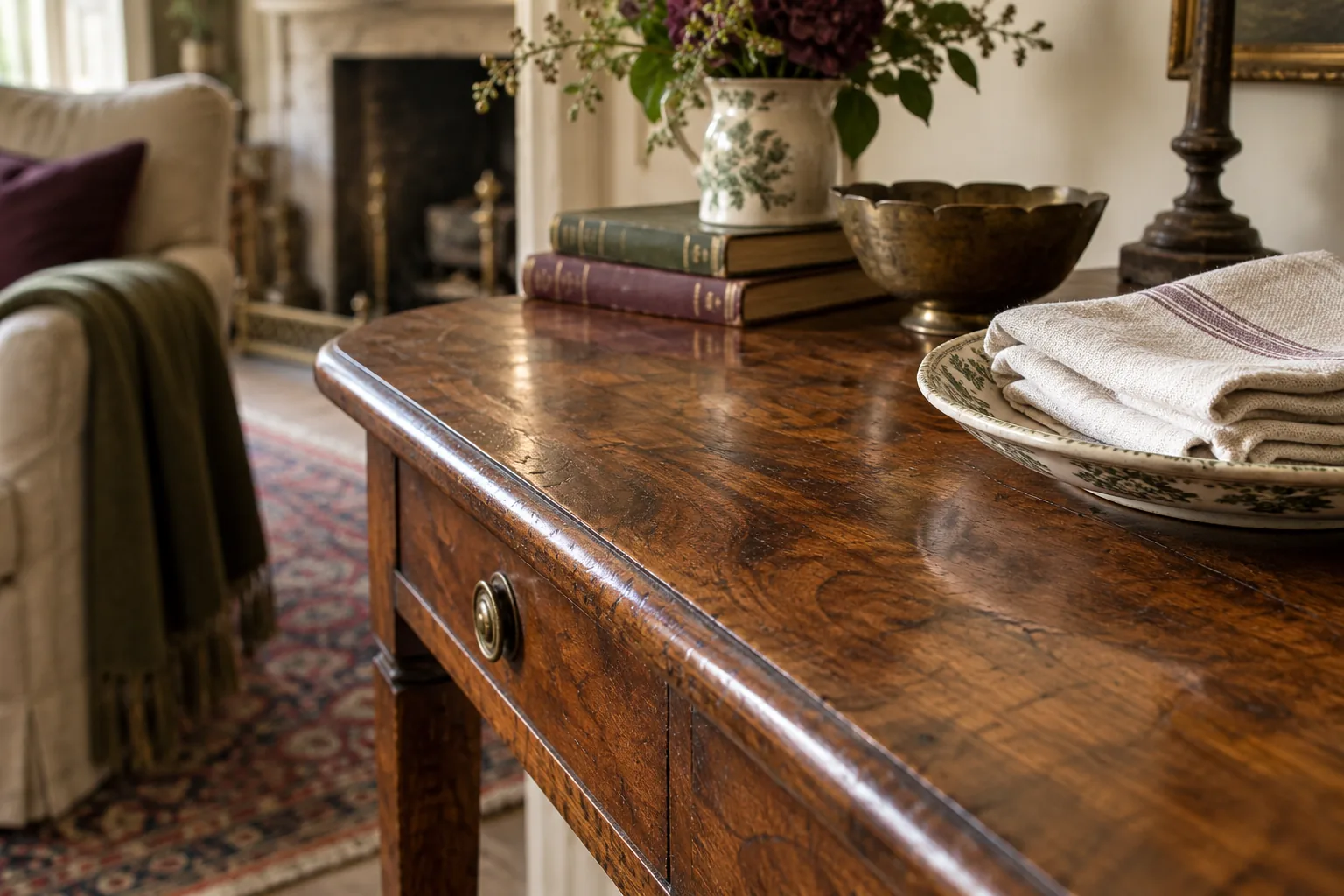
A notebook does not need daily essays. A brief check at sensible intervals and after a relevant event is enough to begin building a picture. Use the same names for rooms and objects so records remain understandable. If there are several similar chests, give each a simple reference linked to a photograph.
Record unchanged condition occasionally too. That helps distinguish a new concern from a feature that has been present throughout the year. It can also prevent repeated worry about an old, stable mark. The notes should make care calmer and more precise, not turn ordinary furniture ownership into constant surveillance.
Know when observation has done its job
New cracking, lifting surfaces, active damp or an object becoming unsafe calls for timely advice rather than a longer period of watching. Stop using affected moving parts if use may worsen the problem. Send the relevant notes and photographs with your enquiry so the conservator can see both the present condition and the sequence leading to it.
After advice or treatment, keep the recommendations beside the original record. Note what changed and when, including any new placement or care routine. Over time, this becomes a small history of the object in your home. It is useful information for future decisions and for whoever eventually looks after the piece next, without pretending that every seasonal change can be understood from a photograph and a household meter.