Begin with what is actually present
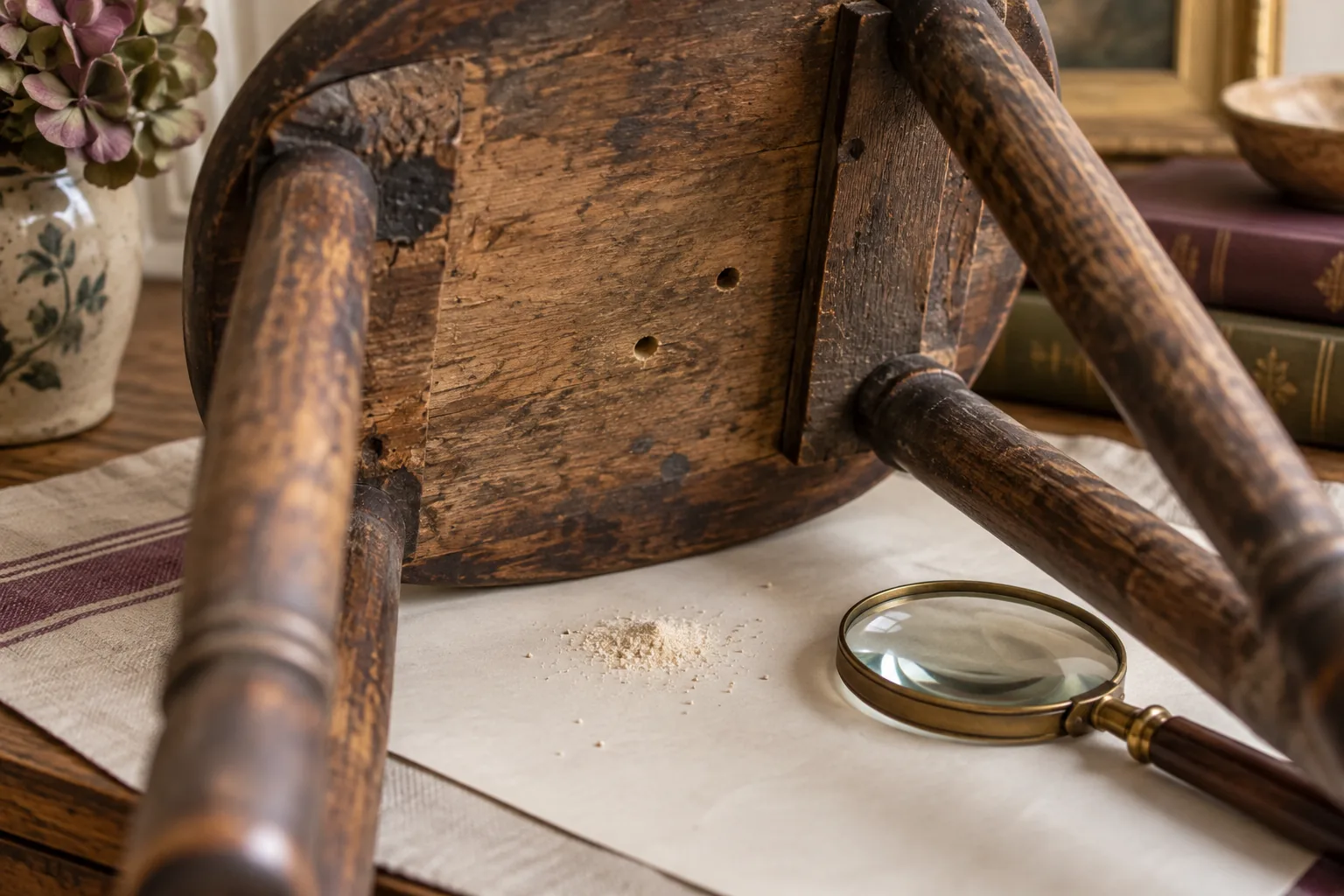
A small hole in a wooden object can raise an immediate worry about pests. So can loose fibres, powder beneath a cabinet or an unfamiliar insect nearby. Those observations deserve attention, but they do not all mean the same thing. Start by recording what you can see without disturbing the object or making a confident identification from one feature.
Take photographs showing both the evidence and its position. Note when it was found, whether the object is newly acquired and where it has been stored. If you can safely retain a detached sample for identification, ask a suitable professional how to do that. Do not scrape material out of holes to improve the photograph.
Avoid moving uncertainty through the house
Do not casually move a suspect object into another collection or stack it with stored textiles while deciding what to do. Ask for prompt advice about appropriate separation and handling. The right arrangement depends on the object and the concern; a fragile piece should not be wrapped or moved in a way that causes another problem.
Tell anyone who helps with cleaning or storage that an assessment is pending. That prevents the evidence being swept away without a record or the object being returned automatically to its usual place. A clear temporary note in the household plan can be more useful than repeated verbal reminders.
Identification comes before a treatment choice
The Canadian Conservation Institute's pest-prevention guidance places detection within a wider approach that includes prevention and an appropriate response. For a household object, the practical implication is to establish what is happening before choosing a remedy. Old damage, active activity and unrelated debris should not be treated as interchangeable.
Contact a conservator familiar with the material and, where building pest management is involved, an appropriately qualified pest professional. Explain that the object may have historic finishes, mixed materials or fragile components. Treatment for a room and treatment for an old object may require coordination rather than one product applied to everything.
Do not apply household insecticide, place the object in an oven or freezer, or attempt a heat or fumigation treatment from a brief online description. These methods involve conditions and material risks that a domestic guess cannot establish. Leave treatment decisions to people able to assess both the pest concern and the object.
Look at the surrounding storage
Without disturbing the suspect piece unnecessarily, note relevant conditions nearby: recent arrivals, packing materials, food, clutter, gaps in the building or signs of damp. Share those observations with the professionals involved. They may help explain where attention is needed, but avoid turning the search into an unsupported conclusion about the cause.
Keep records of other objects stored in the same area and follow advice about inspection. A clear inventory makes it easier to explain what was close to the concern and what has moved since. It also reduces the temptation to handle every object repeatedly while trying to remember where it used to sit.
Keep the follow-up specific
Ask how success will be assessed, what signs should be monitored and when to contact the professional again. Retain treatment documentation with the object's record. Do not assume that a treated appearance or the absence of visible insects on one day answers every question about future care.
After the immediate issue is resolved, review incoming purchases and storage habits. A thoughtful arrival check, clearer storage and appropriate building maintenance may be useful parts of the plan. The aim is not to become suspicious of every old object. It is to respond to evidence in a way that preserves the object, protects the rest of the collection and avoids replacing uncertainty with an unnecessary chemical experiment.