Let the shape do some work
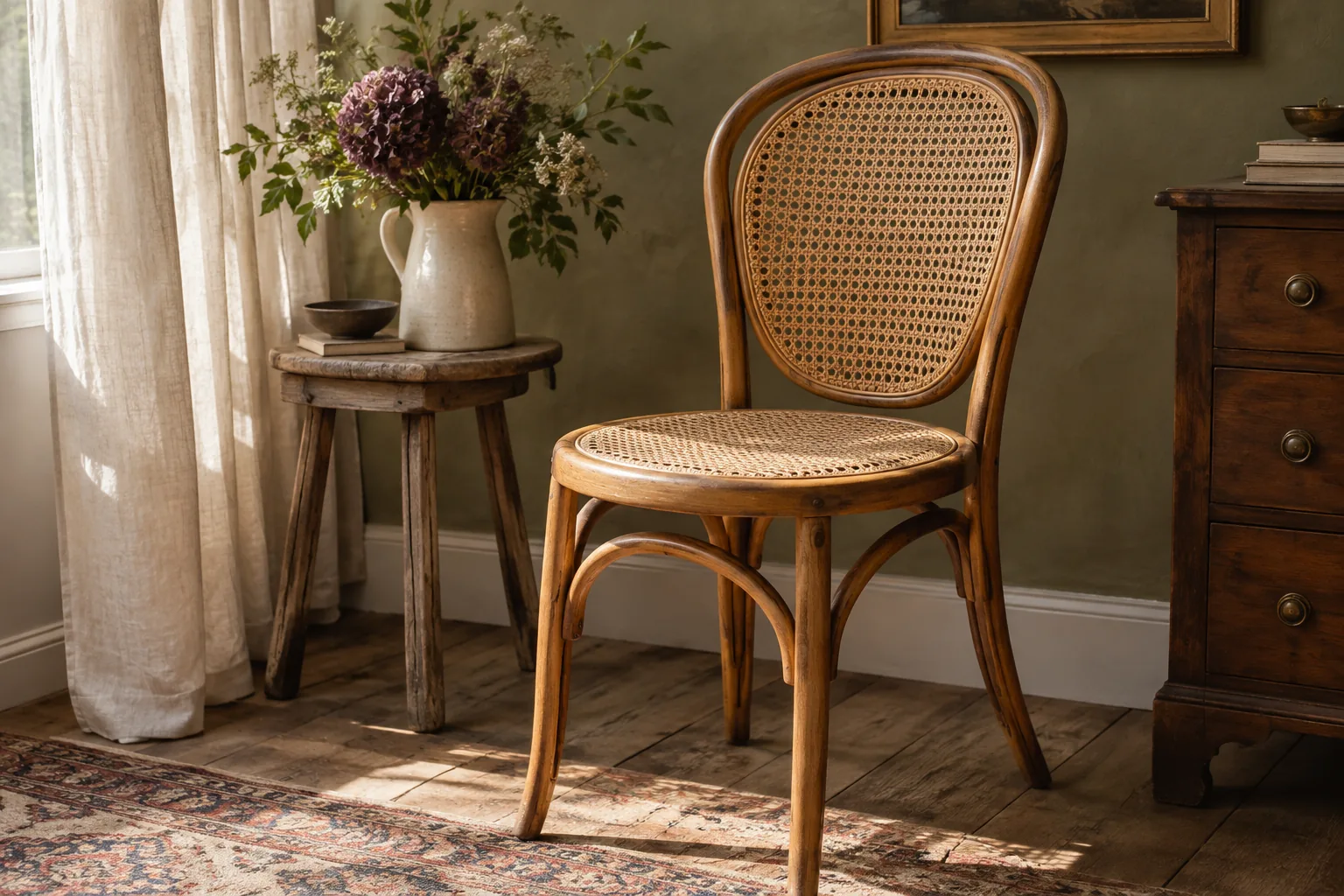
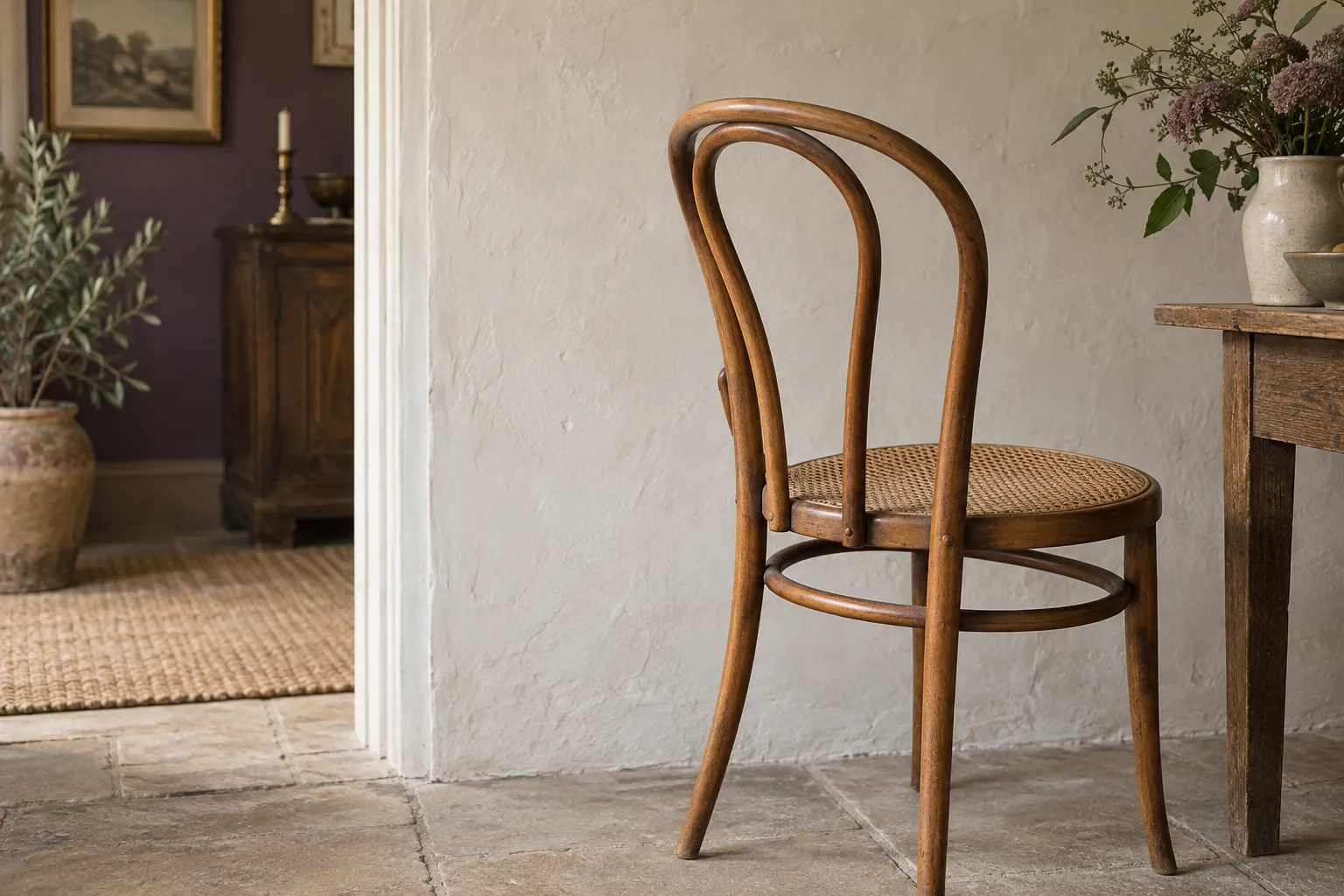
A bentwood chair can introduce a graceful line into a room full of rectangular furniture. Its curved back might soften a square kitchen table or provide a lighter-looking companion to a substantial desk. That is a useful starting point because it concentrates on the chair you can see, rather than the story a listing attaches to it.
Compare the outline from the side as well as the front. Some backs feel almost upright; others sweep away from the seat. The depth and angle affect how the chair occupies a room and how it feels when used. A familiar silhouette does not mean every example shares the same proportions.
Treat attribution as a separate question
The V&A's account of Thonet describes bentwood furniture as a significant development in furniture design and production. That history helps explain why curved timber seating is so recognisable. It does not establish the maker or date of an individual chair offered online. Similar forms, later production and replacements make visual comparison only part of the investigation.
If a named maker is central to the price, ask for clear photographs of labels, stamps and construction details, along with any documentation. Distinguish the seller's evidence from their opinion. A chair sold simply for its useful shape should be judged on that basis; a purchase made for a specific attribution deserves stronger support.
A damaged paper label is worth photographing without trying to peel, clean or enhance it. Preserve the information that remains and let a knowledgeable specialist interpret it.
Check the seat before imagining a set
Bentwood chairs appear with different seat materials, including solid panels and woven seats. Examine the actual surface rather than assuming a cushion will make any condition acceptable. A woven seat with broken strands requires assessment and repair before use. A cushion can conceal damage while doing nothing to restore support.
Ask about movement in the frame and inspect visible splits, fastenings and joints. The curved form can make damage harder to spot in a small photograph, so request detailed images and a viewing when possible. Avoid testing a questionable chair by leaning back in it. If the seller cannot establish that it is suitable for use, include professional assessment in your decision.
Choose the setting, then the finish
At a kitchen table, practical comfort and the available elbow room should lead. At a bedroom desk, a chair used for shorter periods may be selected with different priorities. Try the actual sitting position and measure the seat against the table. Slender appearance is not a substitute for a comfortable relationship between the two.
A mixed group can work when its curves share a similar scale, even if the finishes differ. Place photographs side by side before buying additional chairs, and compare widths and back heights. Avoid automatically stripping every piece to make the timber match. The existing colour may be what gives the group its character. A coherent arrangement can come from repeated shapes, a plain table and a restrained surrounding palette, leaving each chair's surface to remain itself.
Take particular care when buying a group described as a set. Confirm that the seat dimensions match closely enough for daily use, and ask whether every chair is included in the condition report.