Find out why it is awkward
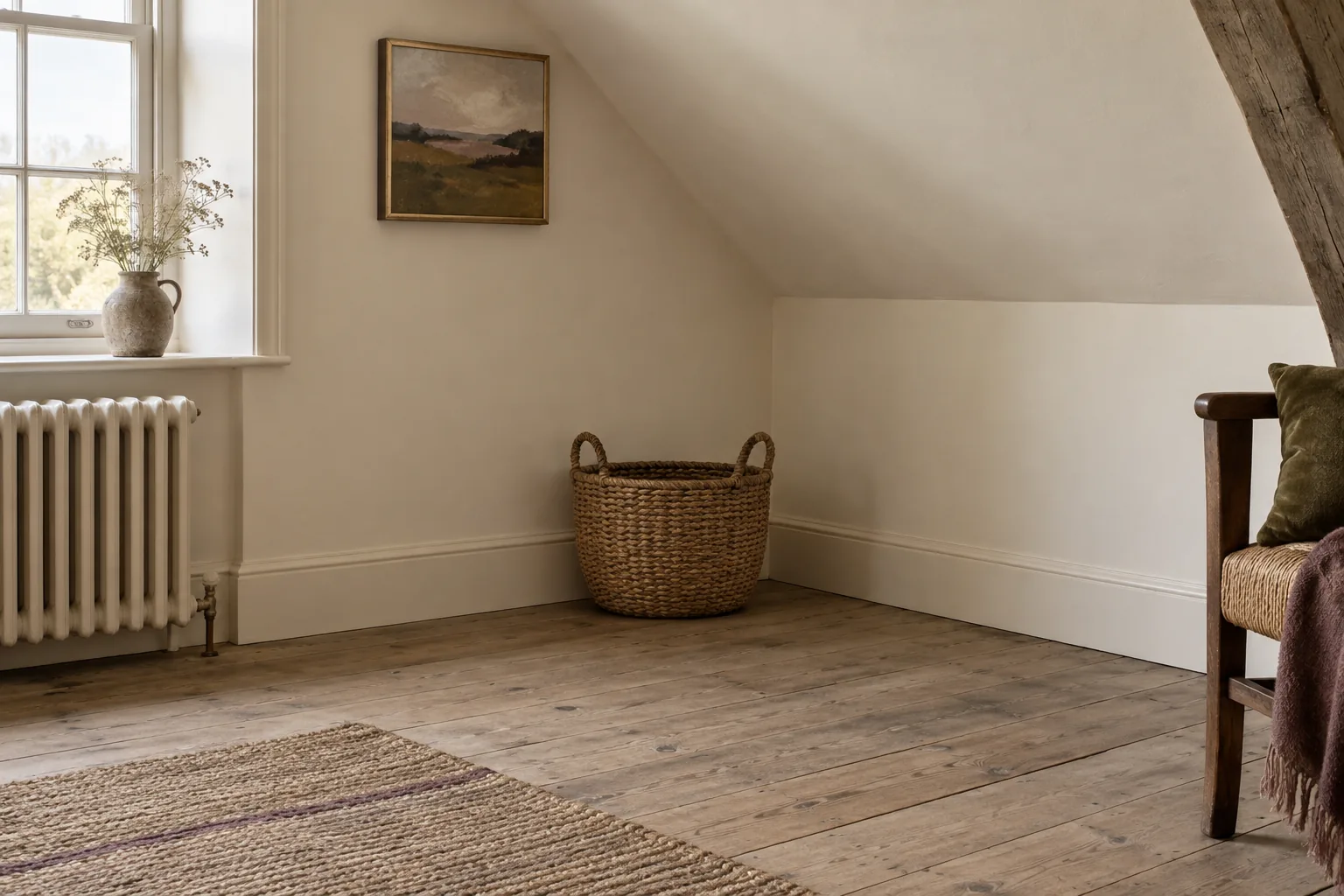
An empty corner can feel like a decorating problem when the real issue is unclear. Perhaps it sits behind a door, receives little light or lies between two furniture groups. Each situation calls for a different response. Before looking for a small cabinet to fill it, watch how the space is used and which views make it feel unfinished.
A corner that supports circulation may already have a purpose. Filling it could make the room harder to move through without improving its appearance. Look at the room as a whole rather than judging the empty patch in isolation. Some spaces need a pause between larger objects, and a clear corner can provide exactly that. The absence of furniture is not necessarily the absence of thought.
Measure at more than one height if the walls or skirting project unevenly. A piece may fit at the top yet catch at its feet, or sit forward because of a socket or pipe. These small physical details often explain why previous arrangements have felt clumsy.
Test a useful activity first
If the corner has adequate space and conditions, consider an activity that would benefit from its position. A reading chair might enjoy a sheltered view across the room; a small table could provide a place to set down a bag. Check the full footprint in use, including where feet, doors and nearby drawers need to go.
Use furniture you already own to test the idea before settling on a new arrangement. A corner that looks perfect for a chair may feel uncomfortable once you sit there, while a modest table might prove unexpectedly useful. Do not give it a role solely because that role photographs well. The activity should make sense within the household's existing habits or solve a practical problem you actually encounter.
Connect it visually without filling the floor
Sometimes the corner feels disconnected because the surrounding walls and furniture have no relationship. A suitable picture on one wall, a repeated colour nearby or a change in the arrangement of an existing shelf can address that without adding another floor-standing piece. Any installation should use methods appropriate to the object and wall.
Avoid forcing a tall object into the corner simply to supply height. Its shape may emphasise the narrowness rather than resolve it. Step back to see whether the area needs a strong feature or a quiet continuation of what is already present. A small connection can be enough: the same timber tone in a frame, for example, or a textile colour that returns on the chair closest to the space.
Let the trial run remain reversible
Keep the first arrangement simple and use the room for several days. Notice whether anyone sits in the chair, whether the table gathers useful belongings or whether you keep moving around the new piece with irritation. An unused decorative station is not necessarily an improvement over an empty corner.
If the experiment does not work, remove it without treating that as a failure. You have learned what the space can comfortably support. A clear corner may make the nearby vintage cabinet more visible or allow the room's larger shapes to breathe. The aim is not to account for every square metre with an object. It is to create a room whose occupied and unoccupied areas feel like parts of the same considered arrangement.