Look for a convincing shape
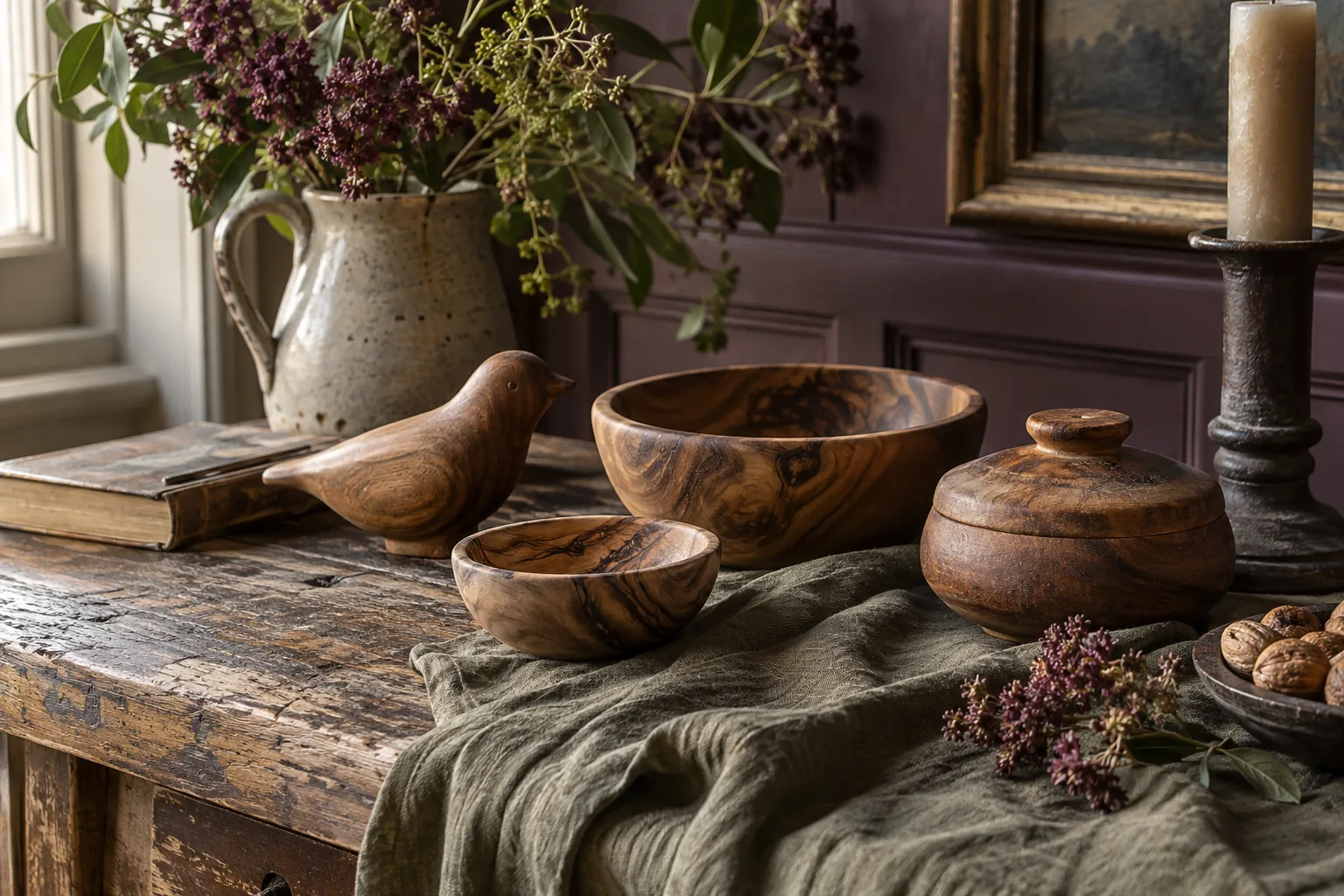
Small wooden objects often invite touch before they invite research. A rounded lid, a turned foot or an animal reduced to a few clear curves can make something modest feel exceptionally considered. Begin with the form. Ask whether you would still like the piece if it were an ordinary wood with no remarkable age or maker attached.
Look from the side as well as above. A bowl with an elegant profile may be more interesting empty than filled with keys. A carved figure may have a particular angle that brings the whole gesture together. These observations help you decide where the object could live instead of buying a vague impression of warmth.
Let the surface tell only what it can
Wear can be attractive without proving a date. A dark colour may come from a finish, use, staining or other causes, and you should not assign a wood species from a photograph alone. Record what is visible and ask the seller what is actually known. A confident story is not a substitute for supporting evidence.
Inspect splits, missing parts and repaired joins. Look carefully at any sharp projecting detail, because that is often the feature most likely to catch a sleeve or suffer in transport. A small crack may be acceptable for display, but understand its position and whether the seller has noticed change. Do not treat all damage as appealing character simply because the object is wooden.
Choose a place that suits the view
A low turned bowl belongs where its rim or interior can be seen. A vertical carved form can hold its own on a shelf viewed straight on. If the object disappears, try changing its background before buying something bigger. Pale pottery, a plain wall or a dark book spine can make a subtle wooden outline much clearer.
Avoid surrounding the piece with objects of exactly the same brown. Similar tones can merge into a heavy patch, especially in a dim corner. A single lighter object or an open area of shelf may be enough separation. The aim is to notice the grain and silhouette, not to create a miniature collection of every wooden thing in the room.
Do not make refinishing the default
A finish is part of an object's present appearance and may contain information about its history. Before sanding, oiling or polishing, consider whether you understand what is already there. A sticky or unfamiliar surface is a reason to pause and seek appropriate advice, particularly on a significant object.
You can choose a piece whose existing surface you enjoy and leave ambitious treatments out of the plan. For practical objects, establish suitability separately. An old wooden bowl with unknown history should not automatically become a food bowl, and a decorative box should not be assumed safe for sensitive keepsakes. A clear display role often gives these objects a comfortable place without unnecessary intervention.
Keep the collection human in scale
Small wooden pieces are easy to buy because they seem to ask for little space. Together, however, they can become a dense line of indistinct brown forms. Choose a few with different heights and leave a gap around the strongest silhouette. Store the others appropriately and rotate them when you want a change.
Keep basic records, including photographs of the base and any marks. Write down why the piece caught your attention as well as the seller's description. A collection becomes more coherent when you recognise your own preferences: perhaps you favour broad rims, compact animals or smooth turned shapes. That knowledge is more useful on the next shopping trip than a demand to buy something merely because it is old.