Count the pieces yourself
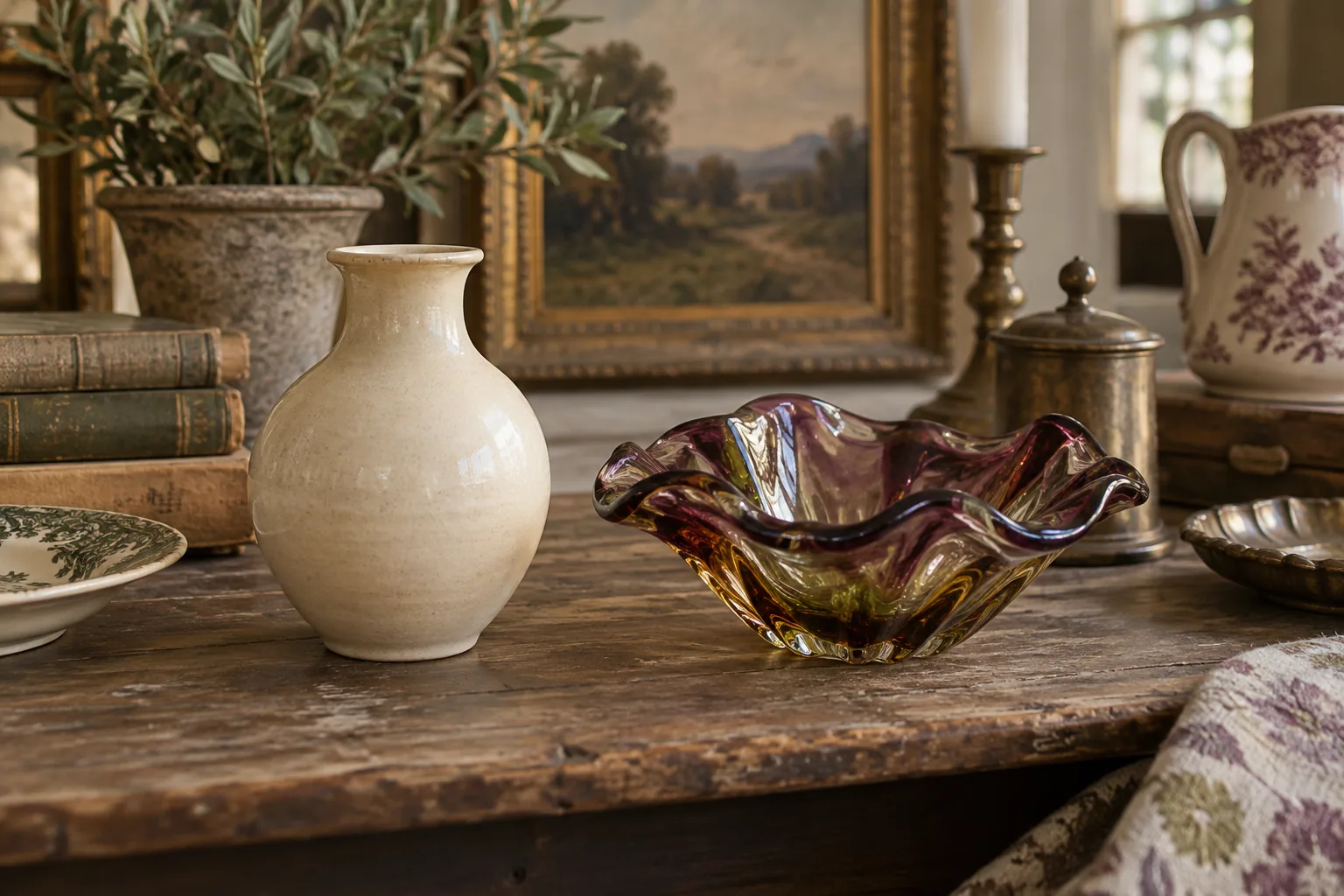
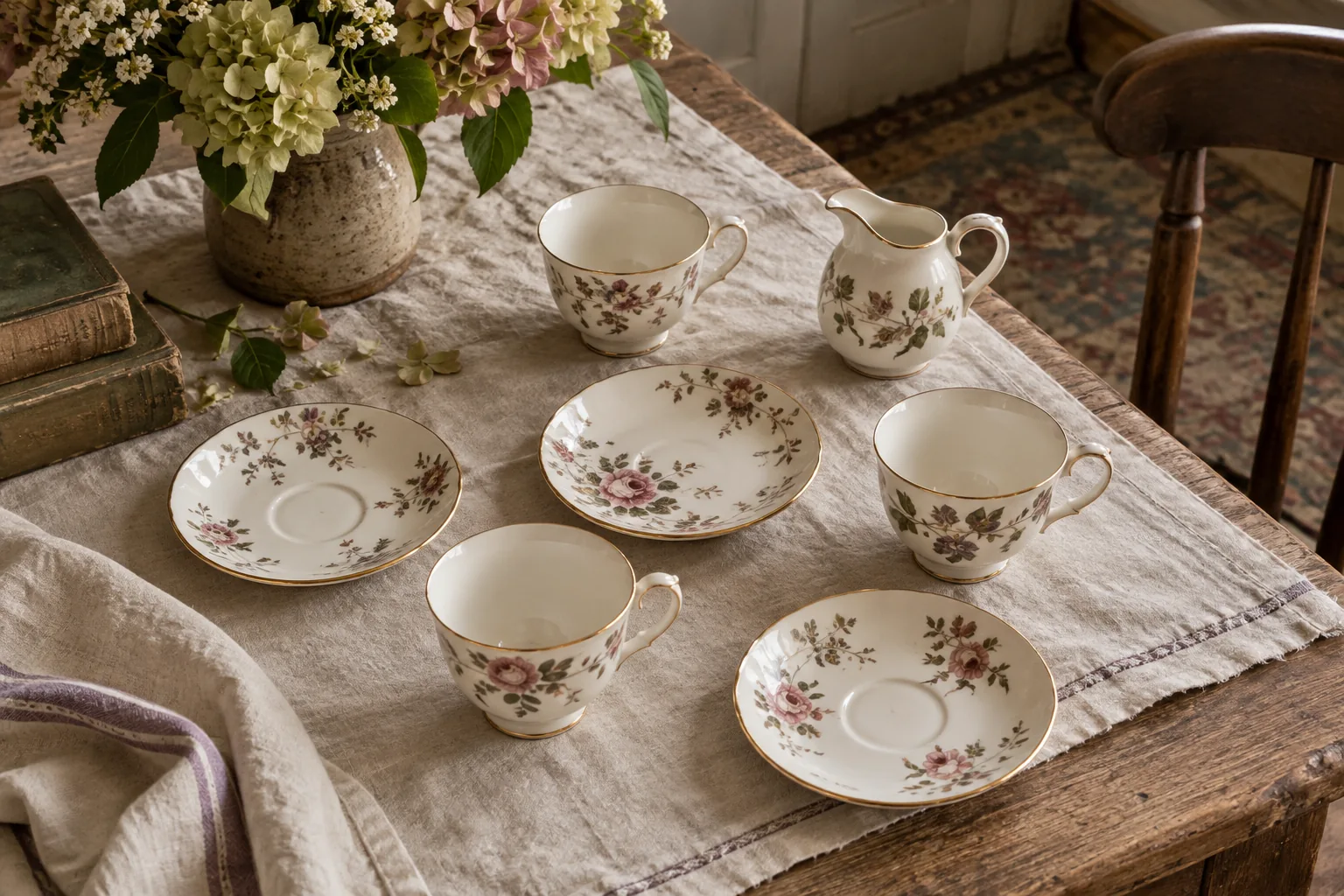
The word set can suggest completeness even when the listing describes only a group. Make a clear inventory of what is included, with quantities, sizes and any variations. Look at the photographs and ask the seller to confirm ambiguous items rather than assuming every object in the display is part of the purchase.
For pieces intended for food or drink, appropriate suitability and condition need assessment separately from the pattern or count. A group can look coherent while containing replacements, damaged items or objects intended only for decoration. Begin with the actual contents and their usable roles. You can then judge whether the group suits your life without allowing an imagined original set to dominate the decision.
Work out the useful combination
An incomplete dinner service may still offer enough suitable plates for your ordinary meals, while a handful of decorative bowls may work individually around the home. Consider the number and types you genuinely need rather than the largest gathering or arrangement you can imagine. Missing specialist pieces may have no practical effect on your use.
Check whether the group creates unnecessary storage. A set containing several items you will never use is not automatically better than a smaller selection. If you are drawn mainly to one or two pieces, ask whether they can be bought separately, accepting that the seller may prefer to keep the group together. The answer may clarify whether you want the whole purchase or only its most appealing detail.
Look for differences within the group
Objects sharing a pattern can vary in dimensions, colour and condition. Compare rims, handles, marks and proportions where relevant, without assuming that a visual similarity proves identical origin. Ask which pieces are known replacements and which details remain uncertain.
Condition can vary just as much. One part of a group may have seen heavy use while another was stored away. Request useful views of representative pieces and any disclosed damage, and understand whether the description applies to every item or only the group overall. If a few elements are essential to your intended use, those deserve individual attention rather than being lost within a general statement about the set.
Treat completion as optional
Searching for missing pieces can be enjoyable, but it should not be the condition that makes the original purchase worthwhile. You may find that the exact pattern, size or colour is difficult to match, and later discoveries may have different wear. The search can continue indefinitely if every near match creates another qualification.
Decide whether you would be satisfied with the group exactly as it stands. If so, any additions are a bonus. If not, consider whether a different group would meet the need more directly. An incomplete set is most rewarding when it already provides enough useful or decorative pleasure, rather than serving as the first instalment of a project whose scope remains unknown.
Store a clear description
Keep photographs, measurements and an inventory with your purchase records. Note identifying marks without claiming more than they establish, and record any information supplied by the seller with its uncertainty intact. This makes future comparisons easier if you do encounter a possible addition.
At home, arrange and use the pieces according to their suitability rather than recreating an absent original display. A few objects can make a complete, satisfying group in their own right. The missing items need not remain visually present as gaps. What matters is the relationship between the pieces you have, the space available and the way you actually want to live with them.