Start with an object you already use
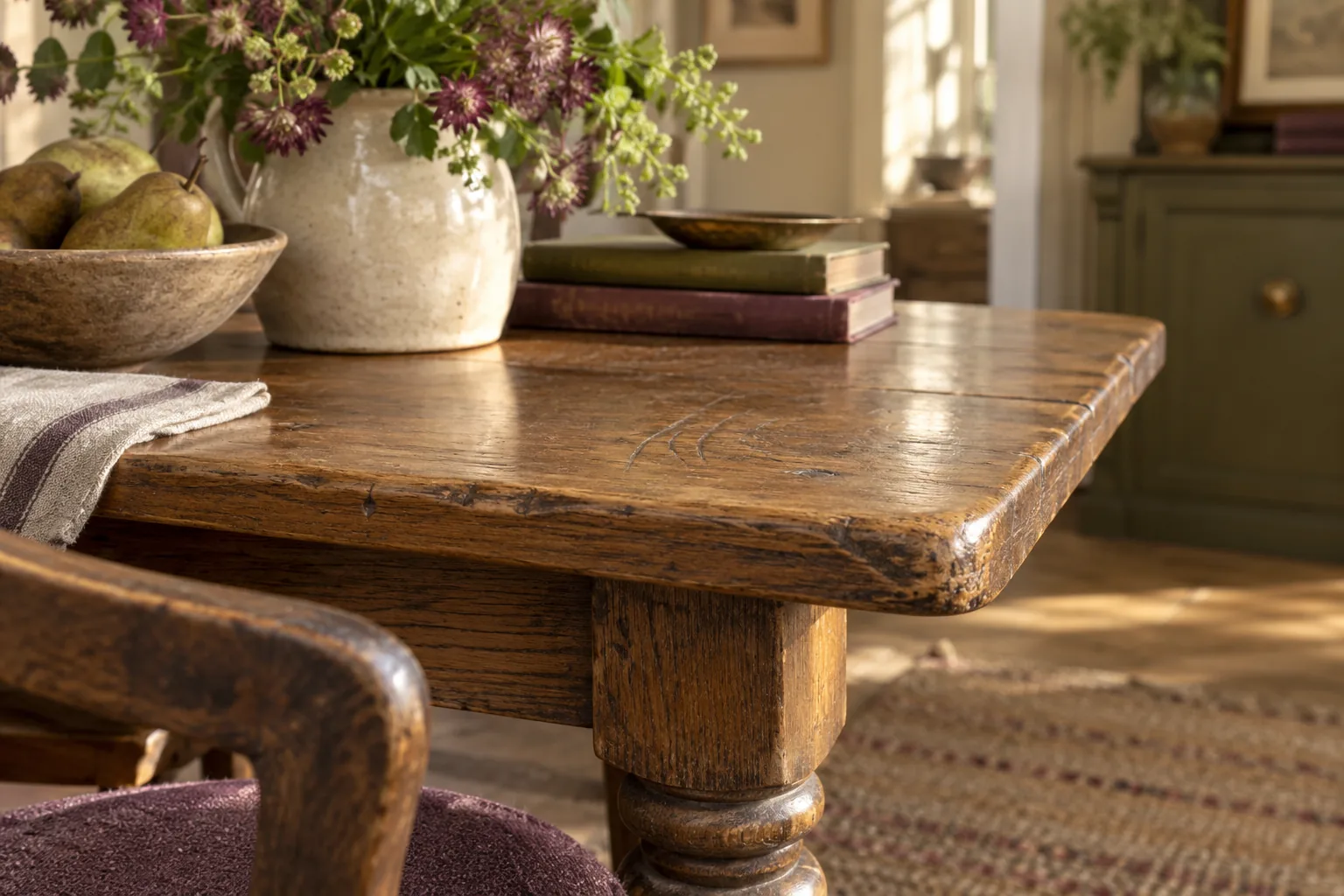
Think about a familiar possession with visible wear. Perhaps the softened edge of a wooden table feels pleasing, while a stain on a chair irritates you every time you see it. These reactions offer a useful guide to buying older things. You do not have to appreciate every mark simply because an object has age.
Make a note of the differences. You may enjoy uneven colour but dislike missing details, or accept a visible repair on a decorative object while wanting daily-use furniture in sound, assessed condition. Your tolerance is not a measure of sophistication. It is information about what you can comfortably live with, and it deserves a place in the buying decision.
Divide concerns into three groups
A simple sorting exercise can help: features you enjoy or do not mind, features you would need addressed, and features that make the piece unsuitable for you. Keep these groups specific. A light surface mark is different from an unexplained crack; faded upholstery is different from an unknown structural problem.
Do not place safety questions in the first group merely because you like the appearance. Structural, electrical and other specialist issues require suitable assessment. The exercise concerns your response after relevant practical questions are understood, not a way to declare uncertain condition acceptable by preference alone. An attractive old finish and a sound object are separate matters that may need different kinds of evidence.
Consider position and frequency of contact
A mark on the back of a cabinet may matter little in one room and be visible from the doorway in another. Wear on a tabletop sits within your daily view; a similar mark underneath may have no aesthetic effect. Judge the feature in the intended position rather than only in a seller's close-up photograph.
Think about touch and routine as well. A rough area where your hand rests can be more noticeable than a larger visual flaw elsewhere. A drawer that is inconvenient to use may become tiresome even if the chest looks beautiful. Imagine the repeated action associated with the piece, because small practical irritations tend to matter more through repetition than they do during a brief viewing.
Separate acceptance from hoped-for improvement
If your response is that a mark will probably clean off or a colour will look different at home, you have not yet accepted it. You are relying on an improvement that may not happen. Ask for relevant information or professional advice where appropriate, and consider the piece in its documented current condition.
Where you genuinely intend to commission work, include the likely scope, cost and uncertainty before committing. Avoid treating every unwelcome feature as a minor project. Some interventions may be inappropriate, difficult or unable to produce the result you imagine. A purchase is easier to enjoy when you know which features are staying and feel comfortable with them, rather than maintaining a growing list of changes required to make it acceptable.
Let your boundaries become more accurate
After living with a purchase, note which imperfections you stopped noticing and which continued to bother you. This experience can refine your next decision. You might discover that small colour differences are less important than comfortable proportions, or that a particular kind of surface wear always distracts you.
Keep the lesson specific instead of declaring that all vintage furniture is too imperfect or that every sign of age is desirable. Different objects, uses and rooms call for different judgements. The aim is a clearer personal brief: the kinds of wear you welcome, the questions you need answered and the condition problems you are not taking on. That clarity makes looking at older things more enjoyable because you can admire a piece without feeling obliged to accept every compromise it presents.