A vase can be decorative without holding water
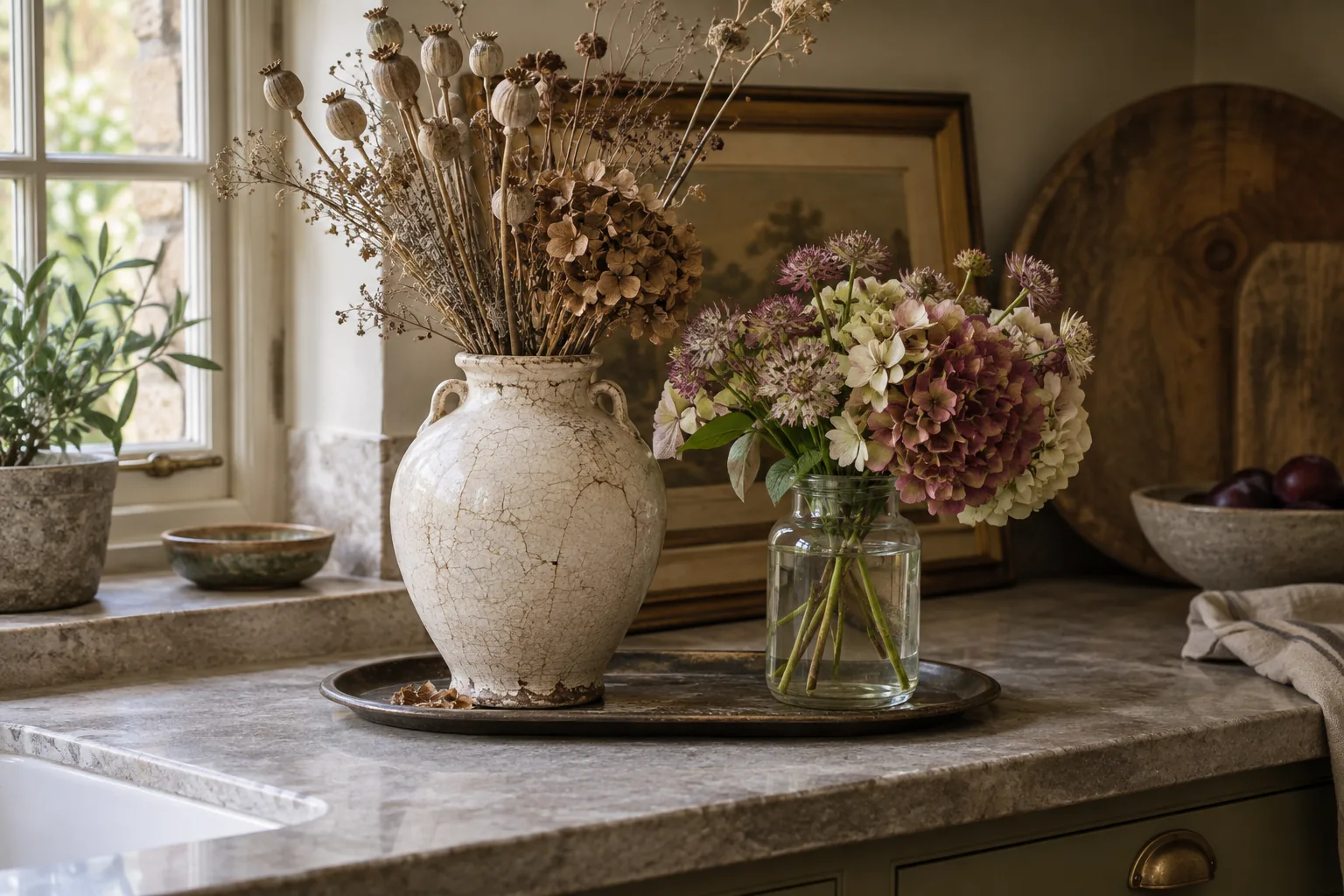
It feels natural to put flowers into anything shaped like a vase. An old ceramic vessel may have spent years doing exactly that, or it may have been intended mainly for display. Either way, its current condition matters. Do not assume that a glazed-looking interior establishes watertightness or that an old repair will tolerate the arrangement you have in mind.
Before filling it, look for cracks, repairs, surface changes and information from the seller or previous owner. Avoid testing an uncertain piece by leaving it full overnight on furniture. That experiment can create a problem for both the vessel and the surface beneath it before you know the answer.
Choose the role that fits the object
A sound modern container designed for water can be the straightforward choice for fresh flowers, while an old vessel remains empty nearby. That is often simpler than making a fragile piece perform a task it no longer suits. The decorative value may lie in the shape and glaze, which remain visible without a large arrangement covering them.
If using an inner container is being considered, seek advice appropriate to the old vessel's condition. The insert needs to fit without pressure, remain stable and be removable without scraping or trapping it inside. It is not a universal solution, particularly for narrow necks, delicate rims or a vessel whose structure is uncertain.
Keep filling and arranging elsewhere
For an arrangement confirmed as appropriate, prepare the water-holding container on a suitable work surface rather than over an old tabletop. Trim and arrange flowers away from delicate objects. Carry the finished arrangement with a clear plan for support and placement, following any advice about the vessel's handling.
Consider the weight and balance of the flowers as well as the water. A tall, outward-reaching arrangement can behave differently from a few short stems. Check that the intended surface is stable and that the arrangement is not where a sleeve, curtain or passing bag could catch it.
Think about the surface underneath
The Canadian Conservation Institute's furniture guidance warns about water damage from objects placed on furniture. A vase arrangement therefore involves two care decisions: whether the vessel is suitable and whether the tabletop is appropriately protected. Do not let confidence in one become a substitute for checking the other.
Use protection suitable for the specific finish, with advice where needed, and inspect the area during use. A decorative mat may conceal moisture rather than prevent it. If you notice dampness, remove the arrangement safely and follow the appropriate response for the affected surface rather than simply adding another layer underneath.
Keep the arrangement easy to lift and maintain. An elaborate display that requires moving several fragile objects before you can change the water encourages awkward handling. Leave enough space to perform the ordinary routine comfortably.
Let the vessel remain the point
Sometimes a single branch-like silhouette in a separate appropriate container, or no flowers at all, shows an old vase better than a full bouquet. Do not add dried plant material automatically if it introduces other care concerns or makes inspection difficult. Choose the display according to the object and its setting.
When the arrangement comes down, follow object-specific advice on cleaning and storage rather than putting an unfamiliar ceramic through a household washing routine. Record any changes you noticed. A vase can have several satisfying roles over its lifetime, and keeping water separate from the question of beauty gives you more freedom to choose a role that suits its present condition.