Write down the claim before judging it
An object's story can be part of its attraction. A connection with a household, a maker or a particular place may make an ordinary-looking piece seem suddenly distinctive. Before allowing that story to influence the purchase, identify exactly what is being claimed. Is the seller describing a previous owner, suggesting a date or attributing the design to someone?
These are different questions. A documented recent owner does not by itself establish who made the object, and a maker's mark does not provide a complete ownership history. Put the claims into separate sentences in your notes. This simple step prevents several partial pieces of information from merging into a more impressive account than the evidence supports.
Ask how the story reached the seller
Find out whether the information comes from a document, a direct conversation, a previous listing or the seller's own interpretation. Ask whether any supporting material can be seen and whether it accompanies the object. Keep the tone curious rather than adversarial; honest uncertainty is a useful answer.
A family recollection may be meaningful without being independently verifiable. Record it as a recollection, including who supplied it where appropriate, rather than converting it into an established fact. The same care applies to statements such as believed to be or probably from. Those qualifications are part of the information, not inconvenient words to remove when the story is retold.
Check whether a document describes this object
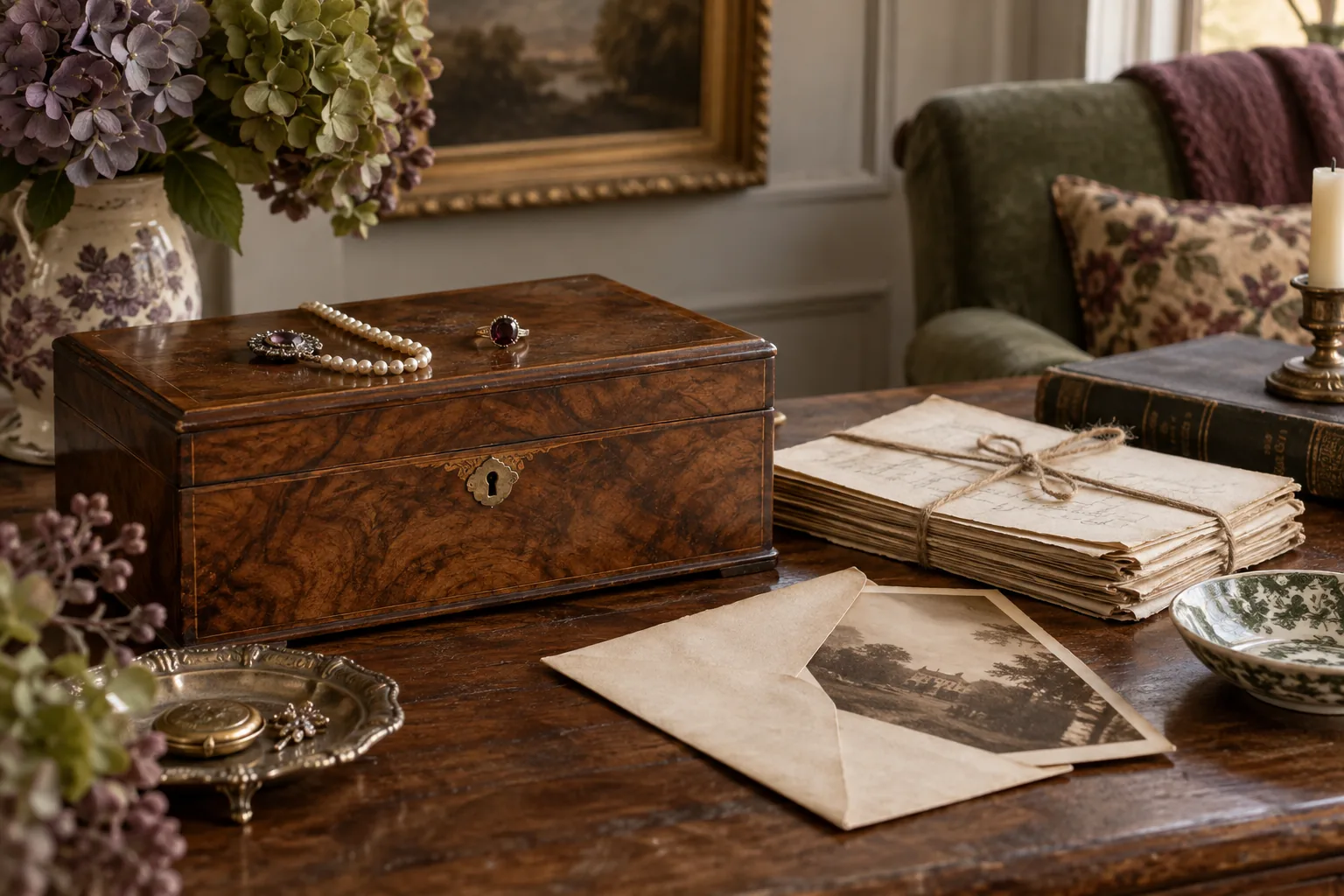
A receipt, letter or old photograph may offer useful context, but look for a clear connection to the particular piece. Does it describe identifiable dimensions, marks or features? Could it refer to another similar object? If the link is uncertain, ask the seller to explain the basis for it.
Do not assume that an old-looking document is authentic or that a convincing document automatically verifies every claim made alongside it. Where the history is central to the purchase, appropriate specialist advice may be worthwhile. The purpose is not to distrust every scrap of paper. It is to understand what that paper can reasonably establish and where additional interpretation has entered the account.
Keep an ordinary hypothetical example in mind
Imagine a chair offered with a photograph of a similar chair in a former owner's house. The image may support the statement that the household had a chair of that appearance. Whether it identifies this exact chair depends on recognisable details and the surrounding evidence. It does not, on its own, establish a maker or the date of manufacture.
Now imagine a receipt that names the chair but uses only a broad description. That may document a transaction without resolving the earlier history. Neither item is useless; each contributes a limited piece of the picture. Thinking in these smaller steps helps you appreciate genuine evidence without asking it to carry conclusions beyond what it shows.
Decide how much the history matters
Ask whether you would still want the object if the most interesting part of the story remained unconfirmed. If its shape, condition and usefulness are enough, incomplete history may be acceptable. If the claimed connection is the main reason for buying, the evidence deserves much closer scrutiny.
Avoid using an attractive anecdote to overlook a practical mismatch or unresolved condition. A compelling previous life does not make a cabinet fit the room or a chair suitable for use. Historical interest can be a real part of your enjoyment, but it should sit alongside the other requirements rather than displacing them. You can admire a story and still decide that the purchase needs firmer support.
Preserve uncertainty in your own records
If you proceed, keep copies of the relevant material and the seller's exact wording. Note what is documented, what is attributed to another person's account and what remains unknown. Store original documents appropriately, avoiding attachments or handling that could damage either paper or object.
Later research may clarify the history, or it may leave the same gaps. Update the record without erasing earlier uncertainty. A modest, accurate account is more useful than a polished biography assembled from assumptions. It lets you enjoy the object for what is known, remain open to further evidence and pass on information that another person can assess rather than simply repeat.