List the unmet needs first
In a small home, a wish list is most useful when it begins with gaps in daily life. You may need a surface beside a chair, closed storage for papers or a mirror in a particular position. Write these needs before adding attractive objects found while browsing. This gives the list a practical structure.
Keep decorative wishes as well, but label them honestly. Wanting a ceramic because you love its shape is a valid reason; it is simply different from needing a cabinet for storage. The distinction helps you decide what deserves space first. Without it, every appealing object can acquire a supposed practical purpose and the list becomes larger than the home it is meant to improve.
Give each item a space allowance
Record the maximum footprint, useful height and any operational space needed for doors, drawers or seating. Include the belongings that will sit inside or on top. A small piece that offers insufficient useful capacity may not solve the problem, while a slightly larger but better-organised one could replace several existing items.
Identify the exact position and check what is already there. If a purchase requires another object to leave, write that beside it. This turns a vague intention to make room into a concrete part of the decision. Avoid counting the same empty corner as the future home of three different wishes; each item should have a plausible place within one coherent arrangement.
Rank by the change it would make
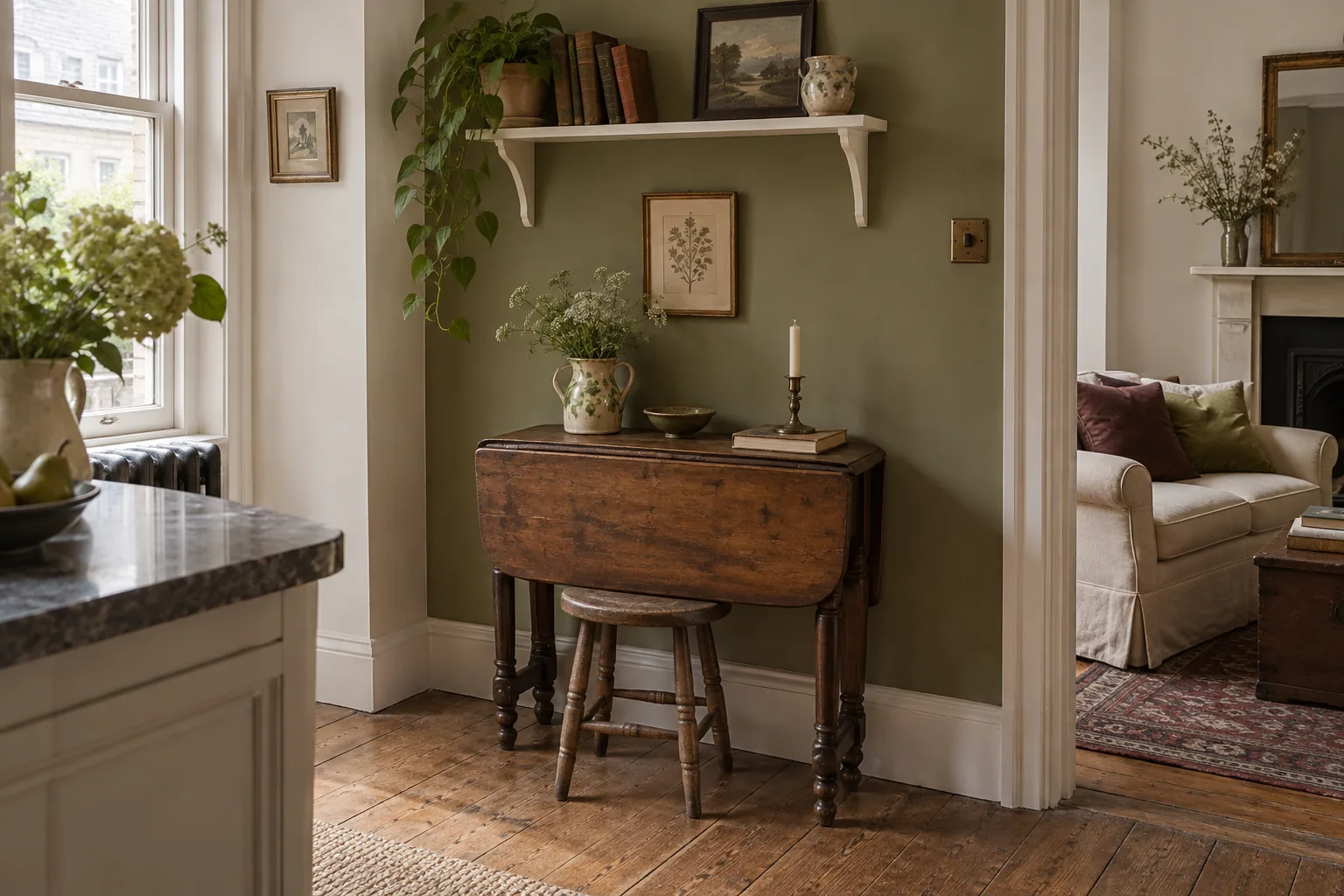
A priority list need not follow size or visual drama. The modest table that makes a favourite chair comfortable to use may improve daily life more than a striking cabinet that mainly changes the view. Ask how often the piece would be used and what inconvenience it would remove.
Keep one or two priorities active rather than searching equally hard for everything. This reduces the temptation to buy the easiest available item while the real need remains unresolved. You can still notice unexpected finds, but the ranked list gives them context. A decorative purchase becomes a conscious exception rather than quietly displacing the practical improvement you intended to make.
Keep a separate place for admiration
Save photographs of pieces you like even when they cannot fit, but keep them outside the active buying list. They can teach you about preferred shapes, colours and materials without becoming promises of future ownership. A grand sideboard may inspire the finish you want on a much smaller chest.
This distinction is especially helpful when browsing regularly. Admiration does not have to lead to acquisition. You can enjoy a beautiful object, note the quality that caught your eye and continue looking for something appropriate. A small home benefits from this freedom because its character depends on selection, not on accommodating every style or category you find interesting.
Review the list after each purchase
Once an item arrives, use it before continuing the search. It may solve more than one need or reveal that another planned purchase is unnecessary. Update the list and measurements to reflect the room as it now works, rather than preserving a plan made for an earlier arrangement.
Remove wishes that have lost their appeal. A list is a decision aid, not a collection of commitments. In a compact home, leaving a little space unassigned can be valuable for movement and changing routines. The most useful list is therefore often shorter over time: a clear record of what would genuinely improve the room, with enough restraint to let the pieces already chosen do their work.