The cloth can wait
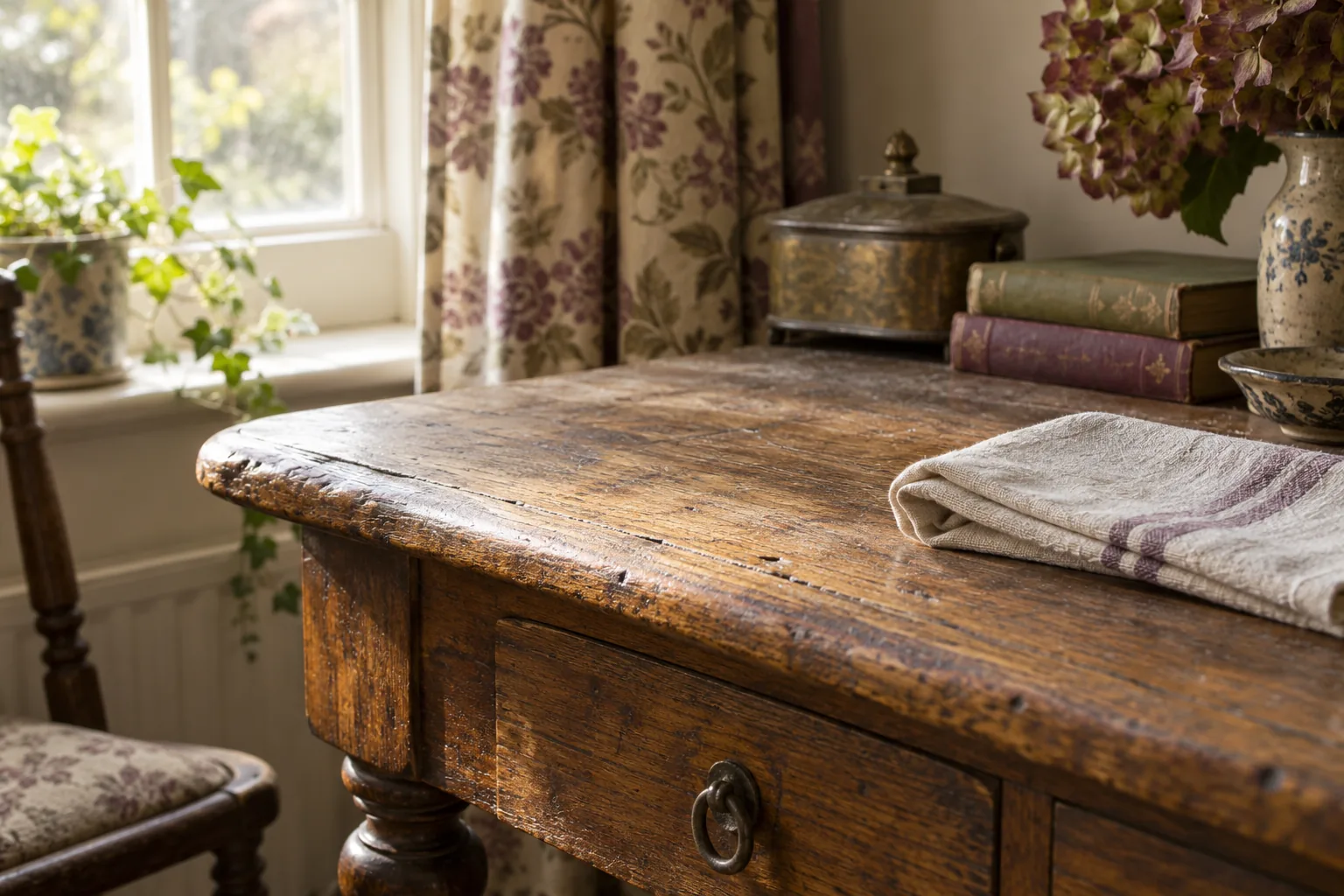
Dust is easy to notice; a loose sliver at the edge of a tabletop is easier to miss. Before cleaning an old piece, give it a quiet moment in good light. Look around corners, handles and decorative details. If there is lifting veneer, flaking finish or something that moves when it should not, routine dusting is no longer the whole question.
This pause is especially useful with newly acquired furniture. You may not yet know which marks are stable, which areas have been repaired or what finish is present. Photograph anything uncertain and ask for informed advice before touching it. Learning the surface is a better first job than trying to make it immediately brighter.
Keep the aim small
For a sound, suitable surface, the aim of routine dusting is simply to remove loose dust. It is not to erase age, improve colour or add a gloss. The Canadian Conservation Institute distinguishes ordinary care from treatments that affect the finish, and notes that old surfaces can respond differently to cleaning materials. An unfamiliar coating deserves particular restraint.
Use the method recommended for that object by a knowledgeable conservator or supplier. Where a clean, soft, dry cloth is appropriate, reserve it for that purpose rather than using a cloth carrying residue from another household task. Do not assume that a product labelled natural, nourishing or suitable for wood is suitable for every old finish.
Make the room easier to clean
Move loose objects to a prepared surface before cleaning the table, provided they can be handled safely. Trying to work around a crowded display encourages hurried movements and missed corners. A tray nearby can help organise small, sound objects, but avoid balancing several delicate items together simply to clear space quickly.
Notice what makes dusting awkward. A lamp cable stretched across the top, a plant with trailing leaves or a collection pressed against a carved edge may be signs that the arrangement needs simplifying. Reducing those obstacles can make care easier without changing the furniture itself. The best housekeeping improvement may be one fewer object on the surface.
Stop when the task changes
A sticky patch, white mark or ingrained dark area is not loose dust. If it remains after the appropriate light routine, resist increasing pressure or changing to a stronger product. Record it and seek advice if it needs attention. Continuing until the surface looks uniform can turn a modest cleaning task into an unintended treatment.
Likewise, stop if colour transfers, a fragment catches or a previously unnoticed edge lifts. Keep any detached material safely associated with the piece and explain what happened when contacting a specialist. There is no benefit in completing the whole tabletop for the sake of consistency after a problem has appeared.
Choose a rhythm you can maintain
A brief, attentive check when dust is visible is often more manageable than an ambitious seasonal overhaul. Keep care notes for unusual surfaces so that another household member does not apply their normal furniture spray by mistake. A small note in your household records is more discreet and more useful than relying on memory.
Finally, put the display back with a little space around each object. Cleaning should not become a performance that leaves the room impossible to use. A cared-for old table can retain marks, variation and a softer sheen. The aim is to keep it comfortably part of the home while avoiding unnecessary changes to the surface you chose it for.