Start with the things behind the doors
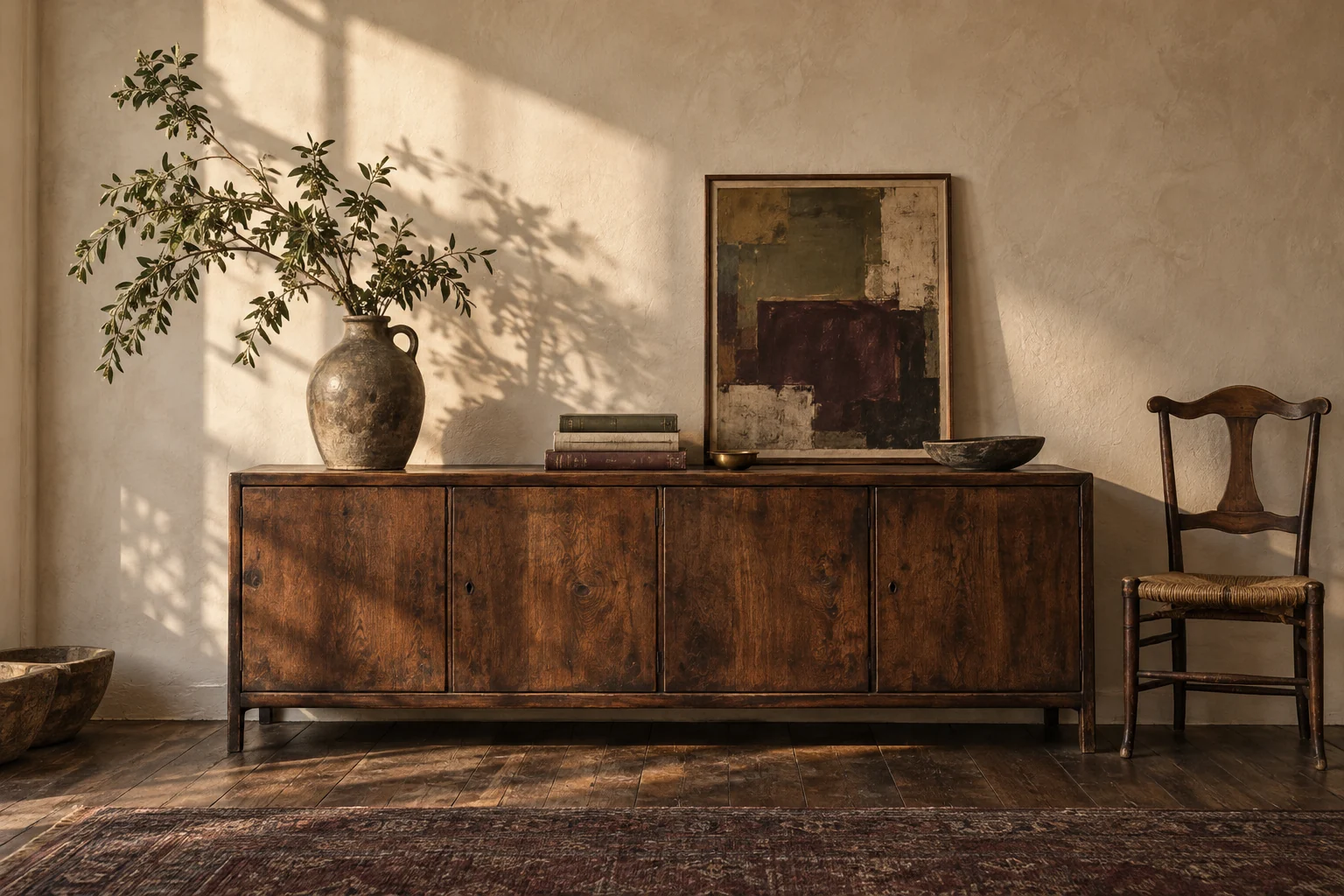
A sideboard can make a room feel settled before anything else has found its place. Its broad top gives a lamp somewhere to stand, while the cupboards promise to swallow all the awkward things that refuse to look tidy. The promise is worth checking. A handsome cabinet with shallow shelves may be excellent for glasses and almost useless for the serving dishes you hoped to hide.
Make a small inventory before you browse. Include the widest platter, the tallest bottle and anything that must remain upright. Measure those objects as well as the available wall. Internal dimensions matter more than the external depth when thick doors, a substantial back or recessed shelves occupy part of the cabinet. Ask for a photograph with a tape measure if the listing leaves this unclear.
Decide how the room will move
Mark the footprint on the floor and add the sweep of an open door. A sideboard that fits perfectly when closed can obstruct the route to a dining chair as soon as somebody retrieves a bowl. Sliding doors avoid that particular problem, although they usually allow access to only part of the interior at once. Neither arrangement is inherently better; consider what happens during an ordinary meal.
Height changes the role of the piece. A lower cabinet can sit quietly beneath artwork, while a taller one brings its surface closer to a convenient serving height. Stand beside a table or worktop of a similar height before choosing. Check skirting boards and sockets, too. They can stop a cabinet sitting where its measured footprint suggests it should.
Read the front, then inspect the work
The spacing of drawers and doors gives a sideboard its rhythm. A symmetrical front feels orderly; an off-centre bank of drawers can introduce a little movement. Choose the arrangement that appeals to you before getting distracted by a fashionable timber description. In a small room, visible legs often leave more floor on show, but they also leave nowhere to conceal trailing cables.
During a viewing, ask the seller to operate every door and drawer. Notice whether a door drops as it opens, whether handles are secure and whether shelves sit properly on their supports. An attractive top does not compensate for storage that is frustrating to use. Repairs can be worthwhile, but request an informed assessment and a quotation before treating a fault as a quick weekend job.
Compare two interiors, not two photographs
Suppose two sideboards have almost identical external dimensions. One has a central partition and a fixed shelf behind each door; the other has a wide cupboard and a shallower drawer above. The first might organise smaller crockery neatly, but the second could be the only one that takes a large serving platter. There is no advantage in the tidier layout if it excludes the object that prompted the search.
Make a rough paper plan of each interior and assign your awkward belongings to it. Include the clearance needed to lift a bottle or remove a stack, rather than treating storage like tightly packed luggage. Notice which things will be hidden behind others. Moving one occasional dish to reach another may be acceptable; repeatedly lifting a heavy stack to find the everyday bowls probably is not.
Also consider where those contents come from. A sideboard next to the dining table can comfortably hold table linen and serving pieces. One across a busy room may be a better home for occasional objects, leaving everyday crockery near the kitchen. The most useful layout depends on both the cabinet and its address within the house.
Choose the access order
If the cabinet will hold both everyday plates and occasional serving pieces, put the frequently used items behind the easiest door. That simple division can influence which internal layout suits you. A shelf obstructed by a central divider might be perfectly adequate for napkins but frustrating for a broad platter carried with both hands.
Give the top some breathing room
Plan the surface around one useful activity. That might be a lamp and a place for post, a short display of ceramics, or a clear serving area beside the table. If every centimetre is already assigned to decorative objects, you may have bought a display shelf with cupboards underneath rather than the practical extra surface you wanted.
Bring a photograph of the room when comparing candidates, including the furniture opposite the proposed position. A sideboard is a long visual line, and it can compete with an equally assertive sofa or bookcase. Sometimes the quieter cabinet is the better purchase: its proportions work, its doors clear the chairs, and the best platter finally has a home that does not involve rearranging the entire kitchen.