Do not treat every mark as dirt
A mark in an old mirror can appear to sit on the front even when it belongs to another part of the construction. Repeated polishing will not necessarily change it. Before cleaning, look carefully from different angles without dismantling the mirror. Describe what you can see and avoid assuming that a darker patch simply needs a stronger product.
Think about the mirror as an assembly: glass, reflective layer, frame, backing and fittings may all have their own condition issues. A handsome frame can distract from an insecure plate, while a clear reflection can distract from a failing hanging arrangement. All of those parts matter when deciding how the object should be used.
The back is not an invitation to investigate
The V&A's account of conserving an early toilet mirror shows how complex the hidden construction can be. That particular object included a tin-mercury reflective layer requiring specialist precautions. It is a useful example of why an unfamiliar historic mirror should not be opened merely to see whether its cloudy areas can be cleaned away.
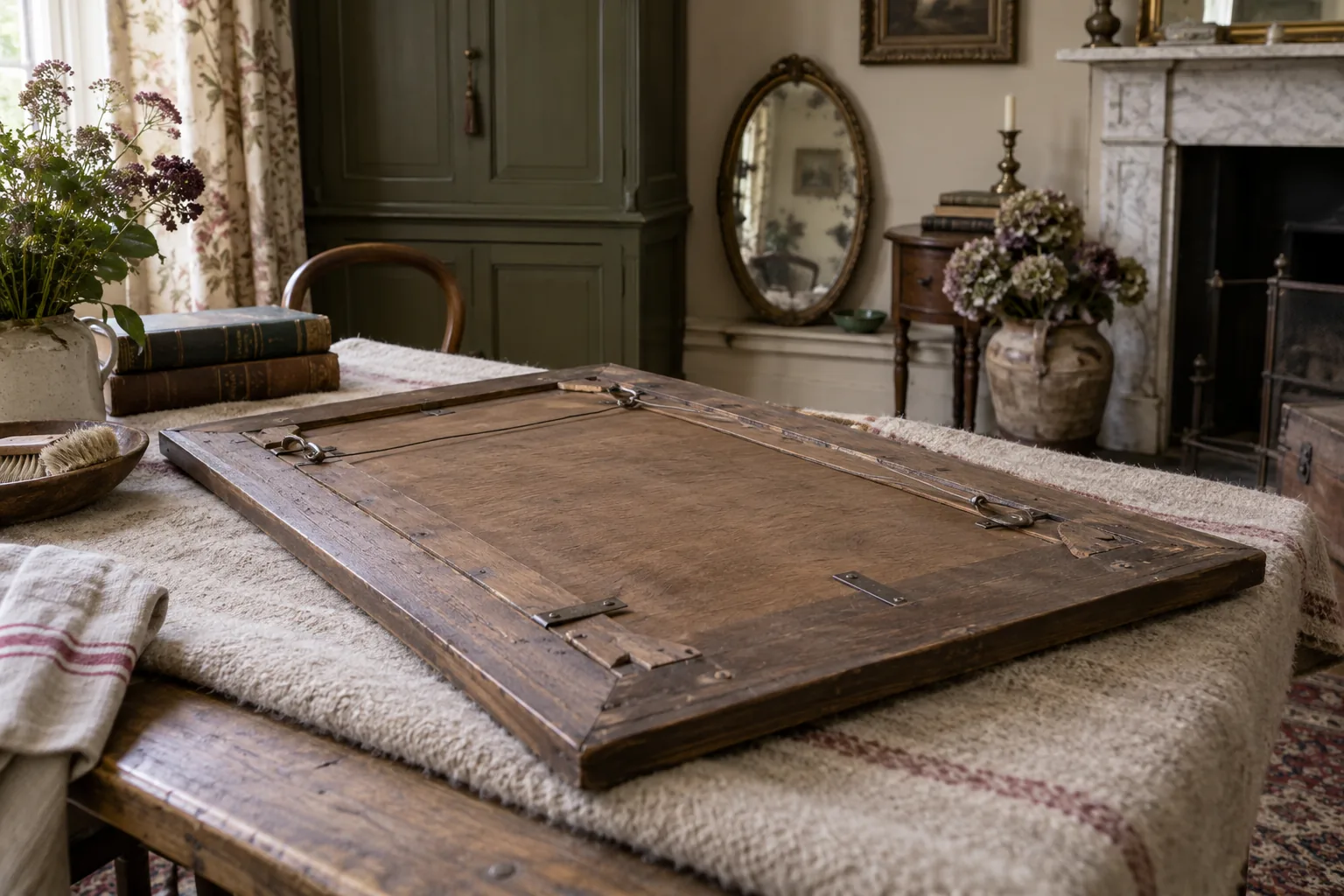
Do not remove the back, scrape a reflective layer or disturb unidentified material. Ask a conservator familiar with mirrors to assess the object if its construction or condition is uncertain. A photograph of an accessible back may be helpful, but obtain it only when the mirror can be handled safely without taking it apart.
Look at the frame independently
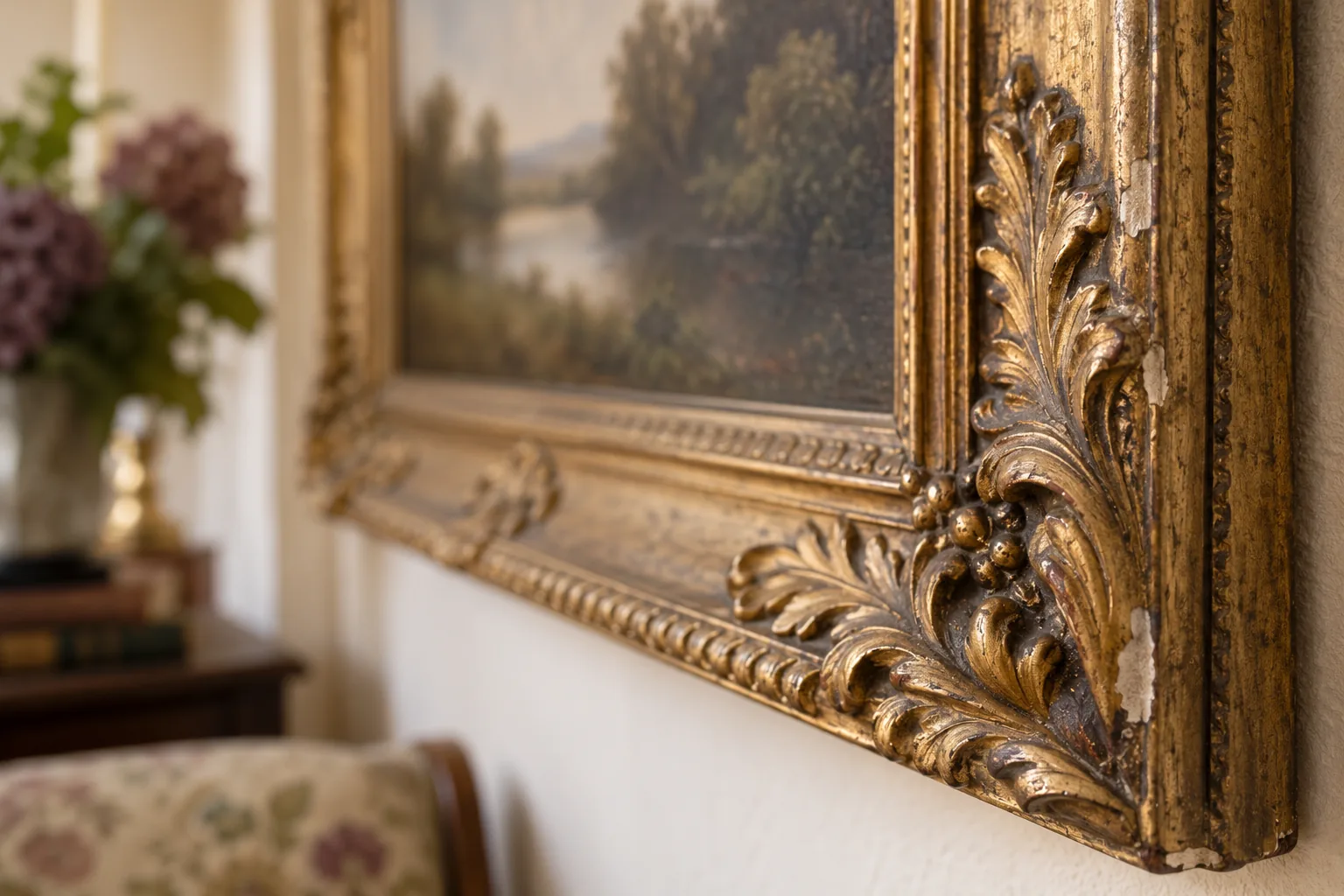
Gilding, paint, decorative mouldings and timber can respond differently to cleaning. A method suitable for ordinary modern glass may be unsuitable for an adjacent old frame. Avoid spraying products onto the assembled mirror, where liquid can reach edges and components you did not intend to treat.
If you have object-specific advice for routine care, follow it carefully and record it for other household members. If not, ask before attempting more than an appropriate, limited task on a sound surface. Flaking decoration or loose ornament calls for assessment rather than a careful attempt to work around it with a cloth.
Check how it is supported
A mirror's weight and shape should be considered by someone competent when choosing or reviewing its hanging arrangement. Old wire, hooks or a previous owner's setup should not be assumed suitable for a new wall. Explain the wall construction and the object, and arrange professional installation where needed.
Freestanding mirrors also need a secure arrangement appropriate to their design. Leaning a heavy framed mirror against a wall can look effortless while leaving important stability questions unanswered. Choose the placement and support deliberately, especially where children, pets or a busy route are involved.
Before moving the mirror, prepare the route and destination and use suitable assistance. The frame's decorative top is not automatically a lifting point. An experienced handler can plan the move without relying on fragile ornament or improvised grips.
Choose the reflection you actually want
Once condition and installation are settled, consider the mirror's role in the room. Some people enjoy a softened or uneven reflection; others need a clear everyday dressing mirror. Be honest about that preference before buying. Replacing the glass or reflective surface can be a significant change, so do not treat it as an automatic improvement.
A conservator can explain options and their implications for the object. You may decide to keep an old mirror in a decorative role and use a separate modern one for practical tasks. That arrangement allows each to do its job without asking a historic surface to behave like something newly manufactured. The result can be both useful and respectful of what makes the older mirror distinctive.