Decide what daily use means
A table used for breakfast, homework and occasional dinner parties faces different demands from a small occasional table beside a chair. List the activities that happen on yours before choosing protection. Heat, moisture, writing pressure and repeated movement of objects are separate concerns, and one attractive cloth may not address all of them.
Be realistic about the household. If the table must tolerate hurried meals and children's projects, choose an assessed piece and an appropriate routine for that role. A particularly vulnerable surface may be better used elsewhere. Good care should make ordinary life possible rather than require constant correction of everyone around the table.
Ask about the actual finish
The Canadian Conservation Institute's furniture guidance recommends avoiding water and heat exposure and considering appropriate protective measures. The details depend on the surface. Ask a conservator or knowledgeable furniture professional what suits your particular table rather than treating every wooden top as interchangeable.
Discuss any proposed full-size cover, pad or glass top before commissioning it. Materials in contact with a finish, trapped moisture and the way a cover is supported can all matter. A protective layer should be part of an informed plan, not an assumption that anything placed between the table and daily life must be beneficial.
Make the protection easy to reach
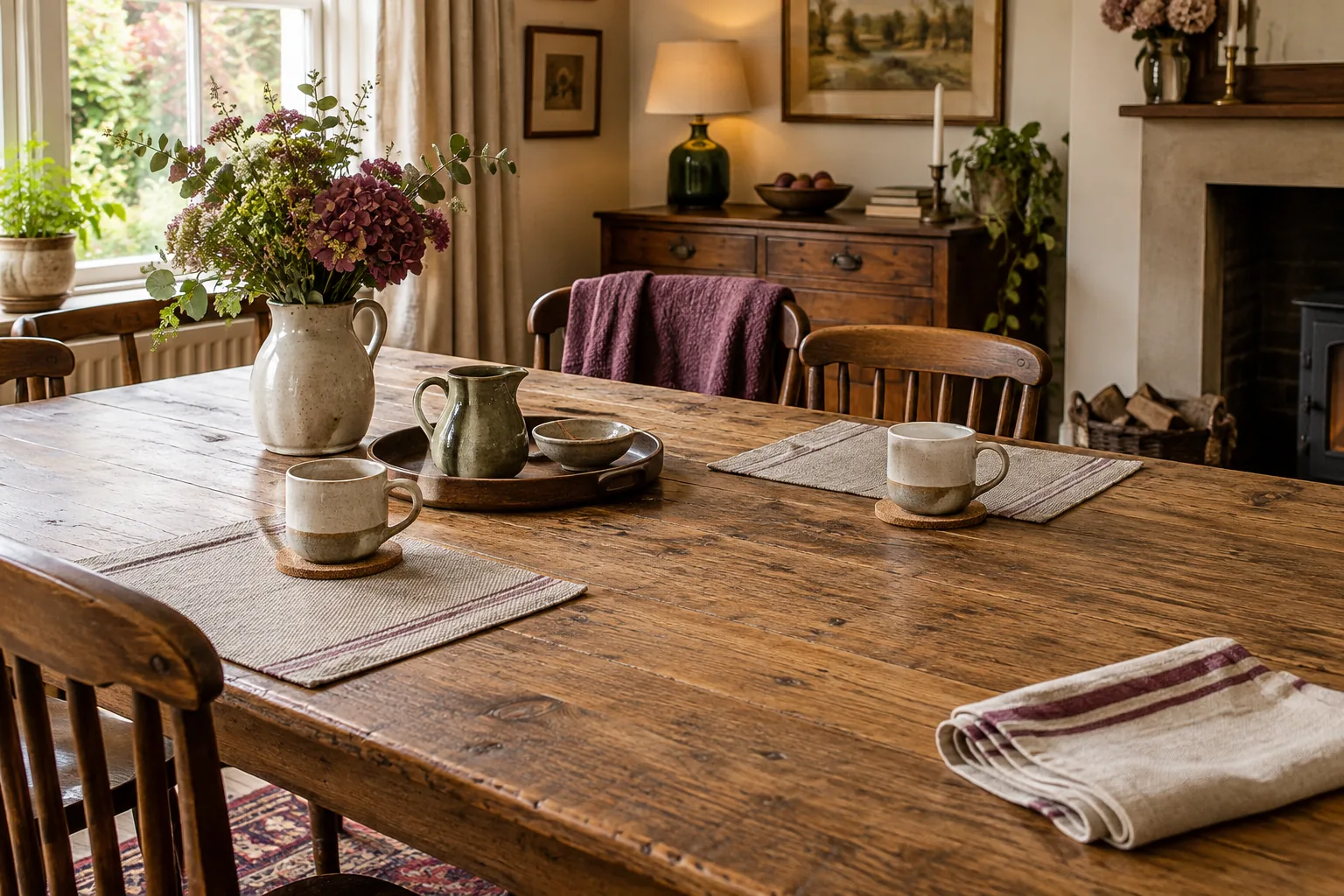
Coasters and suitable mats are most useful when they are already where people need them. Keep them in a nearby drawer or a simple holder rather than a cupboard across the room. If a guest has to ask whether a glass can go down, the arrangement may be less intuitive than it could be.
Choose practical sizes and shapes. A tiny coaster beneath a broad vessel may not provide the coverage you imagined, while an unstable stack of decorative mats creates another nuisance. Follow object-specific advice on materials and use. Appearance can still matter, but convenience is what makes a routine last.
For writing or craft work, provide an appropriate separate working surface where needed. Do not assume that paper alone protects a table from pressure or that a cloth makes every activity suitable. Keep messy or uncertain materials away from a surface whose response you do not understand.
Give spills a prepared response
Ask in advance how to respond to an ordinary spill on the known finish. Keep the recommended supplies accessible and avoid experimenting with household remedies after a mark appears. A calm, object-specific plan is more useful than searching for increasingly forceful methods while the table is still wet.
If an incident leaves a new mark or unstable area, document it and seek advice rather than trying to restore uniformity immediately. State what was spilled and what you did afterwards. That information helps a professional distinguish the original event from any later treatment effects.
Keep an ordinary amount of room
A table crowded with permanent objects is harder to use and harder to care for. Leave enough clear space for the activities it serves. If a vase or plant remains in place, consider its stability and moisture risks; a different location may be a simpler answer than a complicated protective arrangement.
Review the routine after living with it. If everyone reliably uses the nearby mats and the table remains easy to enjoy, the plan is working. If the surface is so vulnerable that every meal feels tense, reconsider its role. A loved old table does not have to perform every household task to remain useful. It needs a purpose that matches its condition and a few habits that people can follow without thinking about them all evening.