A box with more than one possible role
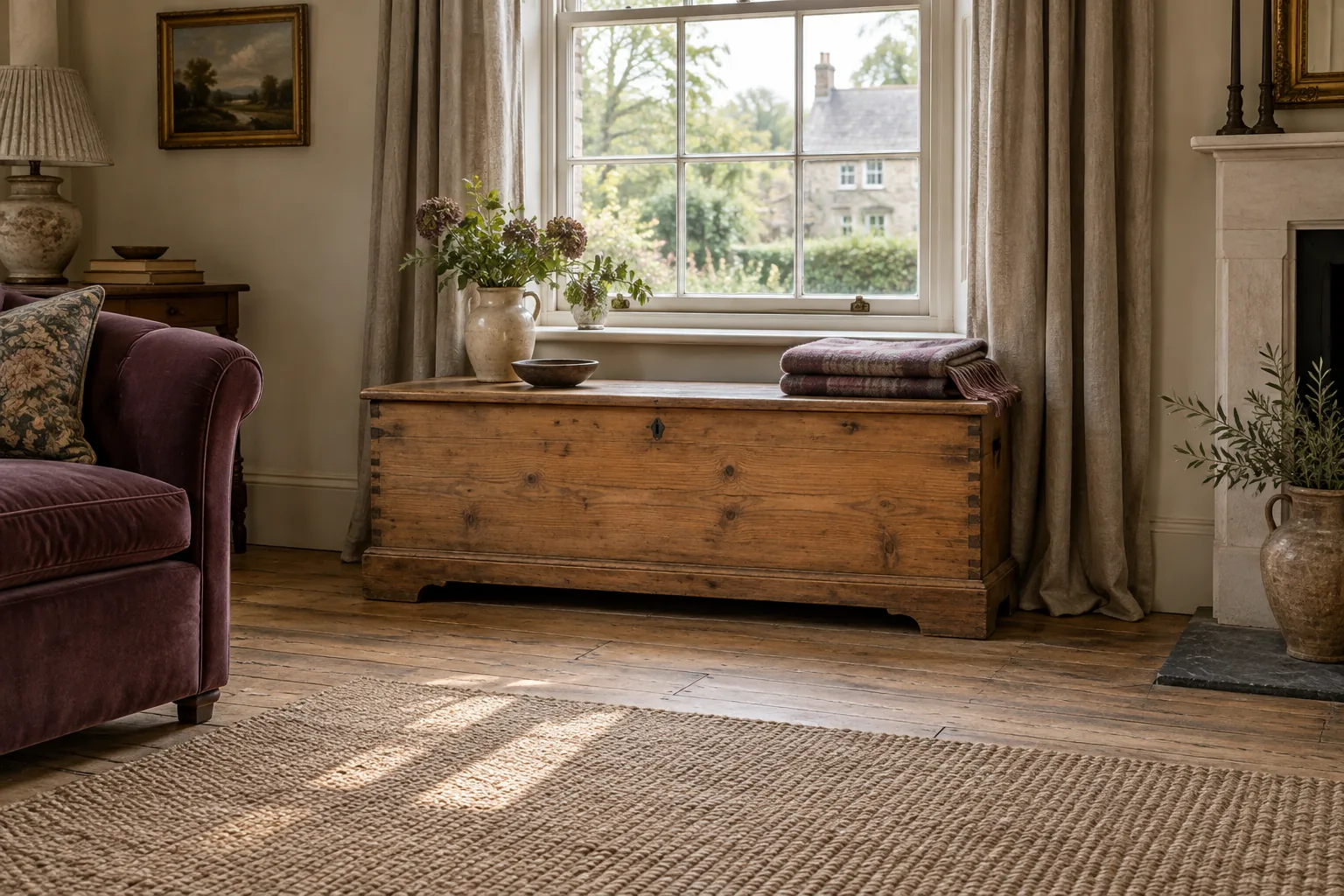
A blanket chest can give a room a strong, simple shape. At the foot of a bed it offers a place for spare bedding; in a sitting room it might hold throws or board games. Its closed form looks satisfyingly self-contained. The practical questions begin when you lift the lid and consider how often you will need what is inside.
Choose the contents before the location. Rarely used blankets can tolerate a less convenient position than games brought out every weekend. If you plan to use the top as a coffee table, remember that everything resting there will need moving before the chest opens. That may be acceptable occasionally and irritating every evening.
Inspect the lid and its movement
Ask the seller to demonstrate how the lid opens and stays supported, if it does. Heavy lids and uncertain hinges deserve particular attention. Keep fingers clear and do not rely on a makeshift prop. If the opening arrangement is unsuitable for your household, seek professional advice before purchase rather than assuming a simple fitting will solve it.
An old chest should not be treated as a child's toy box without an appropriate safety assessment. Consider access, lid hazards and the possibility of a child climbing inside. Sometimes the right decision is to choose purpose-designed modern storage for that job and use the vintage chest elsewhere, beyond unsupervised access.
Look at the space you can actually use
Measure the internal length, width and depth. Thick sides, raised bases and internal compartments can reduce capacity considerably. Place a realistic folded blanket stack on the floor and compare it with the measurements. A deep chest may hold plenty while making the lowest items difficult to reach without removing everything above them.
Inspect the interior for rough areas, loose boards, persistent odours and signs of past damp. Request a view beneath removable liners. Do not assume scented sachets or a new fabric lining will make an unsuitable interior acceptable for textiles. If condition is uncertain, establish what treatment is needed before putting valued possessions inside.
A lid may need space behind the chest as well as above it. Ask for its fully opened dimensions if you intend to place the piece tightly against a wall or bed.
Give the closed top a modest task
Unless the chest has been assessed as suitable seating, avoid using it as a bench simply because it is at a convenient height. A decorative lid is not automatically a seat. As a surface, it can hold a small tray or a few books, provided the load is appropriate and the arrangement is easy to remove.
At the end of a bed, leave a comfortable route around it and enough room for the lid to open. In a sitting room, check that its corners do not create an awkward passage beside the sofa. The chest should make storage more useful without turning the room into a series of small detours.
A little restraint helps the piece look settled. Its broad top does not need to become another permanent display. Let it remain available for an occasional folded throw, while the things inside have a clear purpose and a sensible order. A chest earns its place when opening it produces exactly what you expected to find.