Separate the garden picture from the purchase
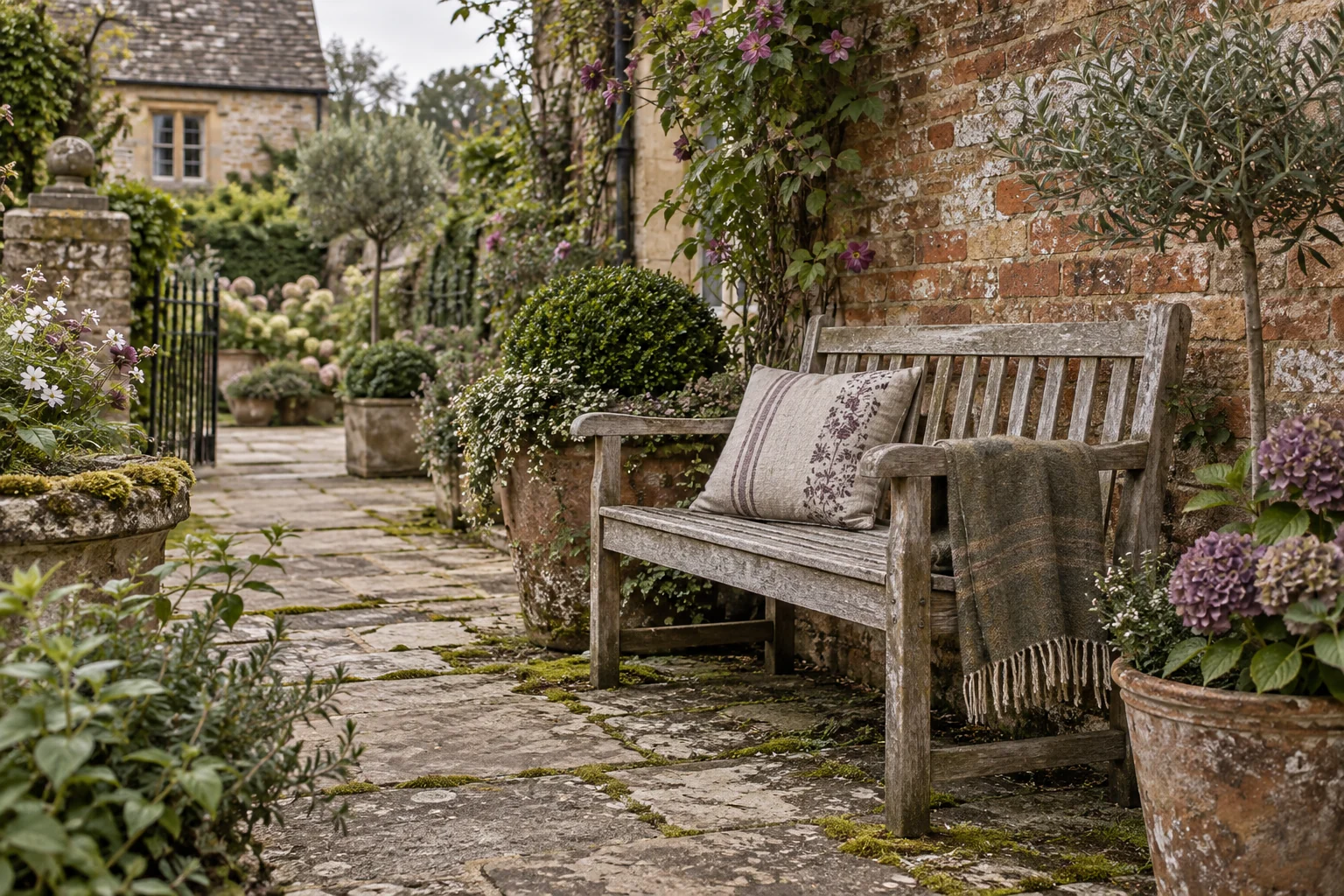
A weathered bench beneath a tree can make a garden look wonderfully established. That image, however, tells you very little about the bench's condition. Before buying, decide whether you want dependable seating or a decorative object. If people will sit on it, appearance is only one part of a more demanding assessment.
Think about who will use it and where it will stand. A seat intended for a quiet paved corner faces different practical conditions from one moved around a lawn. Measure the available area and consider how people approach, sit down and stand up. The garden should remain easy to move through when the seat is occupied.
Examine the structure without testing its limits
Ask about repairs, replaced components and any professional assessment. Look closely at connections, feet, seat supports and the underside. Timber, metal and mixed-material furniture raise different questions, so obtain advice suited to the actual construction. Do not establish soundness by sitting hard, rocking the frame or loading it with several people.
Visible corrosion, splitting, loose parts or uncertain repairs are reasons to pause. A fresh coat of paint may improve appearance without resolving any of those issues. Ask for photographs taken before recent cosmetic work if available. The seller's description should explain the condition rather than rely on words such as rustic or characterful to cover structural uncertainty.
Plan its position and the changing weather
Find out whether the materials and finish are suitable for the exposure you intend. Being described as garden furniture does not guarantee that a particular old example can remain outdoors indefinitely in its present condition. A conservator or experienced specialist can advise on a significant or fragile piece; a more ordinary seat may still need a clear maintenance plan.
Choose a level, stable position and avoid assuming that soft or uneven ground will be harmless. Check drainage and the space around planting. If the bench needs seasonal storage, identify that space before purchase and work out how it will be moved. A heavy seat can be difficult to relocate once pots and borders surround it.
Try the position at seat height before making it permanent. A hedge or balustrade that seems unobtrusive while standing can block the view once you settle onto the bench.
Make sitting there worthwhile
The best position is often chosen by use rather than by symmetry. Notice where you want morning sun, afternoon shade or a view of the house. Try an existing chair in the proposed location before committing to a large bench. You may discover that the attractive spot from the kitchen window is not the place where you actually want to sit.
Check seat depth, back angle and arm position once the furniture has been assessed as suitable for use. A cushion can improve comfort but cannot repair weakness or make an unsuitable surface sound. Choose removable cushions appropriate to the setting and follow their care instructions.
Allow the garden seat to remain a practical object. A few plants nearby and a clear place for a cup may be enough. The most appealing patina is of little use if everyone avoids the bench; a well-understood, comfortable piece can become part of the garden's ordinary rhythm for far longer than a carefully arranged photograph.