Gather the collection before the cabinet
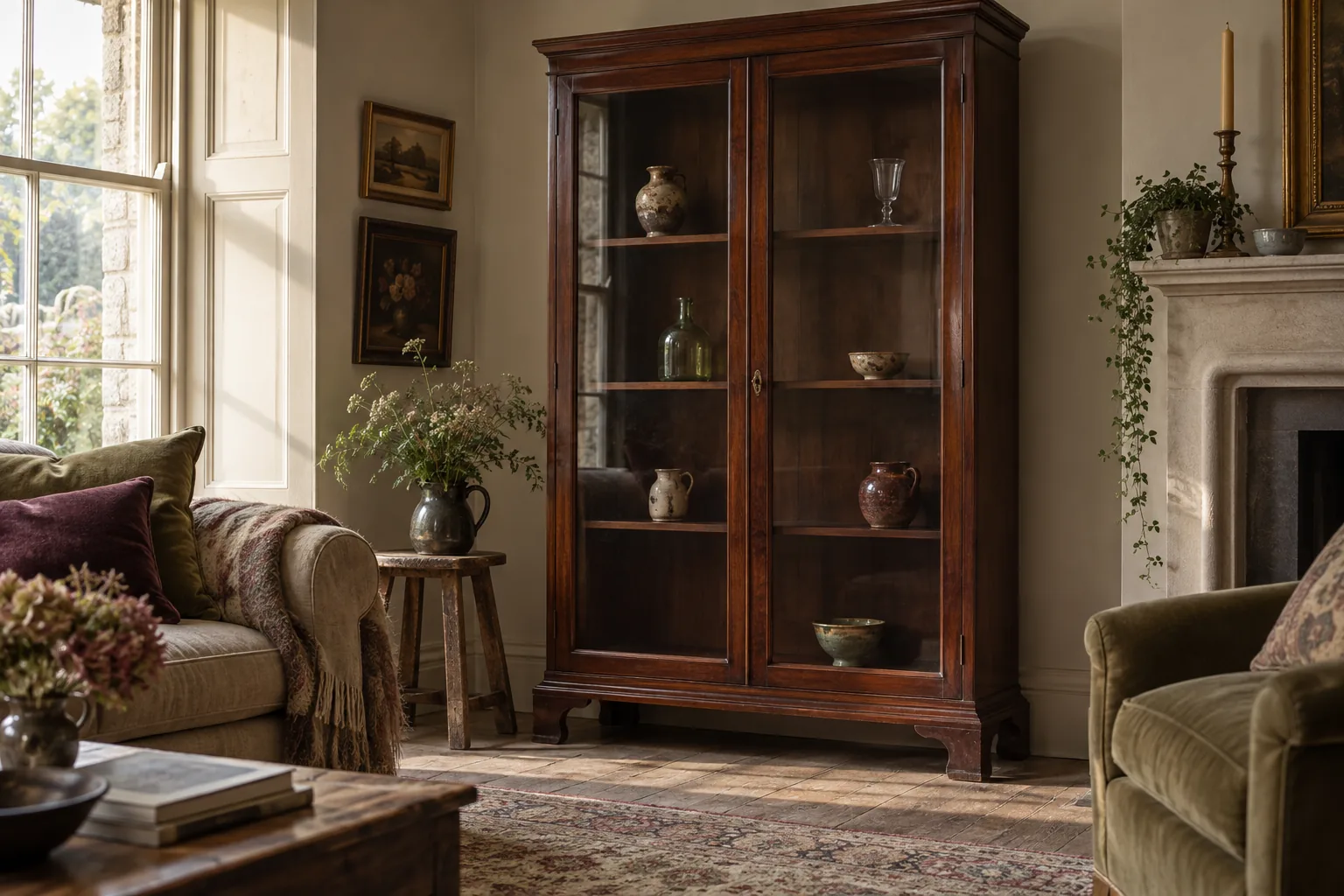
A cabinet can make a modest collection feel deliberate, but it can also encourage you to buy objects simply to fill its shelves. Begin with what you already own. Arrange the pieces on a table and note the tallest, widest and most fragile examples. Their dimensions should guide the search more than a vague desire for an impressive display.
Think about the objects you are likely to add. If you collect small ceramic figures, deep shelves may waste space or tempt you to hide one row behind another. Large jugs and bowls need a different arrangement. A cabinet is most useful when its scale suits the collection rather than overwhelming it.
Look beyond the glass front
Measure usable shelf depth and clear height, including any decorative moulding that reduces the opening. Check how shelves are supported and whether their positions can be changed. Glass shelving needs particular care: chips, uncertain supports and undocumented capacity are reasons to obtain appropriate assessment before loading it.
Inspect door alignment, locks and catches. A door that needs a strong pull is inconvenient around delicate contents. Ask the seller to demonstrate normal operation and show the cabinet empty if possible. Objects placed strategically in listing photographs can make it difficult to see damaged corners, uneven shelves or missing fittings.
Ask whether the cabinet includes all the shelves shown. Sellers sometimes rearrange interiors for photography, and a missing shelf can change the usefulness of the whole piece.
Consider what the background does
A dark interior can make pale ceramics stand out, while a lighter background may suit coloured glass or small timber objects. A mirrored back introduces extra reflections, which can be attractive or visually busy depending on the collection. Look at a similar object against the proposed background before deciding it needs to be changed.
Internal fabric, paper and paint may be part of the cabinet's existing character. Do not buy on the assumption that replacing them will be simple. If a change is essential, seek informed advice about the materials and construction first. A cabinet whose interior already works for your objects is often the more satisfying choice.
Test one shelf at full size
Mark a shelf-sized rectangle on a clear table using loose paper strips, then arrange a small selection of your objects inside it. Leave handling gaps and imagine the position of the door frame in front. This reveals whether the advertised shelf count represents useful display space or simply several crowded layers.
Look at the trial from the height at which you expect to view it. A bowl on a high shelf shows more underside than interior; a shallow dish low in a cabinet may be seen mostly from above. Arrange by the feature worth showing, not just by descending height. You might need fewer shelves than the cabinet provides, provided adjustment is suitable and properly supported.
Give one shelf a different task. A tall vessel can have a generous space while smaller pieces share another level. Repeating the same three-object arrangement on every shelf may become predictable even when the objects vary. Differences in spacing and height can make the cabinet feel more like a collection and less like retail shelving.
Leave a plausible home for future purchases without treating every gap as a vacancy. If a new piece arrives, you can rotate an older one into appropriate storage rather than compressing the entire display. Consider where that storage will be before buying the cabinet. A beautiful front room arrangement is less satisfying if the displaced objects are crowded into unsuitable boxes elsewhere.
Arrange for viewing and for access
Place heavier or larger objects where their weight and size are appropriate for the assessed shelving. Avoid creating a display that requires reaching over fragile pieces whenever you want something at the back. A little clear space around an object makes its outline easier to appreciate and its handling less awkward.
Think about reflections from windows and lamps in the room. You may find that moving the cabinet a short distance gives a clearer view through the doors. Do not introduce heat-producing or improvised lighting inside old furniture. If internal lighting is important, discuss a suitable installation with a qualified person and consider the needs of the objects as well.
An evolving collection benefits from occasional rearrangement rather than constant expansion. Put some pieces away and give others more space. The cabinet should make you notice what you own, including the small details that attracted you in the first place. A shelf with three well-spaced objects can be more rewarding than one that has become an inventory of every purchase.