Unfold it before deciding
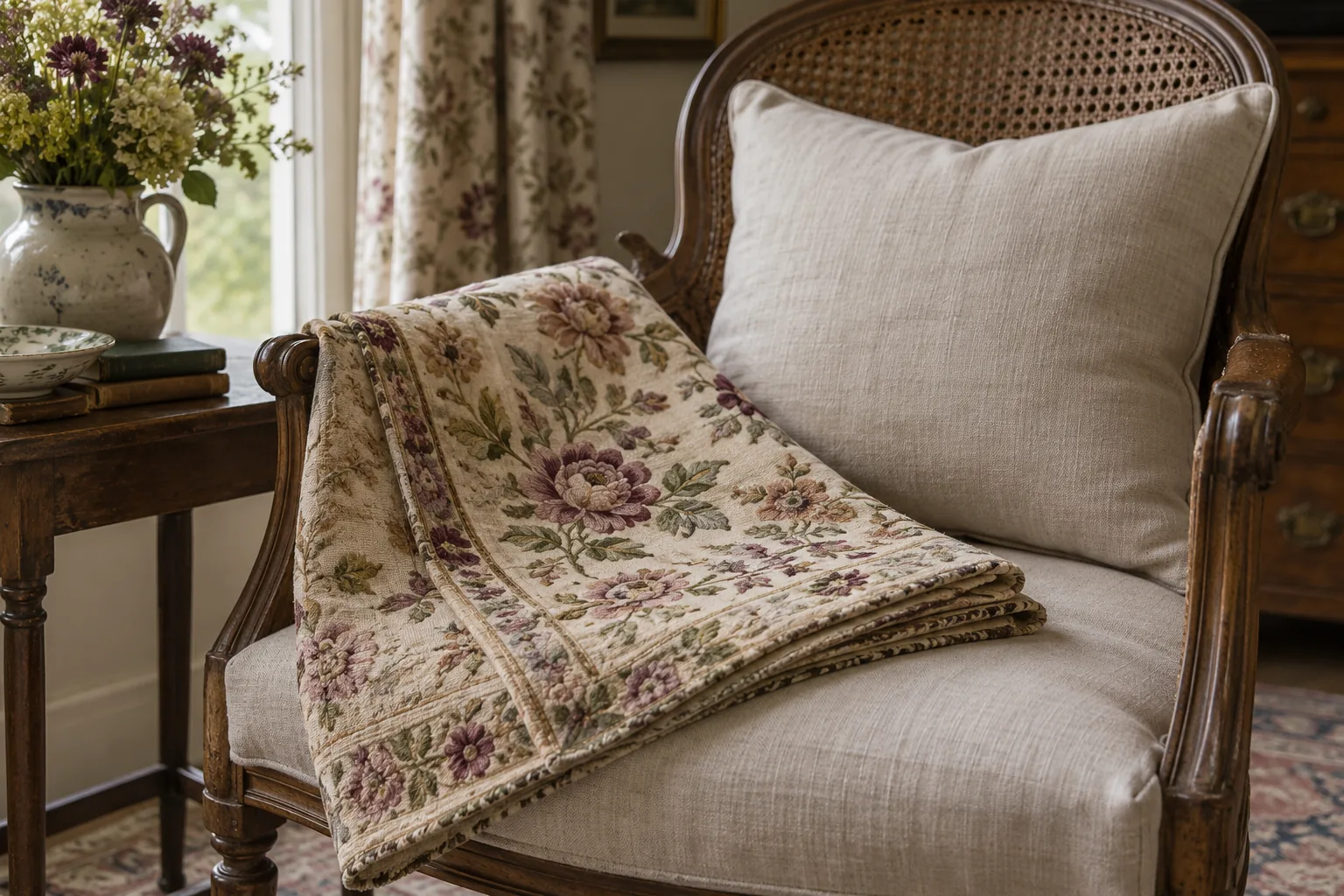
A folded tablecloth can look like a small, manageable purchase until you discover how much fabric it contains. Ask for its full dimensions and, where possible, a photograph laid out. The design may be concentrated at the corners, arranged as a border or spread across the entire surface. That pattern placement should influence how you display it.
Condition can vary across the cloth. A clean-looking corner does not describe the centre, and a strong hem does not establish the strength of the fabric nearby. Ask about holes, thinning, stains and earlier repairs. Decide whether those features are acceptable as they are. Buying on the assumption that every mark will wash out turns an appealing textile into an uncertain treatment project.
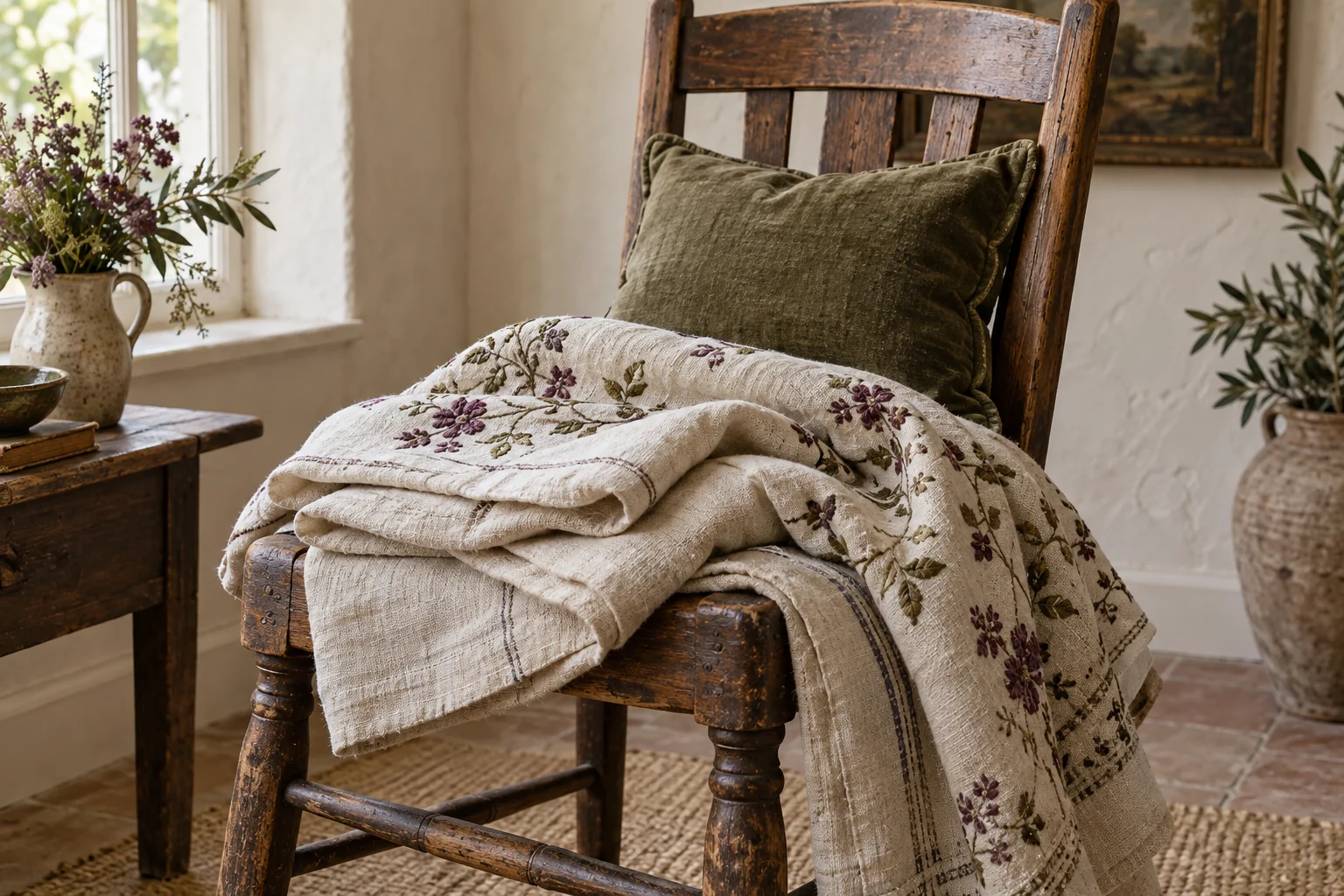
Notice what draws you in: the scale of a stitched flower, a repeated geometric border or the contrast between open and dense areas. These details can be enjoyed without identifying an exact date or inventing a family history. Keep any reliable information that accompanies the piece, but let the visible work earn its place too.
Find a role that reveals the design
A narrow runner may suit a sideboard if its ends remain visible and it does not obstruct a drawer. A small embroidered square might deserve a professionally planned textile mount. A large tablecloth whose interest lies in the whole design needs a different solution; folding it into a tiny decorative strip could hide almost everything you liked.
Try paper templates before installing anything, and consult a textile conservator or suitable specialist for fragile or significant pieces. Hanging a cloth by a few clips can concentrate weight at small points. Support should suit the textile rather than the easiest available wall fitting. An appropriate stored collection that you take out occasionally may be a better choice than permanent display.
Treat display time as a decision
The Canadian Conservation Institute explains that light damage to textiles is cumulative and irreversible. Avoid placing a valued cloth in strong daylight simply because that is where the embroidery photographs best. Consider a quieter location and limit display time, especially when the piece has personal or historical significance.
Do not make washing a prerequisite for enjoying an old textile. Fibres, dyes, finishes and previous damage affect suitable treatment, and ordinary laundry habits may be inappropriate. Ask for professional advice when uncertain. A piece you can only imagine loving after extensive cleaning may not be the right purchase for a decorative project.
Keep food, drinks and daily friction in mind if the textile will remain in a working room. It can be better to use a washable modern runner for meals and display an older cloth separately. That decision allows both objects to do a job they are suited to.
Give it a quiet companion
Embroidery already contains a great deal of detail. Pair it with a plain bowl, a simple wooden surface or nothing at all. Avoid covering its best section with a collection of smaller ornaments. The fabric should not become an expensive background whose work disappears beneath other purchases.
Photograph the entire textile and a few close details, then keep measurements and condition notes with its storage information. A short record makes it easier to rotate pieces thoughtfully. The pleasure of old table linen can lie in noticing careful work at close range; it need not depend on turning your dining room into a period setting.