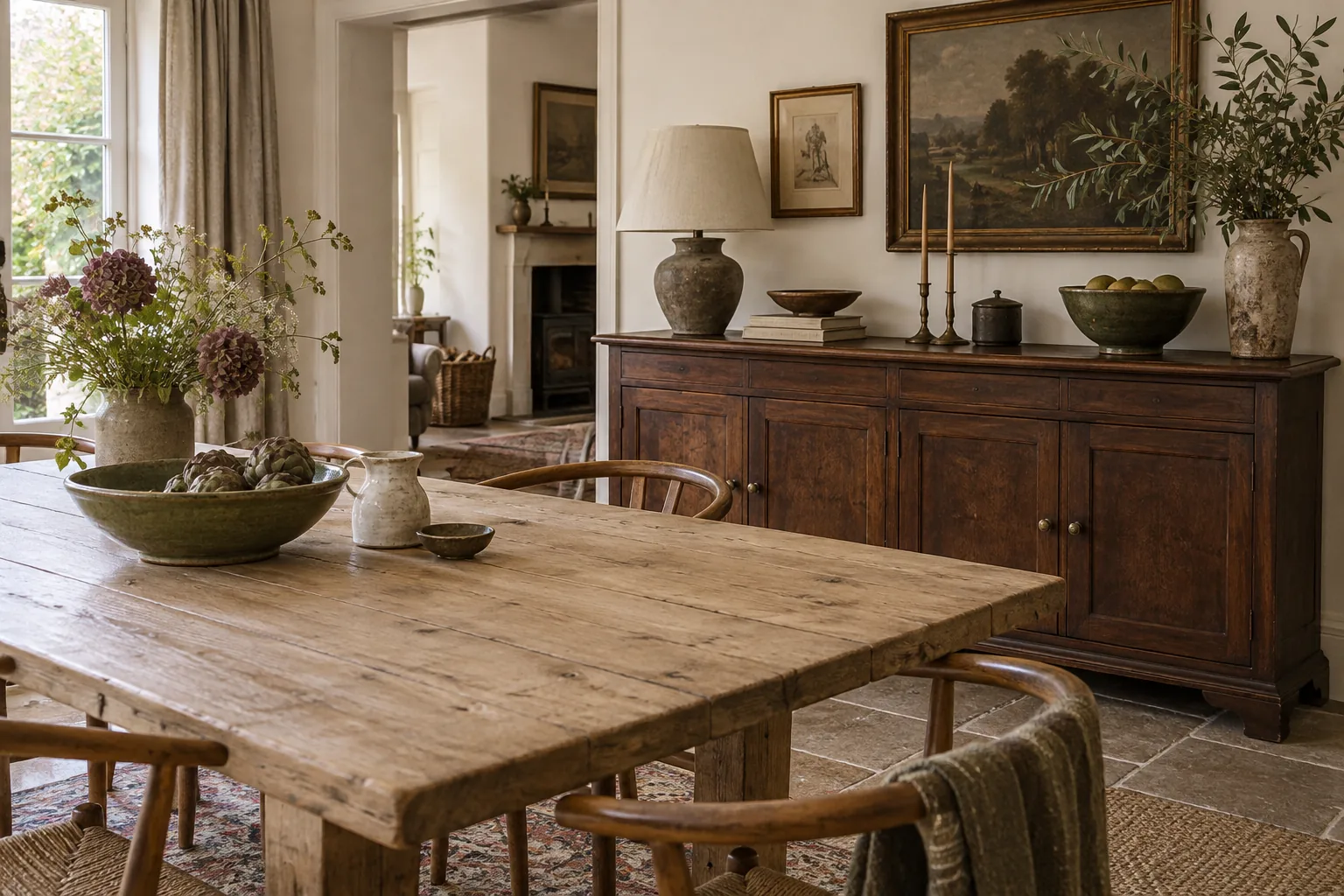
Watch what happens at the door
Keys, letters, bags and wet umbrellas arrive in the hall with different needs. A console table can deal with some of them beautifully and others badly. Before choosing one, notice what you put down when you come home. If a bag always lands on the floor, a narrow decorative top is unlikely to change that habit.
A drawer may be more useful than an extra shelf if the problem is loose keys and small items. An open shelf can accommodate a suitable basket, but only if it is easy to pull out. Decide on one or two jobs for the table. Expecting it to absorb every arrival-related object can turn the smallest piece of furniture in the house into the busiest.
Depth is the important number
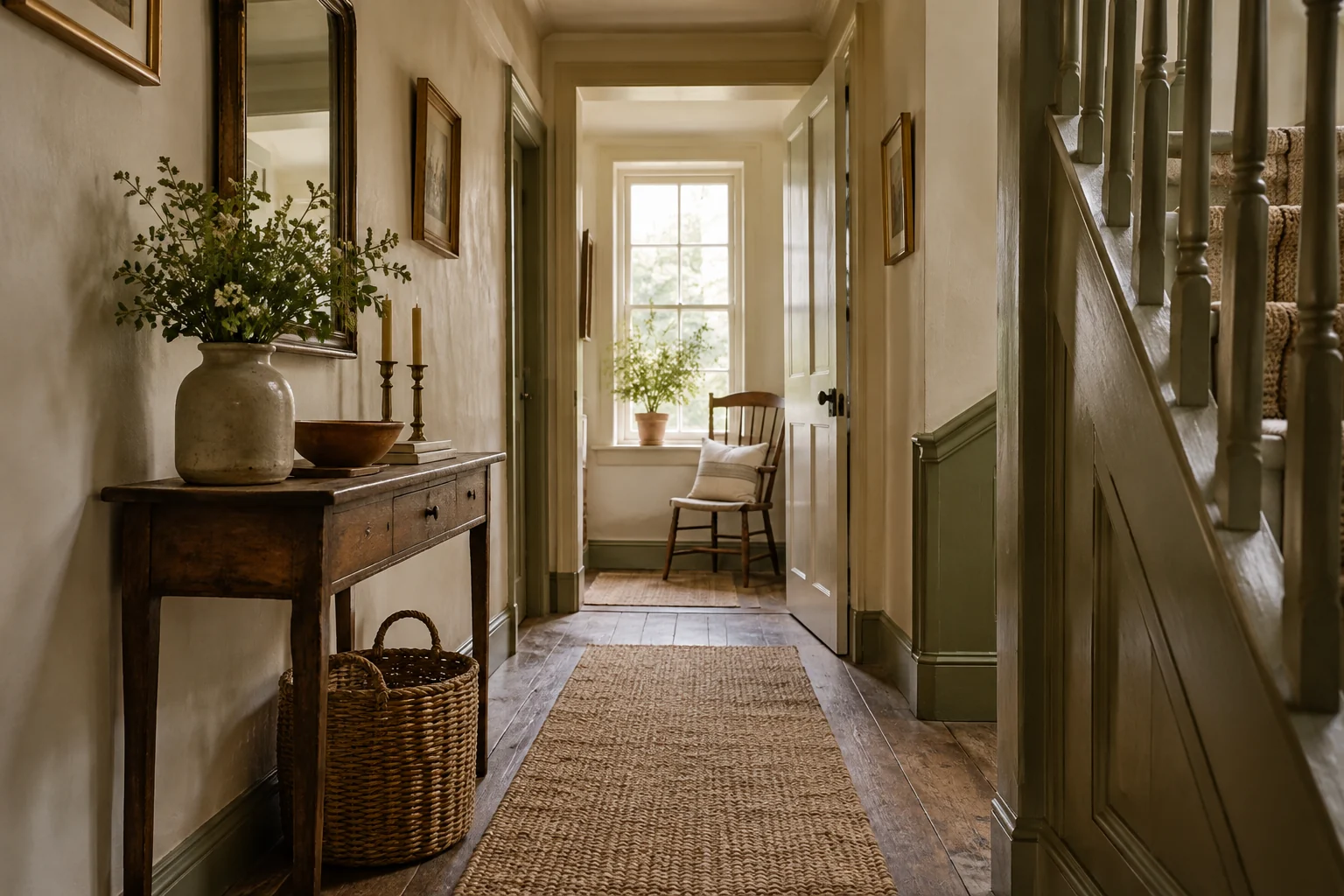
In a hall, a few extra centimetres can have an outsized effect. Measure the narrowest part of the route, including handles, a radiator or any door that opens into it. Then mark the console's depth on the floor. Walk past carrying a shopping bag or wearing a coat, rather than judging the clearance while standing still.
Look for projecting corners and curved fronts in the dimensions. A listing may give the depth at the centre without showing how legs or mouldings extend beyond it. Ask for a side photograph and the maximum projection. A slightly wider, shallower piece may work better than a compact table with an unexpectedly deep body.
Decide what happens above it
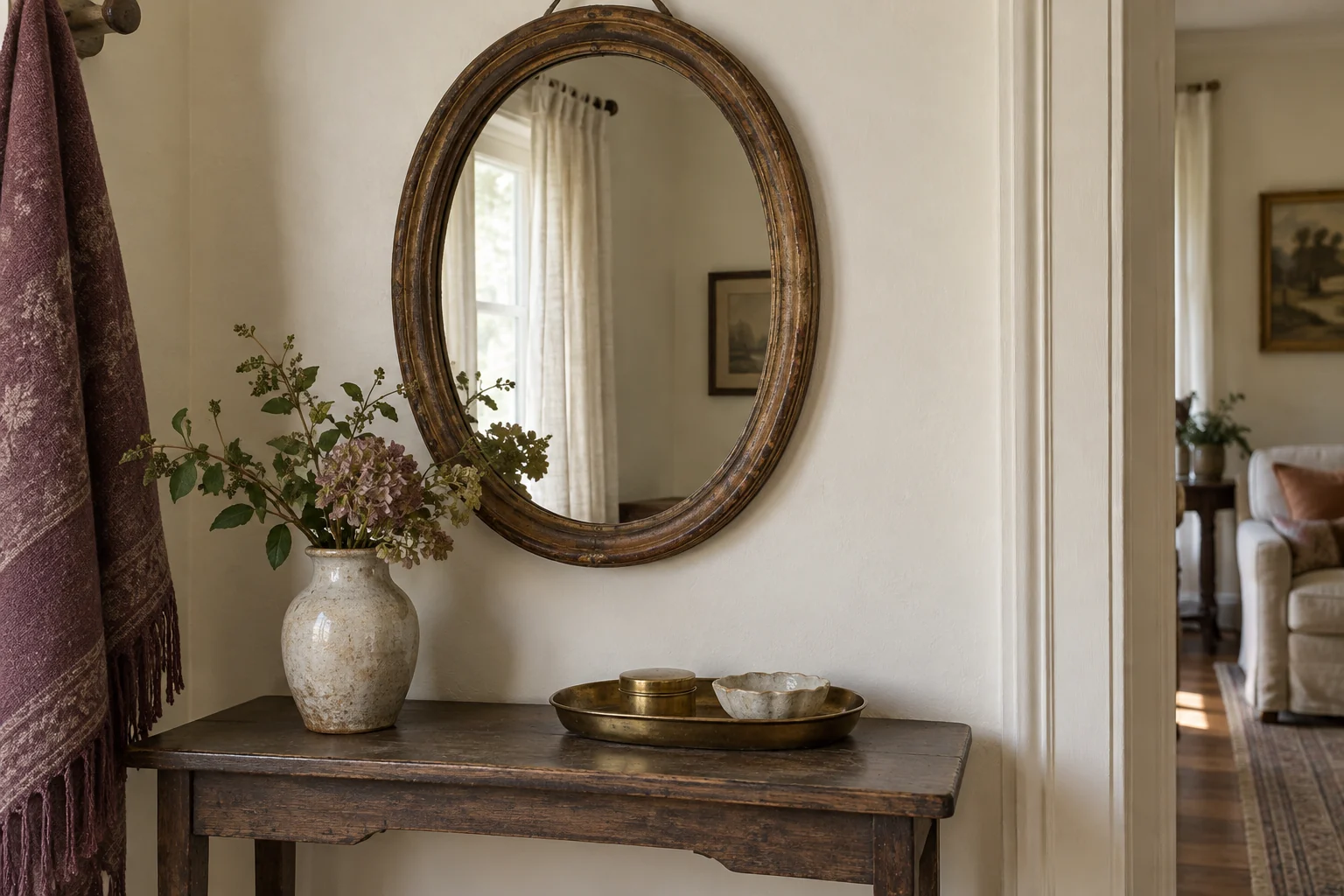
A mirror is useful when it is placed for the people using it, rather than centred automatically over the table. Check the reflected view. You may prefer to see a doorway or a patch of daylight instead of the coat rack opposite. Artwork can be equally effective if the hall already has a practical mirror elsewhere.
Plan any lamp before committing to the arrangement. The cable should reach an accessible socket without crossing the walking route. In a very small hall, a wall light may preserve more of the useful tabletop, but electrical installation needs appropriate planning. Do not buy a table around an imagined lighting arrangement that cannot be achieved conveniently.
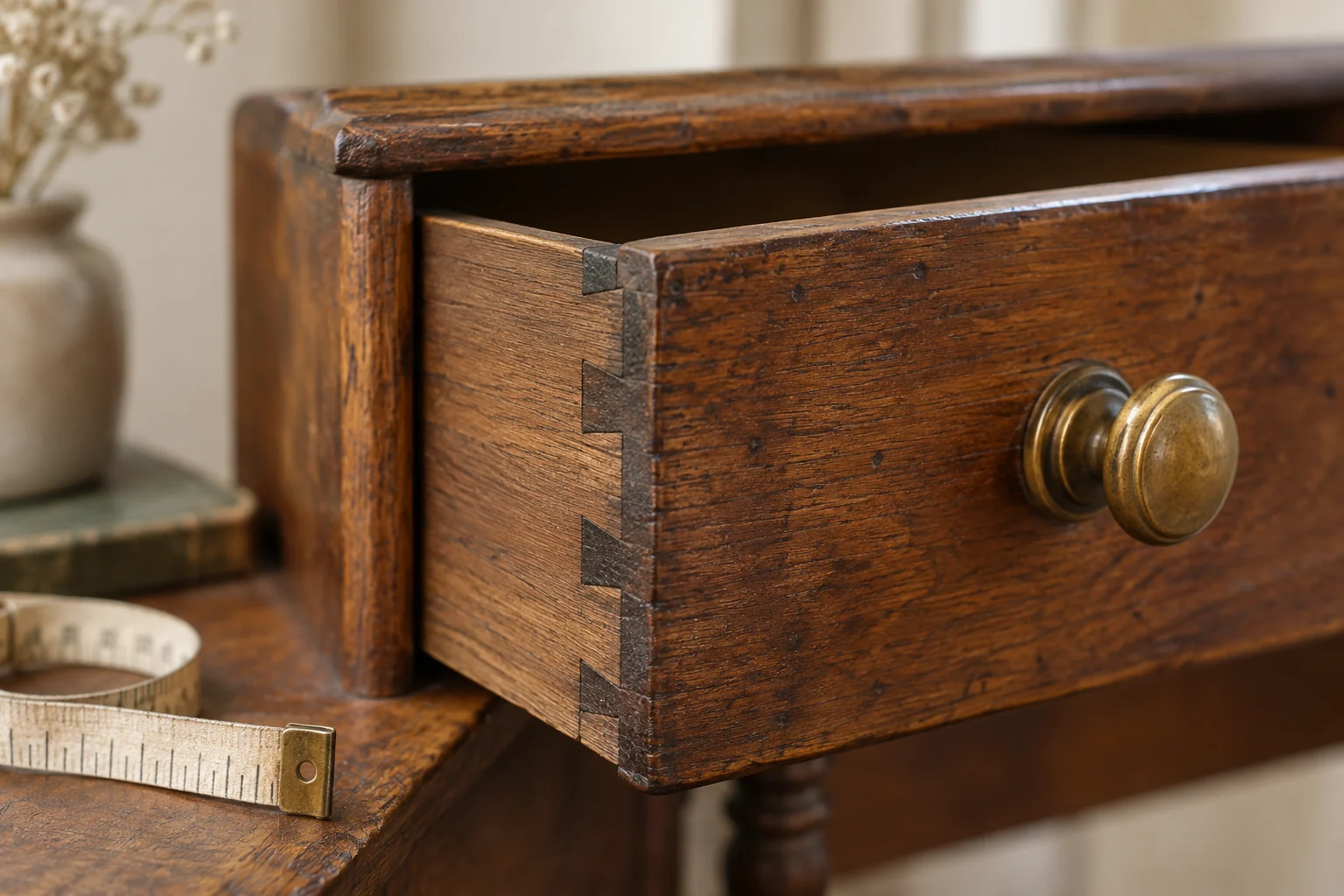
A shallow drawer is useful only if its contents are accessible. At a viewing, imagine reaching inside while holding a bag, rather than standing directly in front with both hands free.
Let the finish suit its use
A hall table receives bags, keys and objects put down in a hurry. Choose an existing surface you can live with and protect appropriately. If every new mark will upset you, a delicate piece may be better placed in a quieter room. A small removable tray can gather keys while keeping the rest of the top available.
Inspect drawers, legs and any wall-fixing requirements before purchase. Very narrow furniture deserves particular attention to stability. Once installed, leave it relatively spare for a week and see what accumulates. The objects that repeatedly appear will tell you more about its proper arrangement than a styled photograph. A good hall console becomes almost unremarkable in use: you arrive, put things down, find them again and move comfortably into the house.
Keep footwear storage separate if it threatens to block the open area underneath. A clear floor beneath a narrow table can be what makes the whole entrance feel less crowded.