Measure the space inside
A bed described as a double may still require more information before you can choose a mattress. Listings sometimes use familiar size names loosely, and older or imported frames may not match the dimensions you expect. Ask for the clear internal length and width, measured at the points where the mattress and its support will actually sit.
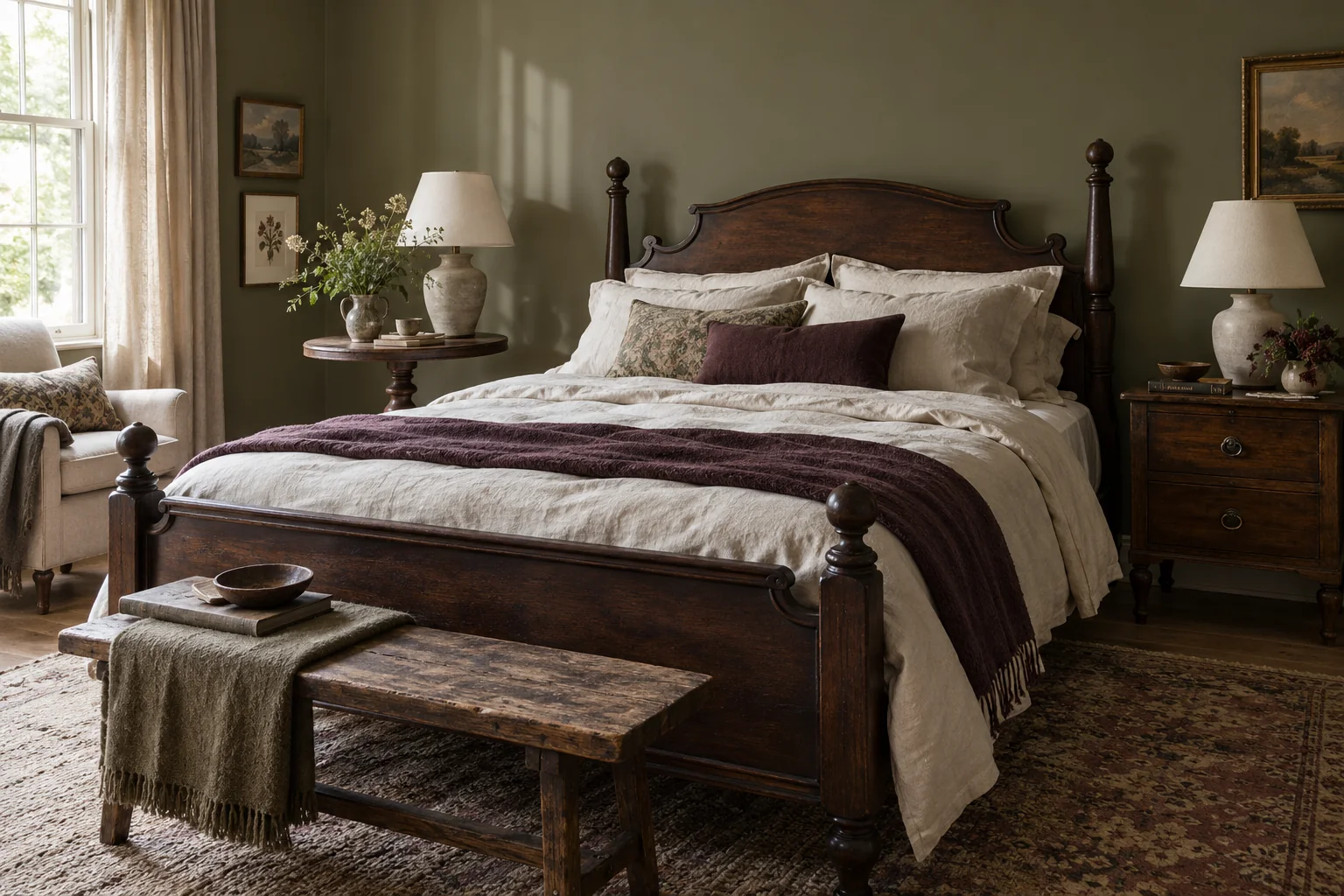
Request the external dimensions as well. Curved ends, projecting posts and substantial side rails can make the frame occupy much more space than its sleeping surface suggests. Draw the full outline in the bedroom and include the route around the foot. A beautiful footboard feels less appealing when you brush against it every time you open the wardrobe.
Understand what supports the mattress
Clarify exactly what is included: headboard, footboard, side rails, slats, platform or other support. A photograph with bedding in place may hide missing components. Ask the seller to show the assembled frame without the mattress, including connections and the middle of the support system. Missing hardware is a question to resolve before purchase, rather than after delivery.
Check compatibility with the mattress manufacturer's requirements. Different mattresses have different support needs, so a frame that once held one comfortably is not proof that it suits another. If new supports are needed, obtain advice and a quotation from a competent professional. Do not improvise a load-bearing arrangement simply to make an attractive frame usable quickly.
Ask whether the photographed mattress belongs to the sale or was borrowed for presentation. Its presence can otherwise create a misleading impression of what will arrive.
Consider the height from both sides
The finished sleeping height depends on the frame, its support and the mattress together. Add those measurements rather than judging the bare frame. A deep mattress can hide a decorative headboard or make the footboard appear unexpectedly low. It may also change how comfortable it is to get into and out of bed.
Think about bedside furniture at the same time. A lamp and glass of water should sit at a useful height relative to the finished bed. If you already own bedside tables, include them in the measurement exercise. Choosing each piece independently can produce a bedroom full of attractive objects that do not work comfortably together.
Ask about assembly and access
Find out how the bed separates and whether the seller has instructions, photographs or labelled hardware. Small fittings can be difficult to replace accurately. Confirm that the complete frame is included and that the delivery team understands the assembly requirements. If assembly is not part of their service, arrange someone appropriate before the pieces arrive.
Inspect finishes and edges with the intended use in mind, particularly on painted metal or timber with unknown coatings. Do not begin sanding an unidentified old finish as a routine first step. Ask for specialist advice where condition or materials raise questions. The purchase should end with a bed that fits the mattress, the room and your daily routine; an evocative shape is a pleasure only when those ordinary requirements have been met.
Keep copies of the seller's measurements and photographs with the purchase details. They provide a useful reference if a replacement mattress or a future move raises the same questions again.