Begin with the books
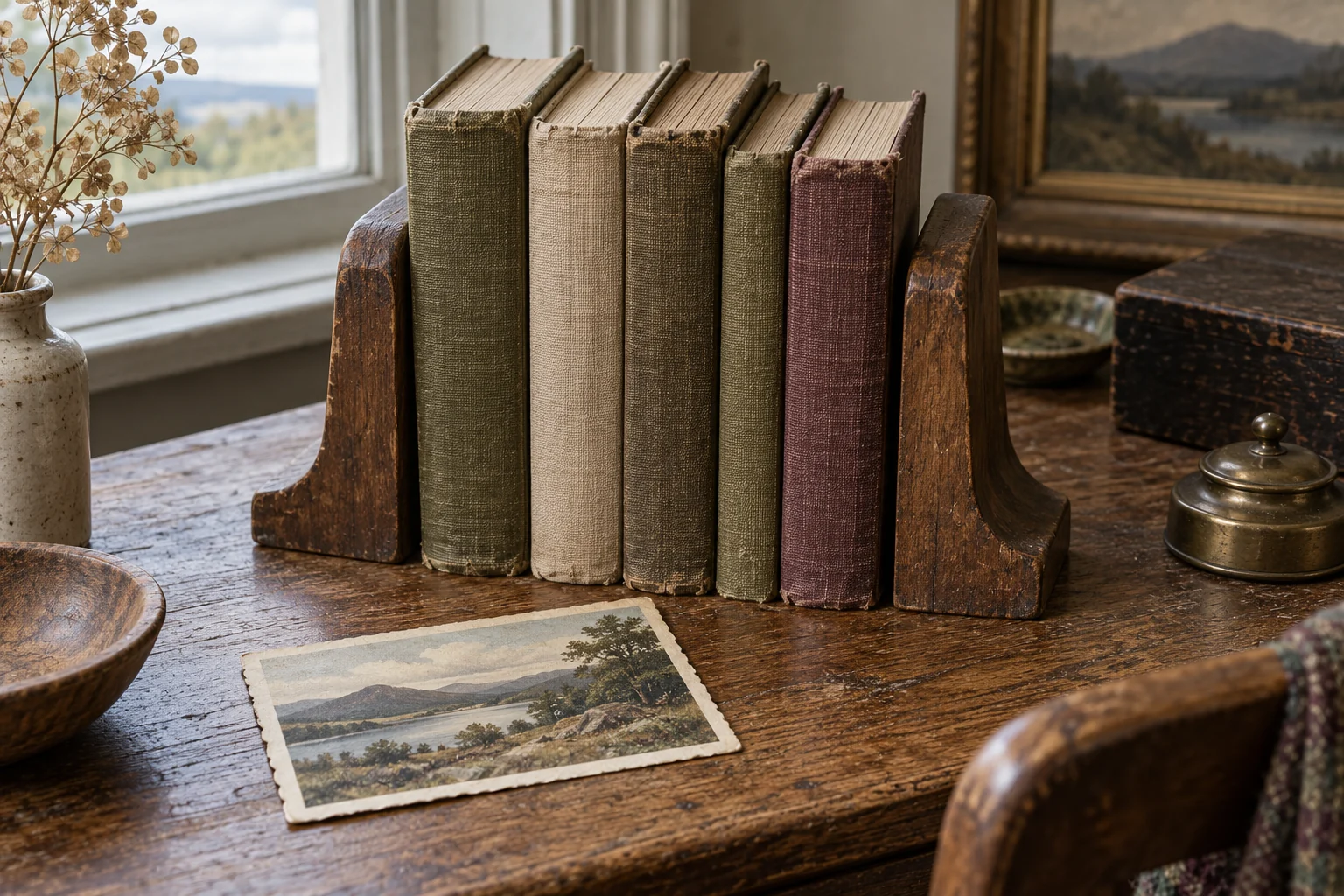
A pair of carved animals might be irresistible on a stall, but the books at home get a vote. Tall hardbacks, lightweight paperbacks and oversized art books make different demands on a support. Measure the height and depth of the intended row before deciding that a decorative pair will do the job.
Consider whether the bookends need to bear any meaningful sideways pressure. On a partly filled shelf, they may be holding a long row upright. At the end of an already supported cabinet, their role might be mostly visual. Describing the intended job clearly prevents you from asking a small ornament to behave like a substantial library fitting.
Inspect the useful surfaces
Look at the base, the face that meets the books and any part that extends underneath them. Sharp edges, grit, damaged coatings or unstable pads can cause trouble. Ask the seller about loose components and previous repairs. A handsome front tells you little about whether the object sits flat.
Do not assume weight alone guarantees stability. A heavy piece with a tiny base can still tip, and a polished underside may slide on a smooth shelf. Test the support gently on a suitable surface with permission. If a vintage pair cannot safely support your books, it may be better displayed elsewhere while discreet modern bookends handle the actual work.
Look at the pair together
Matching pairs are not always identical in every detail, but conspicuous differences deserve a question. Compare size, finish and orientation. One animal facing outwards while the other looks inwards may be intentional; it may also indicate two unrelated pieces. The seller should describe what is known rather than relying on the word pair.
An unmatched arrangement can be more interesting than a perfectly symmetrical one. You might use one decorative bookend at the visible end of a row and a practical support hidden at the other. This works particularly well on shelves where symmetry would compete with the rest of the room. Choose the arrangement for its usefulness and appearance, not an imagined rule.
Keep old books comfortable
Books should not be wedged into a tight row simply to stop them leaning. The Canadian Conservation Institute recommends upright support with room to remove volumes, while larger books may need flat storage. A good display lets someone take out the book they want without dragging it against metal or forcing a neighbouring spine.
Leave delicate bindings away from a decorative surface that could rub them. If the books are significant or damaged, get advice about suitable housing instead of adapting them to a styling idea. The shelf should serve the books as well as the objects. It is perfectly acceptable for practical supports to be visible when they are doing a necessary job.
Let the shape finish the shelf
Bookends can give a row a clear beginning and end. A low rounded pair softens a shelf dominated by rectangular spines, while angular examples add structure to looser arrangements. Try them without additional ornaments first. Their outline may provide all the detail that space needs.
If the pair feels too formal, divide it between two shelves or rooms, provided each piece remains stable in its new role. Keep any identifying marks and the seller's description in your records. Decorative objects that work well often earn their place quietly: you notice the pleasing shape, but you also stop worrying about the books slipping sideways whenever one is removed.