The sofa has a daily job
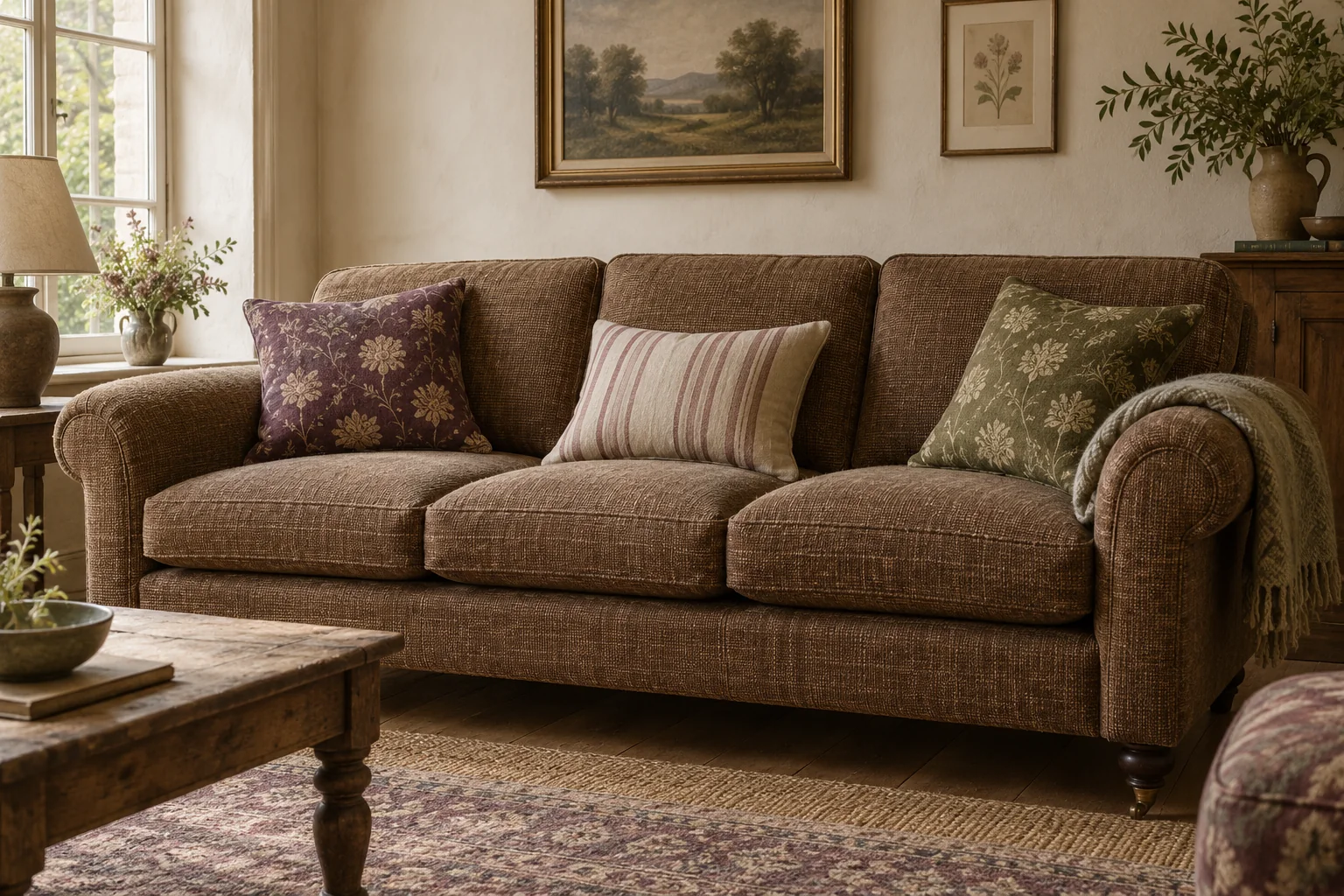
A sofa often carries more expectations than any other piece in a sitting room. It may need to support conversation, reading, television, occasional naps and several people sharing the same space. Begin with the activities that matter most to you. A low, deep sofa can look relaxed while proving awkward for someone who prefers to sit upright.
Try the actual piece wherever possible. Sit in more than one position and notice whether the cushions respond evenly. Check how comfortably you stand up again. A short visit cannot predict every evening at home, but it offers much more information than an attractive front view with carefully arranged pillows.
Measure the usable seat
Overall width can be misleading when broad arms occupy a large proportion of it. Ask for the clear seating width, seat depth and height as well as the external dimensions. Compare them with a sofa you know. That reference makes it easier to recognise what a difference of a few centimetres might mean in use.
Decide how many people will regularly share it and whether the cushion arrangement suits that number. A two-cushion sofa may create an obvious division even when its total width suggests room for three. The issue is not a rule about cushion numbers; it is how the specific design encourages people to sit.
Understand the upholstery work
Ask what is known about the frame, support system, filling and cover. If the sofa has been refurbished, request a description of the work and any available documentation. A new fabric does not establish that everything underneath was renewed. If condition is uncertain, have a competent upholsterer assess it before you commit.
Obtain a quotation before buying a sofa intended for reupholstery. Include collection and return transport, fabric requirements and any work that can only be confirmed after opening the upholstery. Discuss suitability for domestic use and relevant requirements with the professional doing the work. A beautiful frame may still make sense, but it should do so within a realistic total budget.
Think about pets, visitors and ordinary spills when choosing the upholstery plan. Ask the upholsterer about fabric suitability and care, using your actual habits rather than an ideal version of the room.
Solve delivery before decorating around it
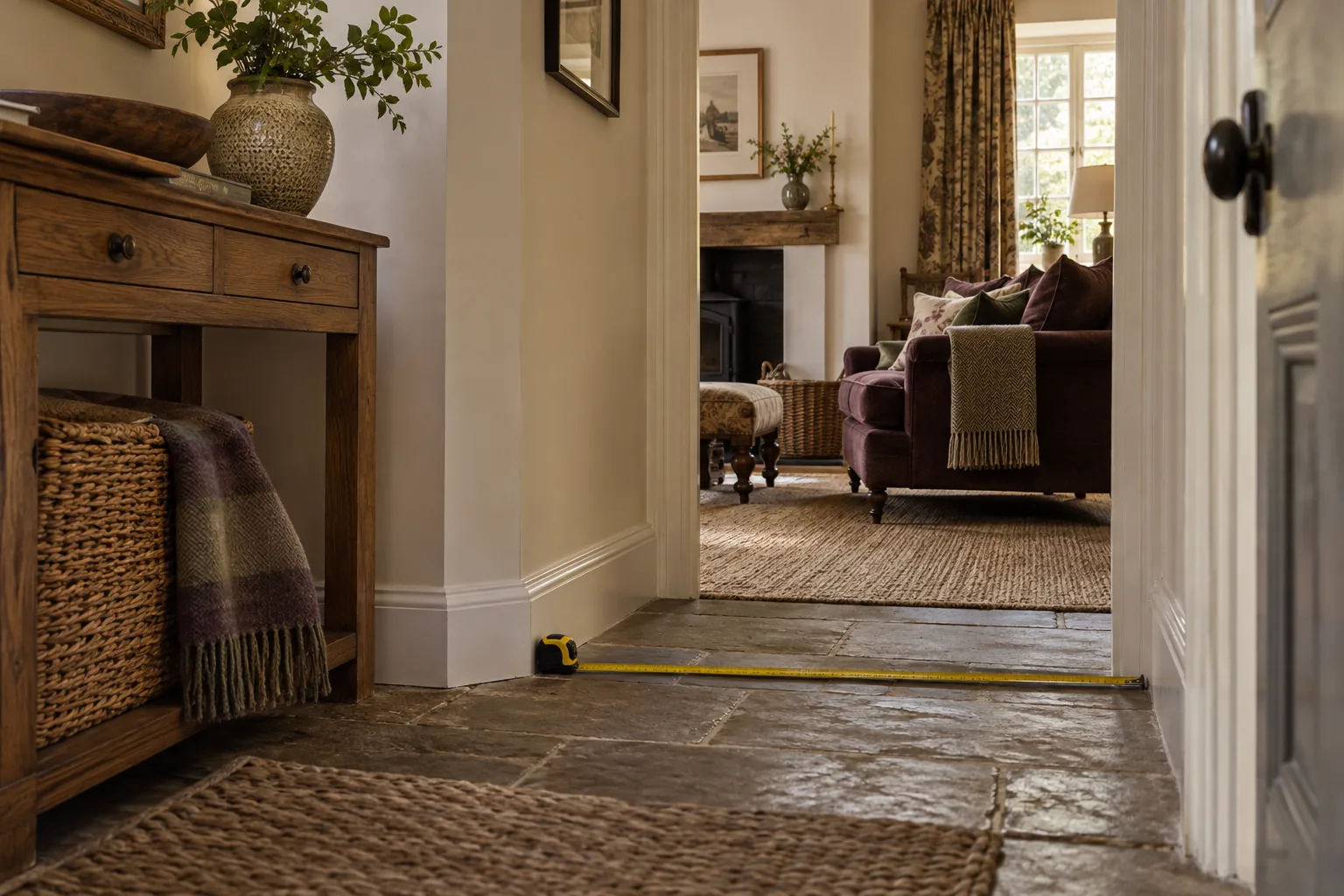
A sofa is particularly unforgiving of a tight access route because its arms and back often form a substantial fixed shape. Ask which parts, if any, can be removed safely and obtain dimensions for the resulting components. Do not assume that soft upholstery means the frame can squeeze through a narrow doorway.
Share photographs and measurements of doorways, turns, stairs and landings with the delivery company. A professional access assessment is worthwhile where clearance is doubtful. Confirm arrangements before paying for transport, especially if a failed delivery would leave you with storage or return costs.
Once the practical questions are answered, consider the room's visual balance. A strongly shaped sofa can sit well with modest side tables and a plain rug. You do not need to repeat its period throughout the room. Choose colours and textures you enjoy, then let the sofa become part of daily life. The successful purchase is the one that still feels right after the cushions have shifted and the photograph has long been forgotten.