Picture the chairs in use
A dining nook is easy to measure when its chairs are tucked away. The useful test comes when people pull them out, sit down and walk behind one another. Mark out the table's footprint, then allow for the movement around it before deciding on a piece. A vintage table can bring considerable warmth to a plain corner, but a generous top is not helpful if every meal involves shuffling furniture. Start with the number of people who eat there most days, rather than the largest gathering you might occasionally host.
Choose a shape that suits the corner
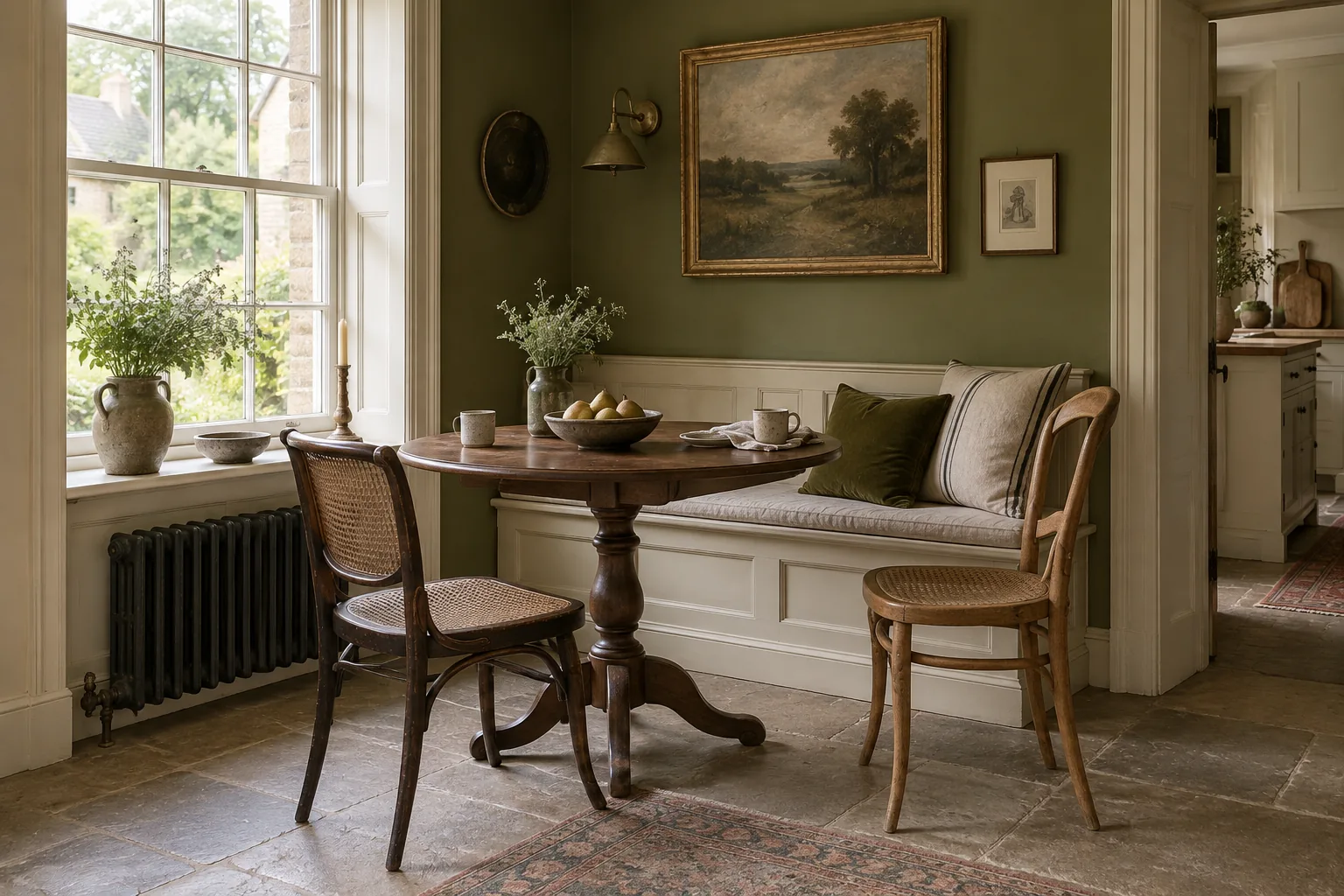
A round table has no projecting corners and can feel sociable in an open nook. A rectangular table may make better use of a long wall, while a square one can suit a compact, clearly defined area. Look underneath as well as at the top: legs and stretchers affect where knees and chairs can go. Pedestal bases vary in how much foot space they offer. There is no universally correct shape. The right choice is the one that supports comfortable seating and leaves a sensible route through the room.
Mix chairs with a common thread
Different chairs can make a dining nook feel accumulated over time, but a random assortment may look and feel unsettled. Try connecting them through timber tone, back height or a simple repeated cushion colour. Seat heights should work comfortably with the table, even when the chairs are visually different. Check that arms fit where you intend to push them in. Two matching chairs and two quieter companions can create enough variation without turning every seat into a separate focal point. Comfort should decide which ones remain in daily service.
Keep the wall nearby uncomplicated
The wall behind a small table is part of the arrangement, particularly when the nook sits within a larger kitchen or living room. One picture, a modest group of prints or a calm colour can give the space its own identity. Avoid making the background so busy that the table feels crowded before anything is put on it. Consider the view from a seated position, including whether a mirror reflects something you want to see during a meal. The wall should support the nook, not compete with everything happening across the tabletop.
Leave a place for the things that accumulate
Dining tables often become temporary homes for post, laptops and unfinished tasks. Rather than expecting constant tidiness, decide where those things move when it is time to eat. A nearby basket for current papers or a clear shelf for a laptop makes resetting the table easier. Keep decorative arrangements easy to lift in one movement: a small tray or a single vase is simpler than a complicated centrepiece. The table can have a life between meals, provided its other uses do not make sitting down together unnecessarily laborious.
Make ordinary meals look inviting
You do not need a full set of special tableware to make the nook pleasant. A cloth or a pair of mats can soften the surface, while everyday plates in related colours give the setting a quiet rhythm. Let the table's own grain and marks remain visible when you enjoy them. Check any older tableware for suitability before using it with food; decorative appeal alone does not establish that. Once the essentials work, stop adding. A comfortable chair, a clear surface and a room to look into are already a good beginning for supper.