Notice what the room needs now
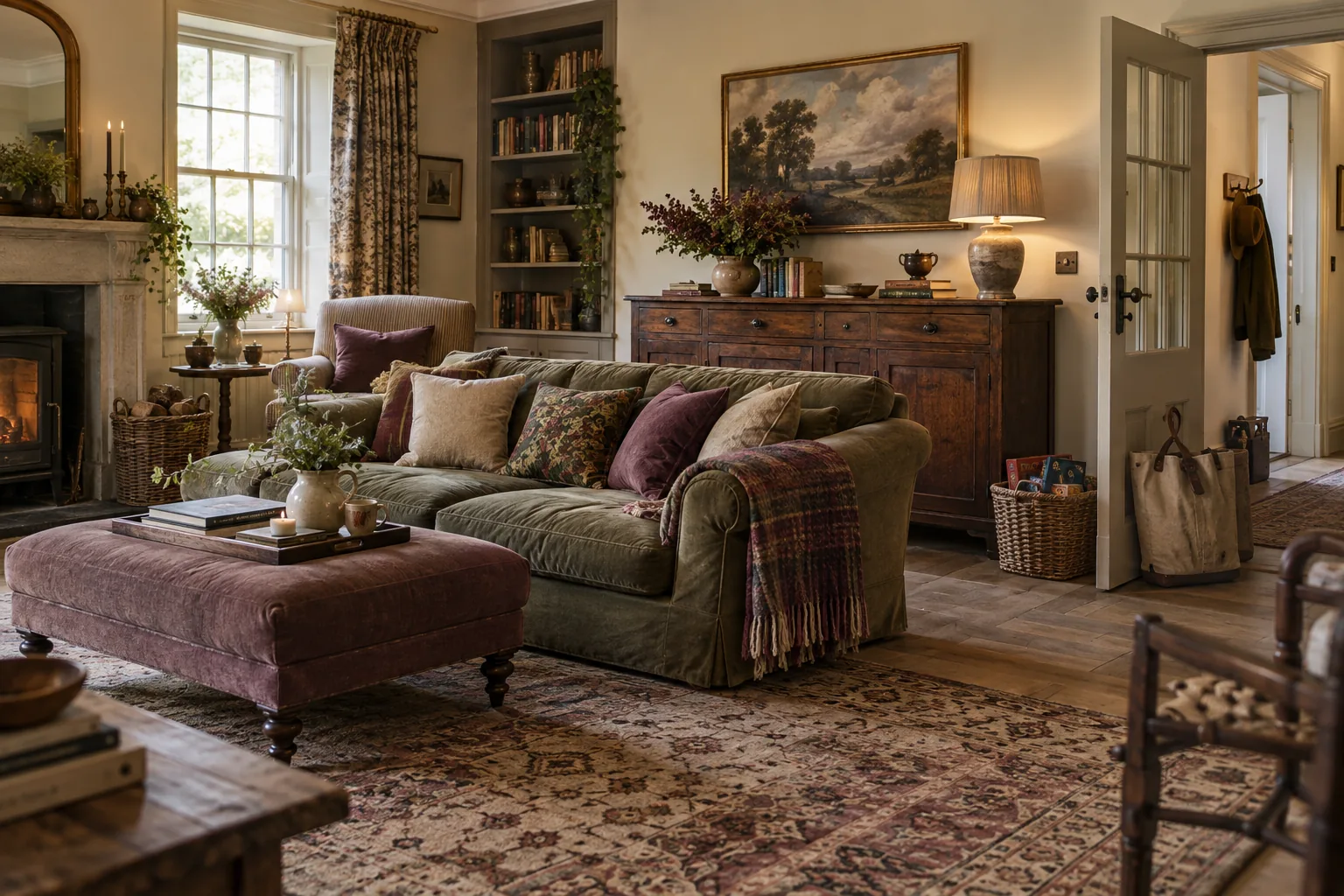
Seasonal decorating can begin with a practical observation rather than a theme. Perhaps the afternoon light has changed, a favourite chair now feels chilly or the room seems crowded when you spend more evenings indoors. These changes suggest useful adjustments. You may need an extra throw, a clearer window area or a more inviting place to sit.
There is no requirement to introduce a new palette each season. A room with older furniture often benefits from continuity, with smaller changes allowing familiar pieces to feel different. Start by looking at how the space is used at this time of year. The right seasonal change might be moving a chair a little closer to a useful light rather than adding a collection of decorative objects.
Change the weight of the textiles
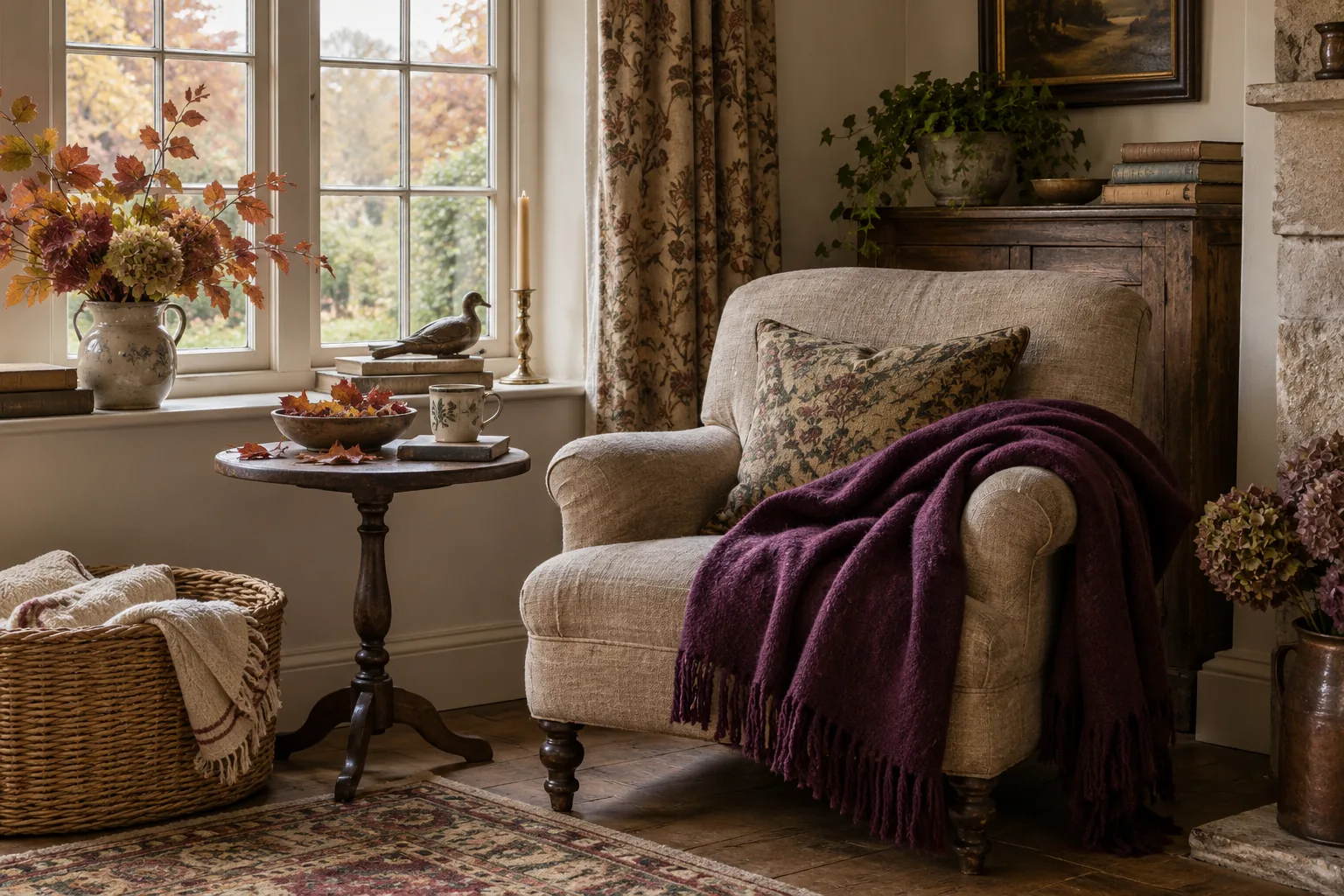
Texture can alter a room's atmosphere without replacing its colours. A heavier woven throw may feel welcome in cooler months, while a lighter covering leaves the same chair looking less enveloped. Reduce or increase layers according to comfort, and store unused textiles cleanly and appropriately for their materials.
Keep delicate older fabrics away from unsuitable conditions and demanding daily use. If you rotate a vintage textile into a display, consider light exposure, support and condition as well as its seasonal colour. Ordinary washable pieces can carry much of the practical work. The distinction allows a treasured cloth to be enjoyed where it is safe while the blanket used every evening remains easy to look after.
When storing layers, label the container with what is inside and check that everything is fully dry. This makes the next change easier and prevents a favourite cover from disappearing beneath unrelated household items until the season has already passed.
Refresh one display rather than every surface
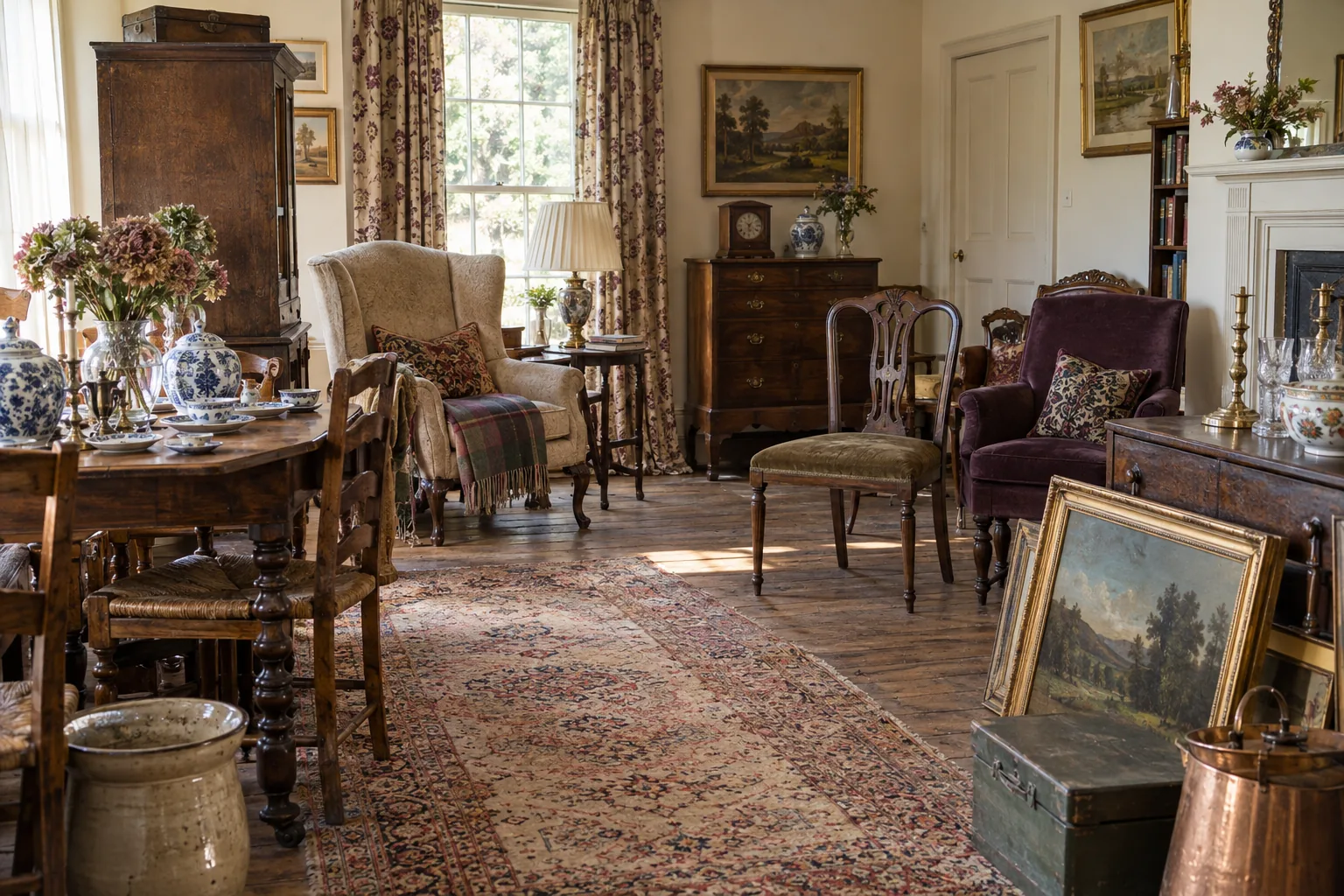
Choose a single shelf, mantel or tabletop for a small change. Bring out an object that has been stored away, replace one picture with another suitable piece or simplify an arrangement that has become too dense. A change is easier to appreciate when the rest of the room remains familiar.
Natural materials can be attractive, but consider moisture, shedding, pests and the surfaces they touch. Keep potentially damaging or unsuitable items away from valuable objects, heat sources and places accessible to children or pets. You do not need a seasonal arrangement on every ledge. One modest display, placed where you see it regularly, can make the room feel renewed without creating a large job of cleaning and storage later.
Return to the room's ordinary rhythm
After making a change, use the room normally for a few days. See whether the extra layer is helpful, whether the moved chair blocks a route and whether the display still leaves space for everyday belongings. Seasonal adjustments should make the room more comfortable, not demand a new set of rules for inhabiting it.
Keep a small record of combinations you enjoy if that helps, but allow future seasons to be different. Your needs may change, and a textile or object that once worked in a particular spot may find a better role elsewhere. A home can mark the passing year through gentle shifts in use and atmosphere. It does not need to announce the season with a complete decorative transformation every time the weather turns.