Choose the job before the clock
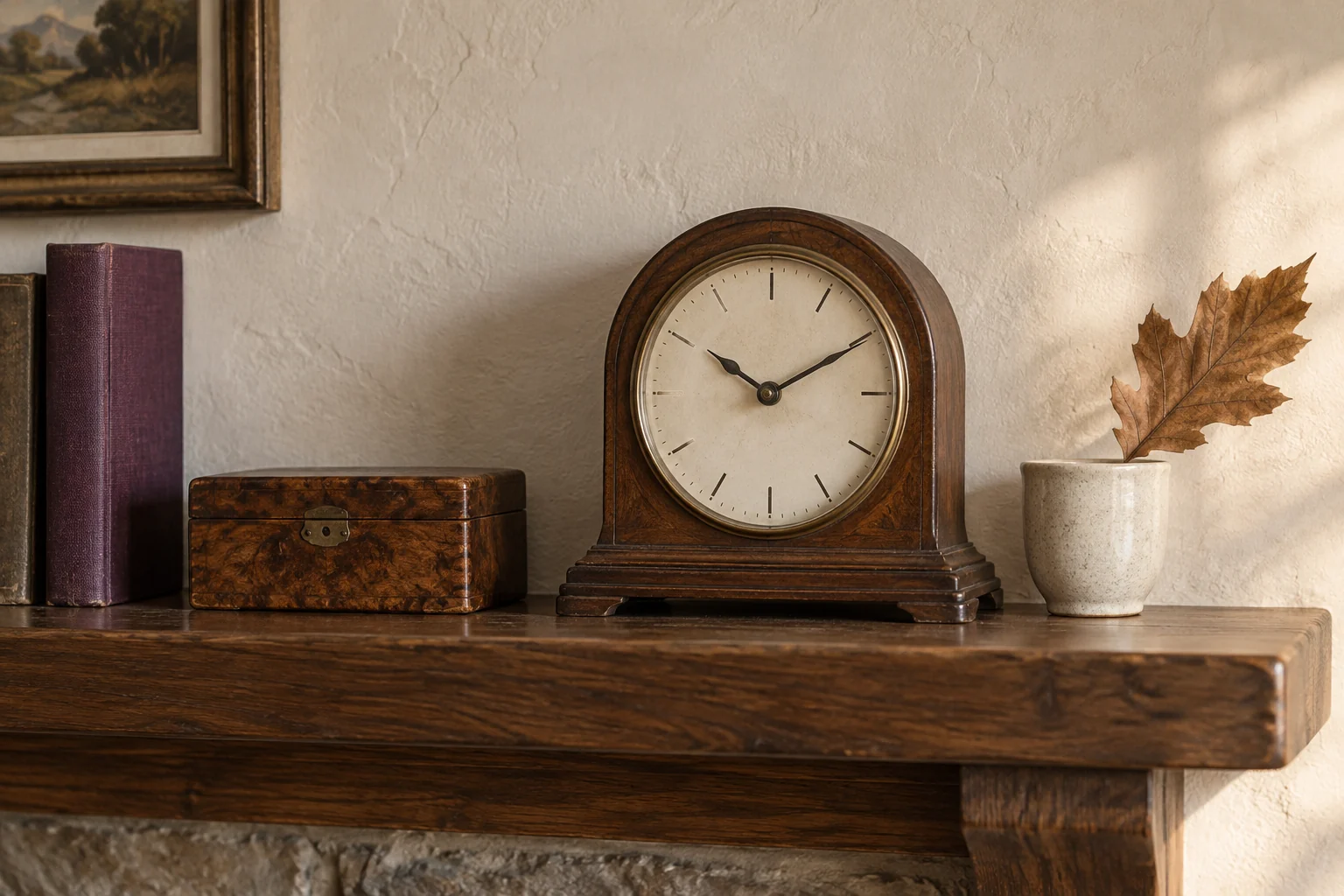
A clock has a strong visual presence even when its hands are still. Numerals, dial, case and feet create a compact composition that can anchor a shelf. If that is what appeals, you may be content with a clearly described non-working example. If you want dependable timekeeping, the purchase needs a different set of questions.
Ask whether the seller has observed it running, for how long and under what conditions. Working briefly does not establish accuracy or the absence of servicing needs. A statement that a clock only needs a simple adjustment is not the same as an assessment by a suitable specialist. Include possible professional costs before deciding that a low purchase price is attractive.
A repair project can be rewarding for someone with the right knowledge, but do not buy one by accident. Decide in advance whether you are willing to own a clock that remains still. That answer is often more useful than a hopeful description of what it might become.
Inspect the case and dial separately
Request a full front view, both sides and the rear. Look for missing parts, loose decoration, damaged glass and poorly described repairs. Ask whether keys, pendulums or other components are included where relevant. Do not assume that an object shown nearby in a photograph belongs to the clock.
Keep the dial and its markings undisturbed. Unknown old luminous paint is a reason to avoid opening, scraping or cleaning the dial and to seek specialist advice. Likewise, an old electric clock needs appropriate professional assessment before connection to power. Decorative appeal does not establish that a mechanism or electrical component is ready for use.
Record what the seller knows about replacements. A case, dial and movement may not all have the same history. That need not make the object unsuitable for your home, but the description should not promise originality without support. Buy with a clear understanding of what remains uncertain.
Give the dial a useful sightline
Place a clock where its face can be seen from a normal position in the room. A tiny dial high above a doorway may contribute shape without offering readable time. A large dark case on a narrow shelf can dominate everything around it. Try a paper outline before buying, including projecting feet or finials.
Leave enough space for safe access and any legitimate servicing needs. Do not trap the clock behind a row of delicate ornaments. If it will run, consider how its sound might affect a bedroom, workspace or adjoining room. Ask to hear it in person or request an ordinary recording, recognising that a phone cannot reproduce volume precisely.
Let it remain itself
A clock does not need a pair of matching candlesticks to look complete. A simple arrangement with one lower object can allow the case to carry the composition. If its dial has strong typography, keep nearby patterns quieter so the lettering remains legible.
Avoid winding, forcing or dismantling an unfamiliar mechanism to see what happens. Arrange specialist advice when needed and keep records of any work. If you choose a non-working example for display, say so plainly in your notes and any later sale. Its value to your room may lie in proportion and design, and that can be enough without inventing a promise of future performance.