Pause before cutting
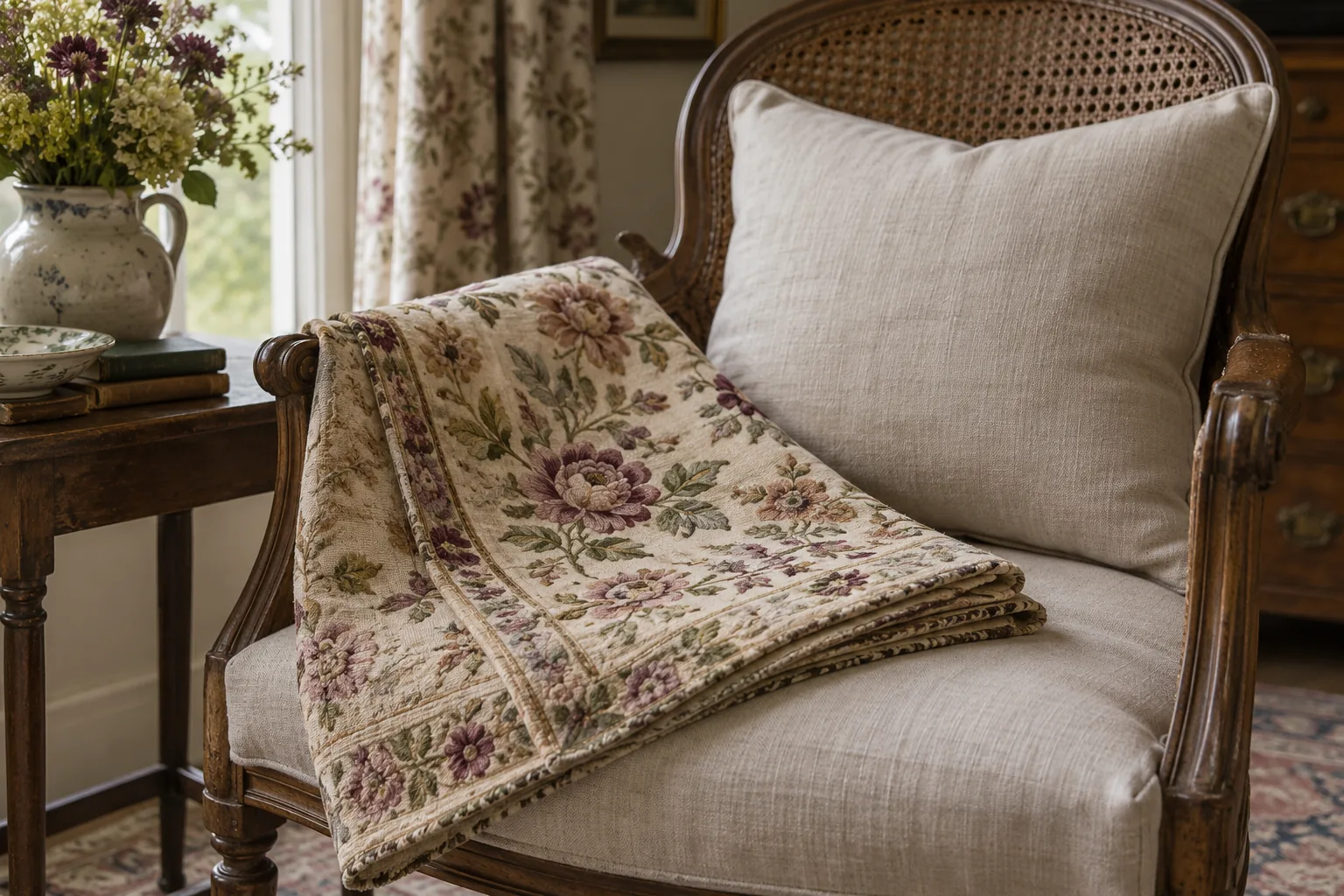
A fragment of old fabric can suggest a cushion immediately. The colour is right, the pattern would enliven a plain sofa, and the scale seems manageable. Before reaching for scissors, look at the whole piece. What appears to be spare material may include an intact border, a maker's label or evidence of its original construction.
Ask whether alteration would remove information or destroy a complete object that someone else could preserve. This matters especially for significant, rare or culturally important textiles. You do not need to make every old cloth into something useful. A suitable display mount, careful storage or simply choosing a different fabric may be the more satisfying decision.
Even an unremarkable fragment deserves an honest condition check. Look for thinning, broken threads, splitting and areas that seem much weaker than the rest. Do not pull at the fabric to test it. A textile that survives lying flat may not tolerate stuffing, seams and the repeated pressure of someone leaning against it.
Separate a display cushion from a working one
A cushion used every evening needs durability and practical care. A decorative cushion placed on an occasional chair has different demands, though it still needs protection from accidental use. Be realistic about the room. If children, pets or visitors regularly sit there, a fragile textile is unlikely to remain an untouched display object.
When buying an already converted cushion, ask what is old and what is new, how the front has been supported, and what care instructions apply. Check dimensions and fastening details rather than relying on a photograph of a plump insert. A removable cover is not automatically washable, and a fresh backing does not make a weak front stronger everywhere.
For a textile you wish to preserve, consult an appropriate specialist about support and mounting. The Canadian Conservation Institute's textile guidance emphasises the importance of physical support and the effects of light. A construction chosen solely for a neat appearance can still place strain on vulnerable areas.
Borrow the colours instead
You can take inspiration from a vintage textile without using it as upholstery. Choose a modern fabric that echoes one background colour, then display the old piece suitably elsewhere. This creates a relationship while allowing the sofa cushions to perform an ordinary, washable household job.
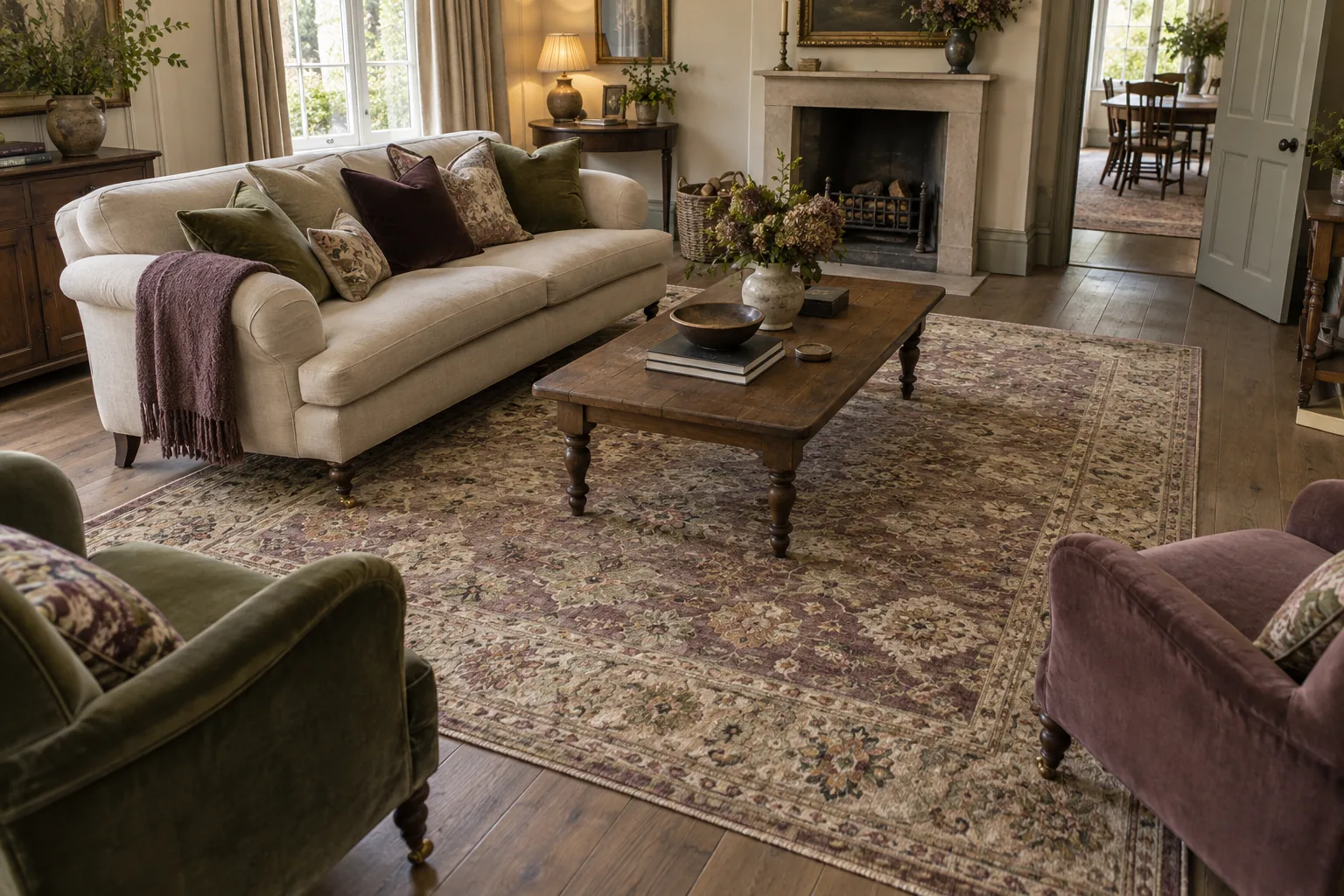
Avoid trying to repeat the entire pattern. One muted red, a broad stripe or a particular balance of light and dark may be enough. Put fabric samples in the room at different times of day. A design that looks delightful in isolation can become restless beside patterned curtains, a rug and several existing cushions.
If you do use a sound, appropriate fragment in a new object, document it before alteration. Photograph the complete material and record what is known about it. Be transparent when describing the finished cushion: an old textile combined with new components is a contemporary adaptation, not an untouched historical object.
Make the final arrangement comfortable
A successful sofa does not need every cushion to be a conversation piece. One patterned cover can sit amongst plain ones, with enough space left to sit comfortably. Vary size only where it improves comfort or reveals the pattern; a procession of decorative layers soon becomes something to remove before using the room.
Choose materials and uses that fit your habits. The most thoughtful way to appreciate an old textile may be to preserve it separately while letting a new cushion carry its colour into daily life. That gives the original object attention without asking it to withstand demands it can no longer meet.