Begin with a neutral question
A repaired object is not automatically a poor purchase. The relevance depends on the material, the work, the condition now and the use you intend. Ask what repairs or alterations are known rather than treating the question as an accusation. A seller may have carried out work, commissioned it or received information from a previous owner.
Keep those sources distinct. A documented professional repair provides different information from a recollection that someone once fixed a loose part. Neither should quietly become a more certain story in the listing or your own notes. You are trying to understand the available evidence and its limits, not obtain a complete biography that may no longer exist.
Locate the work on the object
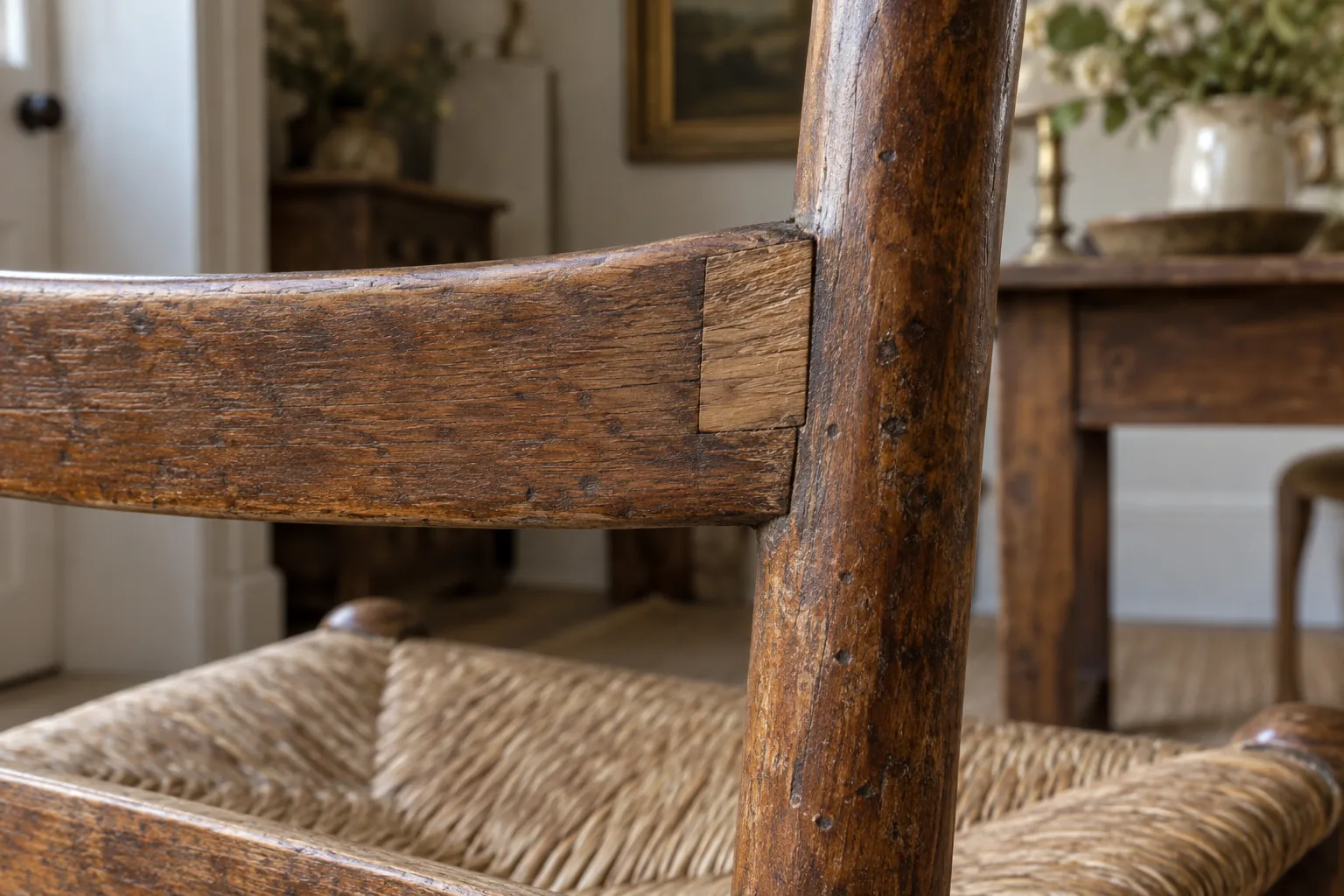
Ask which areas were affected and whether the repair is visible. Request photographs showing both the detail and its position within the whole piece. A close-up alone may make a small intervention seem dominant, while a distant photograph can hide a significant change.
Find out whether any parts were replaced and whether the original components remain available. The relevance varies with your priorities: appearance, historical interest and practical use may lead you to different conclusions. Do not assume that an old-looking replacement is original or that a neat surface tells you how the work was done underneath. If that distinction matters, it may require appropriate expert examination.
Ask what the repair was intended to solve
Understanding the original problem can be more useful than hearing only that a piece has been restored. Was the work cosmetic, intended to address movement or required because a part was missing? Ask whether the issue has reappeared or whether anything about present use remains limited.
Avoid asking the seller to give assurances beyond their knowledge. For structural, electrical or specialist material questions, seek the right professional assessment. A general statement that something feels solid does not replace an examination where safety matters. You can appreciate a well-presented piece while still recognising that the question you need answered falls outside a casual visual description.
Look for records, but allow honest gaps
An invoice, treatment note or photograph from before the work may help explain what was done. Ask whether such records exist and whether they can accompany the purchase. Read them for their actual content rather than assuming a professional name automatically guarantees every part of the object's present condition.
Many ordinary pieces will have no records of earlier work. That absence does not prove poor repair, but it limits what you can know. Decide whether the remaining uncertainty is acceptable for the intended role. A decorative object displayed securely and a chair used every day may require very different levels of confidence, even when both have an equally incomplete history.
Make the decision about the present piece
Once you understand what is known, return to the object in front of you. Does its current appearance please you? Is it suitable for the planned use, with any necessary assessment completed? Will further work be needed, and has that been included in the decision?
Keep the repair information with your purchase records, preserving qualifications and unknowns. If you later commission more work, add those details rather than replacing the earlier account. A repair history can become clearer over time without ever becoming complete. The aim is a purchase you understand well enough to use and care for appropriately, not an impossible promise that an older object has never been changed.