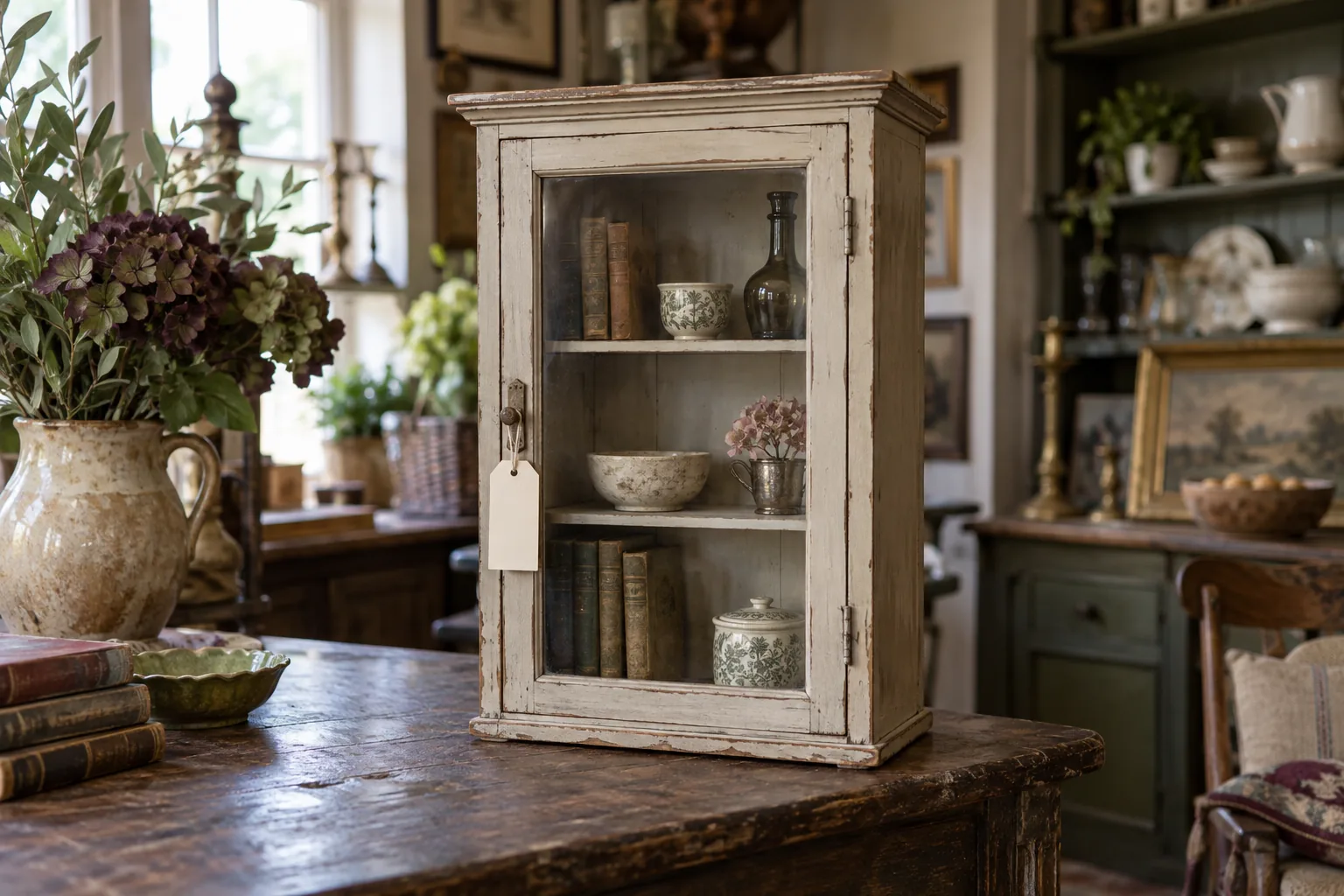
Notice the sentence you keep repeating
If you find yourself saying that a piece will work once you change the room, arrange several repairs or discover somewhere to store it, pause. Some purchases deserve that effort, but the effort should be part of a deliberate plan. It should not be a growing list of explanations invented to protect an initial attraction.
Write down the original reason you were looking. Does the object meet that need now, or has it quietly created a different project? A chair wanted for immediate use is not the same purchase as a chair requiring specialist assessment and substantial work. You can still choose the project, but make that choice openly instead of calling it the straightforward solution you first intended to find.
Treat essential missing information as missing
An unanswered question about a decorative detail may be acceptable; an unanswered question about a crucial dimension, condition issue or included component may not be. Decide which information you need before committing. If it remains unavailable, do not fill the gap with the answer you hope is true.
A seller may simply not know, and that does not require an accusation. You can acknowledge the uncertainty and decline. The practical effect is the same whether information is unavailable through incomplete history, limited access or a brief listing: you are being asked to decide without it. Your willingness to accept that uncertainty should reflect the object's intended use and the consequences of being wrong.
Listen to your ordinary preferences
Some faults are not technical problems at all. You may dislike the colour, find the proportions clumsy or know that a visible stain will bother you every time you pass. A compelling description or an apparently attractive price does not remove those responses. You will live with the object, not with the argument for why you ought to appreciate it.
Avoid relying on a future alteration to make every visual objection disappear. Changes can be costly, inappropriate for the piece or less successful than imagined. If you would not enjoy the item in its current state, be clear about the work required and whether you truly want it. Sometimes the simpler answer is to wait for a piece whose basic character already suits you.
Distinguish urgency from suitability
An object may sell to someone else while you think. That possibility is real, but it does not answer whether the purchase makes sense for you. A deadline can encourage prompt investigation; it should not replace the investigation. If the practical questions cannot be resolved in time, allowing the piece to go may be the most sensible outcome.
Be particularly cautious when the conversation leaves you feeling unable to ask ordinary questions or read the relevant terms. You need enough space to understand what you are agreeing to. You do not have to prove that the seller is behaving badly before deciding that the process is too rushed or unclear for your comfort.
Leave with a useful note
Record what attracted you and what prevented the purchase. Perhaps the cabinet had the right shape but too much depth, or the fabric was lovely while the underlying project was beyond your plans. These notes sharpen future searches and turn a declined purchase into useful knowledge.
Then let the decision end. Repeatedly checking whether the object has sold can make a sound choice feel like a missed opportunity. There will not necessarily be an identical piece, but your need can often be met in more than one way. Walking away leaves room, attention and resources for something you can choose with a clearer understanding of how it belongs in your home.