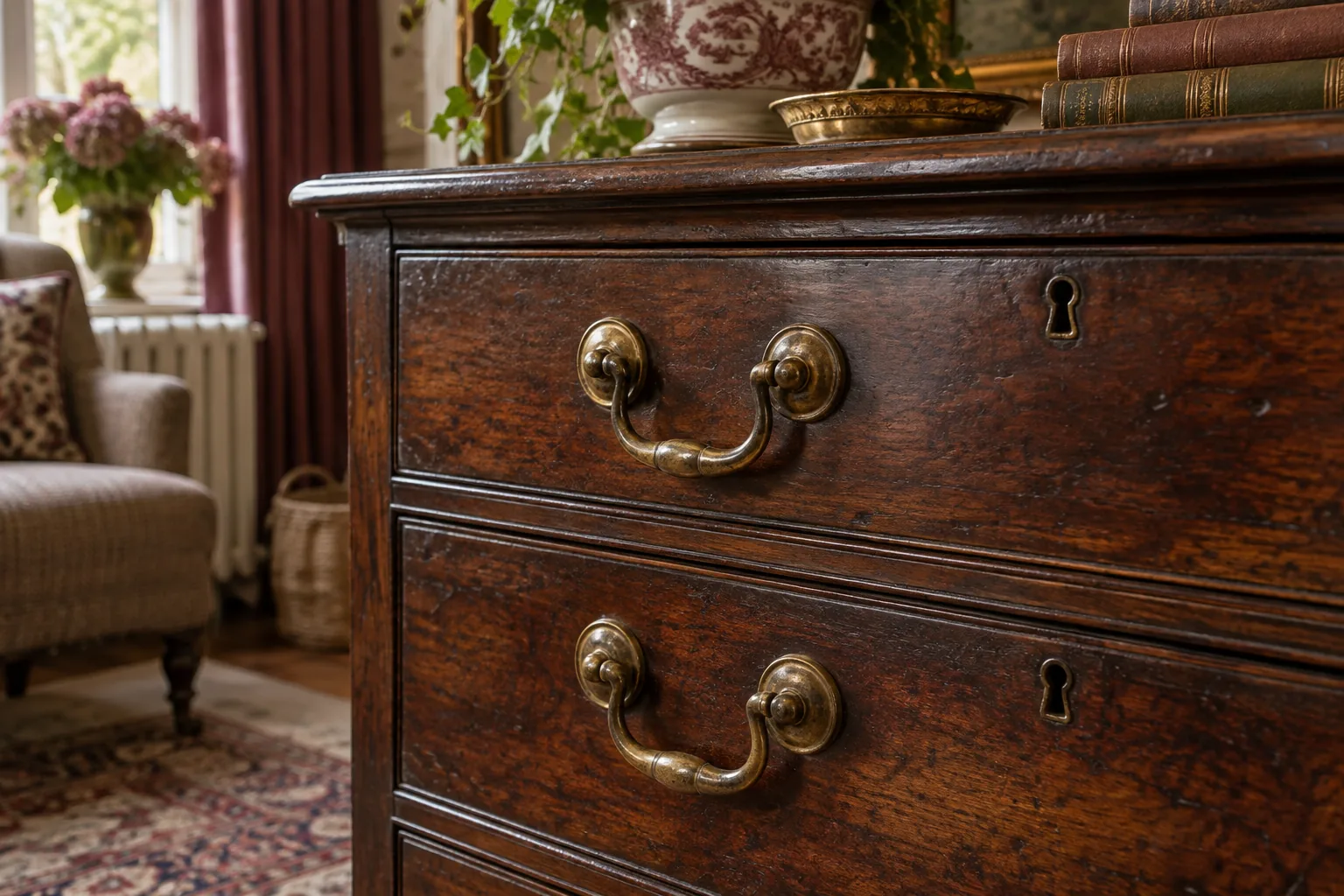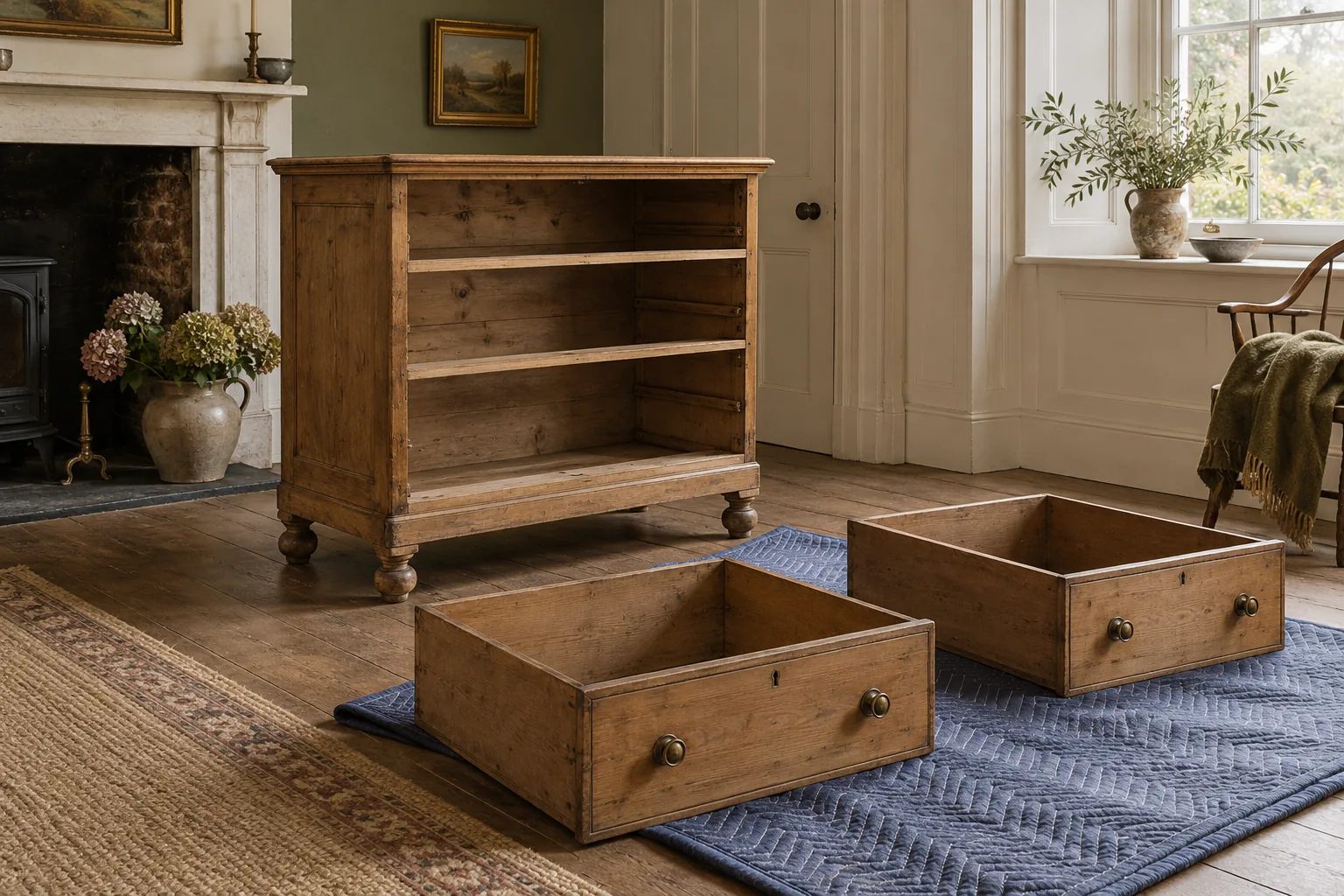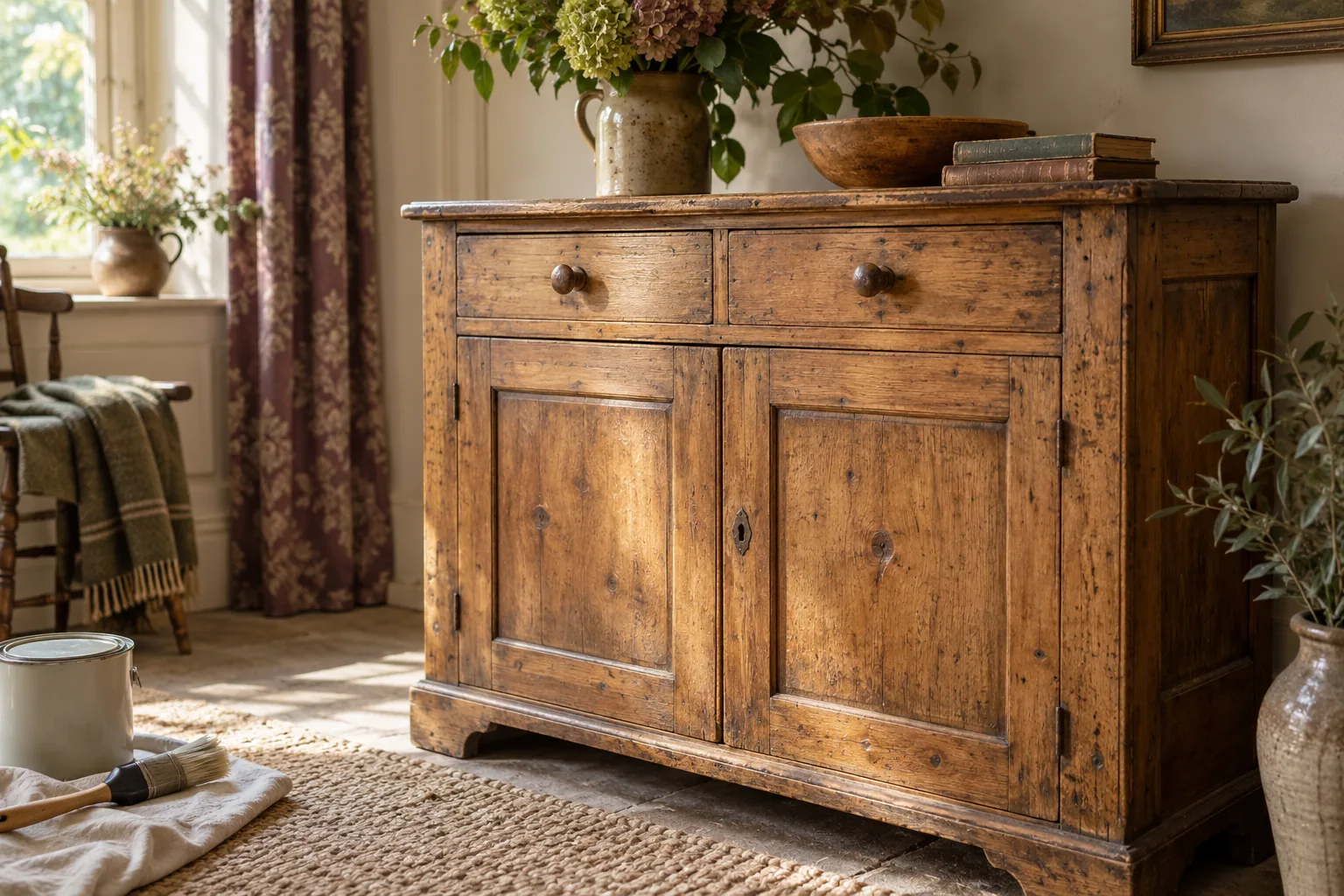
Name the problem paint is meant to solve
A cabinet may feel wrong in a room because its colour clashes with the floor, its handles dominate the front or its scale is awkward. Paint addresses only some of those problems. Before buying supplies, write down what you hope will improve. If the real issue is a deep cabinet blocking a narrow route, a different colour will leave the inconvenience intact.
Try the reversible changes first. Move the piece, alter nearby textiles or clear a crowded top. Photograph the new arrangement and live with it briefly. This is not a test of whether you are sufficiently devoted to old furniture. It is a way to find out whether a permanent surface change is actually necessary to enjoy the piece.
Find out what you already have
Look for documentation, maker information and evidence of previous work, without scraping or removing anything. If the cabinet may be significant or its surface is unusual, seek an informed assessment. You do not need to assume that every brown cupboard is precious; you do need more than an online trend to decide that its existing finish is disposable.
The Canadian Conservation Institute identifies original finishes as part of the historical and aesthetic value of furniture. That gives the decision a wider frame than colour alone. A surface may contain evidence of manufacture and use that cannot simply be recreated after removal. Ask what is known and what remains uncertain.
Do not begin with preparation
The phrase just preparing the surface can conceal the most consequential stage of a makeover. Sanding, stripping and aggressive cleaning may already alter or remove what you were trying to evaluate. Unknown coatings also call for appropriate material and safety advice. Do not start disturbing them while waiting to decide whether painting is a good idea.
If the surface is flaking, sticky or otherwise unstable, that is a condition problem to understand first. Covering it does not explain the cause or guarantee a sound result. A professional assessment can distinguish necessary treatment from cosmetic preference and help you understand whether the proposed work is suitable.
Compare more than the before-and-after image
Think about how the cabinet will look alongside its interior, back, hardware and worn areas. An online photograph often shows one front view in flattering light. Your experience will include opening the doors, seeing the edges and living with future wear. Consider whether you want the whole piece transformed or whether you are responding to a single image.
Cost the work honestly, including professional preparation where needed and any repairs. Compare that with using the cabinet in another room or finding a piece whose present finish suits you. Buying a different cabinet is not always the answer, but it should be part of the comparison if the proposed transformation becomes extensive.
Keep the decision with the furniture
If you proceed after appropriate advice, retain photographs of the earlier state and a record of the work and materials. This does not make an unsuitable intervention suitable, but it prevents future owners or repairers from having to guess what happened. Ask anyone doing the work to provide a clear description.
If you decide against painting, the process has still been useful. You may understand the cabinet better, have a more suitable place for it and know which details deserve care. There is no obligation to produce a dramatic transformation. Sometimes the best outcome is a piece you had nearly dismissed becoming comfortable in the room through smaller decisions around it.