Notice the whole front
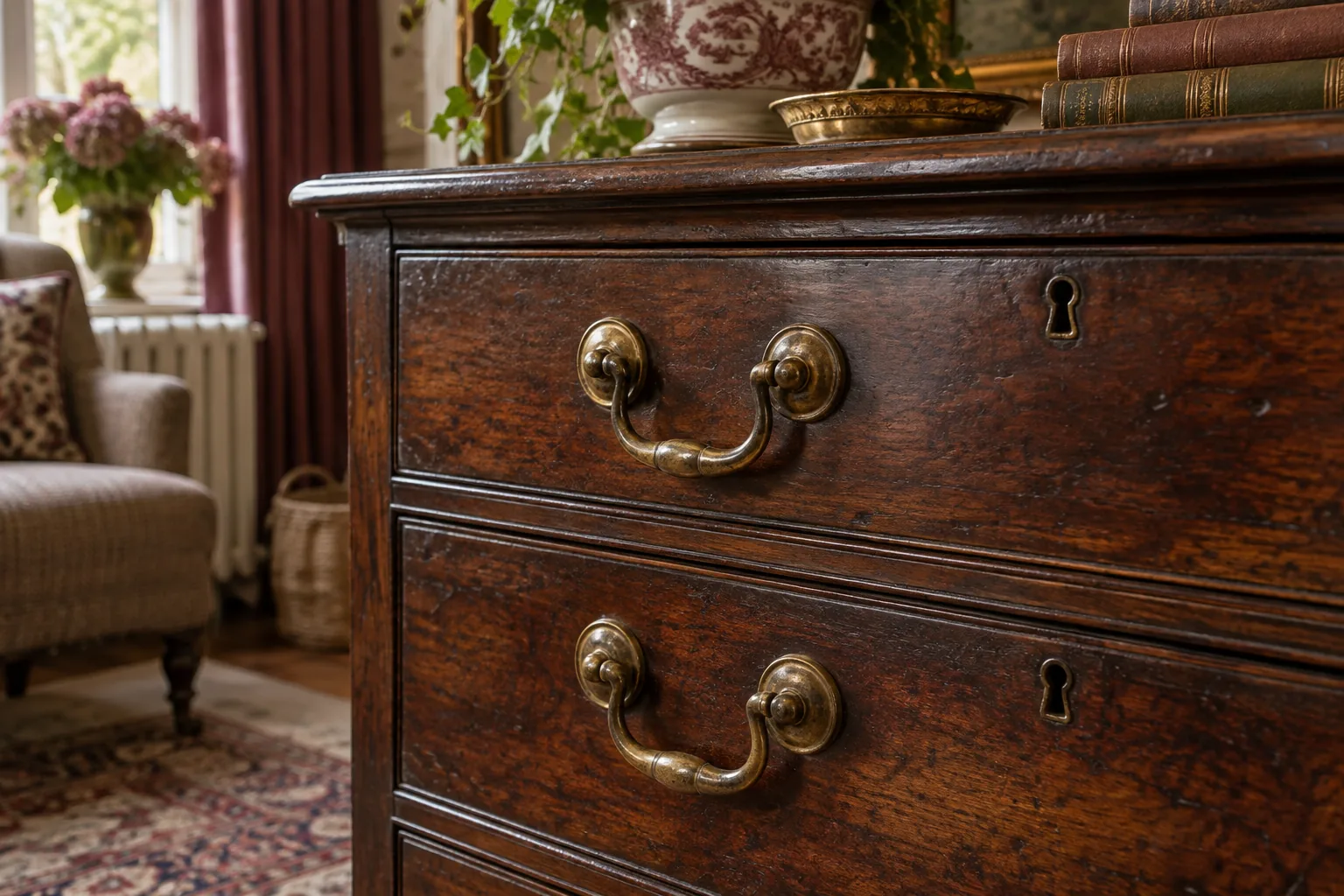
A pair of brightly polished handles can change the expression of an old chest as much as new paint. Before treating the metal, step back and look at it with the timber, drawer spacing and surrounding room. The quieter surface may be helping the piece feel coherent. A desire for cleanliness does not necessarily require a mirror finish.
Distinguish loose dirt from colour and wear. A fitting may be coated, plated, made from more than one material or altered by an earlier treatment. Appearance alone may not tell you which. Avoid choosing a polish simply because the handle looks approximately brass-coloured in daylight.
Keep identification separate from cleaning
The Canadian Conservation Institute's guidance on metal objects explains that metals and their surface conditions require different care decisions. Polishing can affect a surface rather than merely tidy it. For an unfamiliar or important fitting, identification and condition assessment should come before choosing a product.
Photograph the hardware in place and ask what the seller or previous owner knows. If the handles have already been replaced, that is useful context, but it does not automatically make aggressive treatment appropriate. The surrounding timber finish still needs consideration, as do any coatings on the fittings themselves.
Do not turn removal into an experiment
It can be tempting to unscrew every handle and spread the parts across the kitchen table. Old screws may resist, fittings may include small washers, and the connection may be less straightforward than expected. If you are unsure, leave the assembly intact and ask someone competent to assess it.
Where a professional removes components, ask for a record of their positions and keep related parts together. Two apparently identical handles may fit differently. A simple numbered photograph can preserve information that disappears once everything is mixed in a bowl. Do not mark original surfaces directly just to make reassembly easier.
Decide how much contrast you want
A useful aesthetic exercise is to cover the handles temporarily in a photograph rather than on the furniture itself, then compare their visual contribution. Do they create a strong rhythm, or sit quietly within the front? The exercise may reveal that their darkened colour is part of what you like.
If you still want a brighter appearance, discuss the likely result and limits with a conservator. Ask whether an existing coating would be affected, whether wear might become more visible and what future maintenance would involve. A freshly polished appearance can create an ongoing expectation, whereas a more restrained approach may suit the room and the object better.
Look for changes, not perfect uniformity
A handle used every day may look different from a decorative escutcheon that is rarely touched. Such variation can be compatible with ordinary use. New powdering, unusual deposits or a changing surface should be recorded and assessed rather than labelled patina automatically. Attractive age and active deterioration are not interchangeable descriptions.
Keep photographs with any care recommendations so you can compare changes over time. Make sure anyone helping with household cleaning knows which fittings are to be left alone. It is easier to maintain a considered decision than to undo an enthusiastic polishing session. The aim is a piece whose surfaces make sense together and whose future care is understood, whether the final metal finish is bright, subdued or somewhere between.