Write down the night-time essentials
A bedside surface has a short but demanding list of tasks. It may hold a lamp, a book, glasses, a phone and a glass of water, all within easy reach from bed. Before choosing a charming small table, arrange those things on a surface and see how much space they occupy. The practical answer may be larger than the photograph in your mind.
If you need a drawer for medication, charging accessories or other personal items, include that requirement from the start. An open stool will not become enclosed storage simply because it looks right. Conversely, a small chest with several drawers may be unnecessary if you only need a lamp and somewhere for a book.
Match the height to the finished bed
Measure from the floor to the top of your mattress, including any topper. Compare this with potential bedside pieces while thinking about how you reach sideways. A very low table beside a tall bed can require an awkward movement; a high chest may put objects above a comfortable line of sight. Try a temporary surface at the proposed height before buying.
Width and depth affect the route around the bed as well. A narrow table can still project too far if it is unusually deep. Mark its full outline and open nearby wardrobe doors. The bedroom needs to function in the morning as well as look inviting at night.
Let the two sides differ for a reason
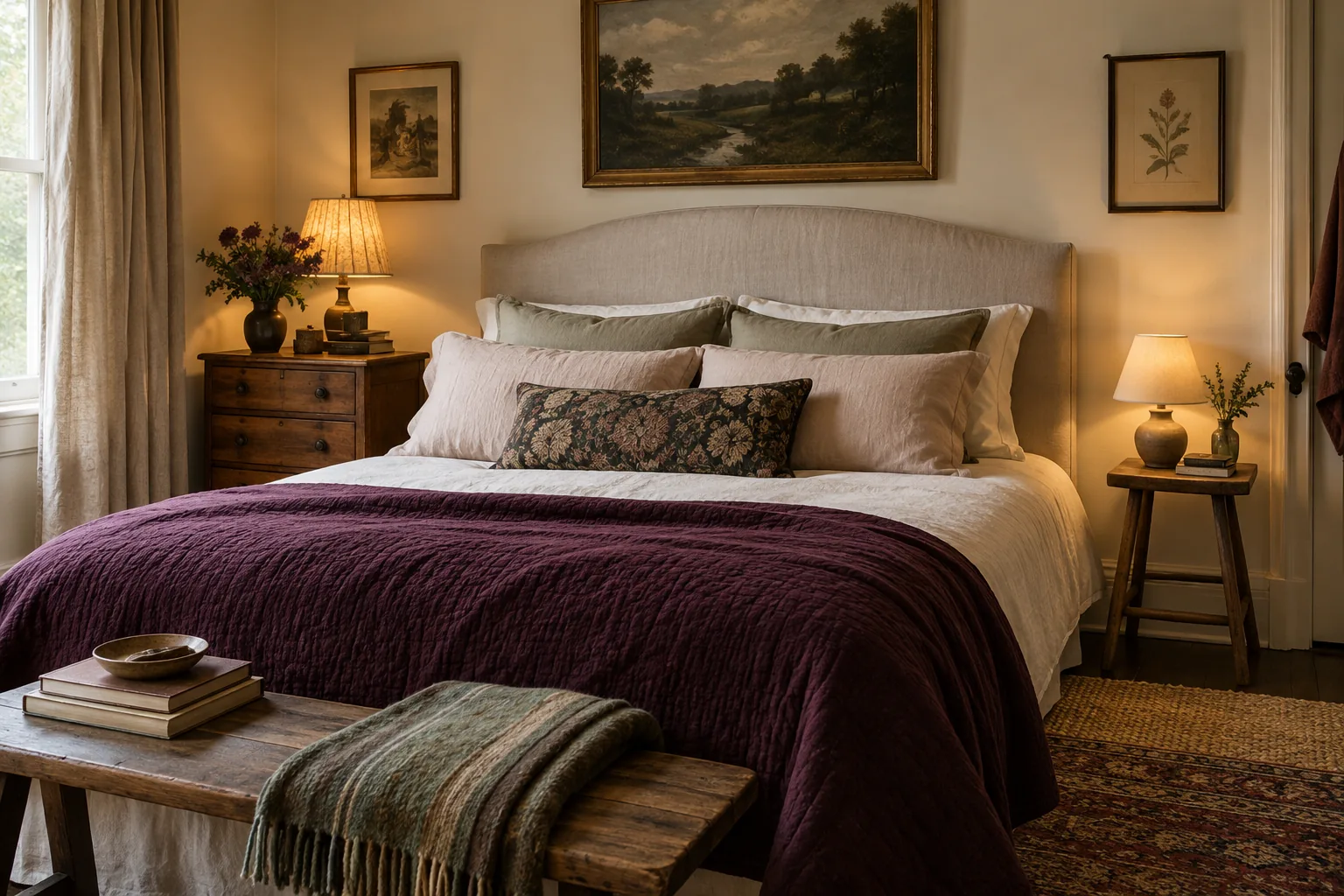
One person may prefer a drawer while the other wants an open shelf for books. Different furniture can respond to those habits without making the room feel disjointed. Similar heights, a shared timber tone or lamps of related scale can provide enough connection. You do not need to repeat every feature.
Where one side has less space, accept that difference rather than forcing a matching pair into an awkward arrangement. A compact table may work beside one person and a small chest beside the other. Compare the visual weight, then use bedding and the wall behind the bed to give the composition a calm background.
If you choose different lamps, compare their light at reading height. Visual balance alone is not enough when one side of the bed remains awkwardly dim.
Be selective about unusual alternatives
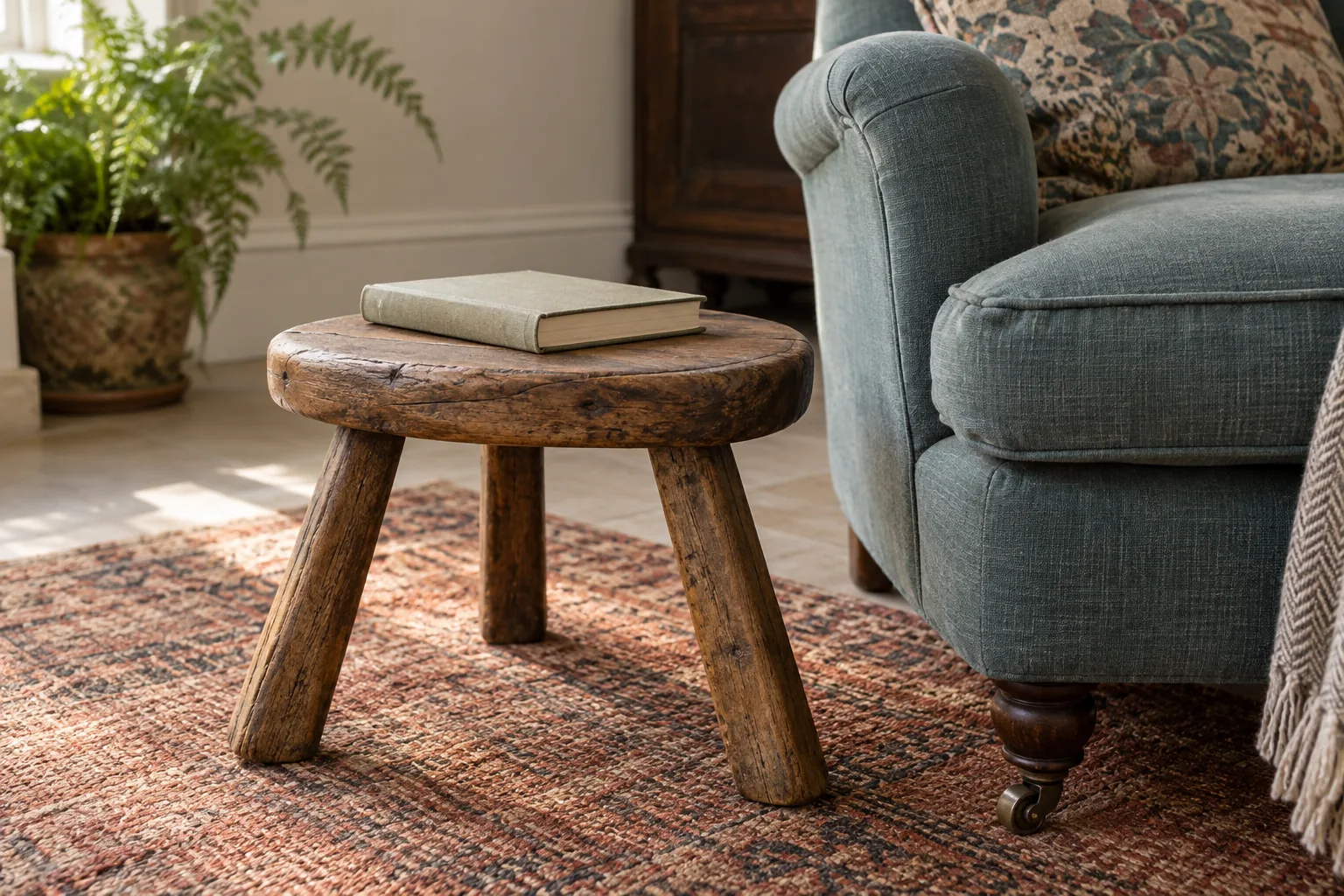
A stool can offer a useful surface if it is stable and large enough, but a narrow or curved seat may be unsuitable for a lamp or drink. A stack of cases introduces questions about level surfaces and convenient access. Evaluate the object in its new role instead of assuming that anything of roughly the right height will do.
Check drawer operation, wobble and projecting handles before purchase. Plan cables so they do not trail across the route beside the bed. A lamp should have a secure, level place and enough space around it for normal use. These details matter more than whether a piece was originally marketed as bedroom furniture.
After arranging the room, leave a little empty space on each surface. It is useful for the unexpected paperback or cup placed there at the end of a long day. A bedside table that is already full before you use it is a small but remarkably persistent inconvenience.