Stay seated for a while
The first few seconds in a dining chair tell you remarkably little. An upright back may seem supportive until you try to lean into conversation; a generously padded seat can leave you sitting too low beside the table. When possible, try the chair for more than a brief perch. Settle into it, change position and notice where your feet, thighs and shoulders naturally come to rest.
If several people use the table regularly, ask them to try it as well. Comfort varies with the person sitting down. A chair that suits the tallest member of the household may leave somebody else balancing at its edge. For occasional entertaining, a compromise may be acceptable. For the place where you eat and work every day, it deserves more consideration.
Measure the relationship with the table
Record the seat height, but also measure the space beneath the table apron. That lower rail, rather than the tabletop itself, may determine whether thighs and armrests fit comfortably. Cushioned seats compress in use, so a catalogue measurement alone cannot describe the final position. If buying separately, take the table measurements and a photograph showing its underside to the viewing.
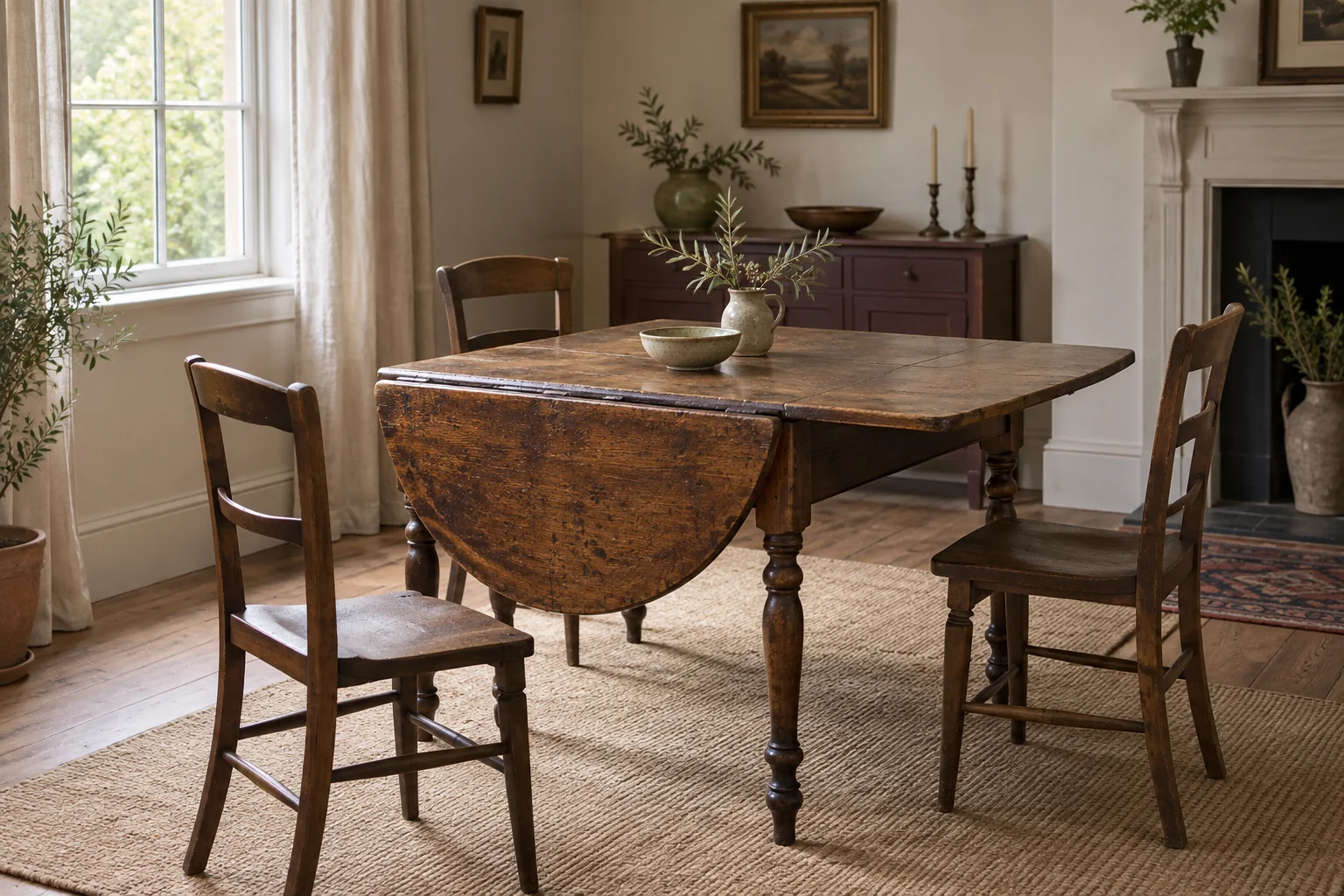
Width needs equal attention. Six chairs may fit along a table in a photograph because their backs overlap or because none is occupied. Measure the widest part of each chair and allow room for people to sit down without having to move their neighbours. At the ends, look at how the table legs affect the usable space. Broad arms can create a particularly awkward fit there.
Listen to what the frame is telling you
Ask about repairs and inspect visible joints before trying a chair. Loose components, cracked rails or unexplained movement require assessment, not a harder test sit. A seller describing something as decorative may mean it is unsuitable for seating. Clarify that distinction directly. Attractive chairs are plentiful enough that you need not accept uncertainty about whether one can do its basic job.
Turn your attention to upholstery only after the frame. A new cover can improve appearance without telling you anything about the materials beneath it. Ask what work was done, by whom and whether there is documentation. If a full refurbishment is part of your plan, obtain an upholsterer's opinion before purchase. The shape of the chair may make the work more involved than a simple square seat suggests.
Think about movement
Notice how the chair is moved when someone sits down. A heavy frame can be cumbersome on a rug, while a light chair still needs a secure handhold. If you regularly rearrange the dining area, handling deserves a place alongside comfort and appearance in the decision.
Build a set you will enjoy using
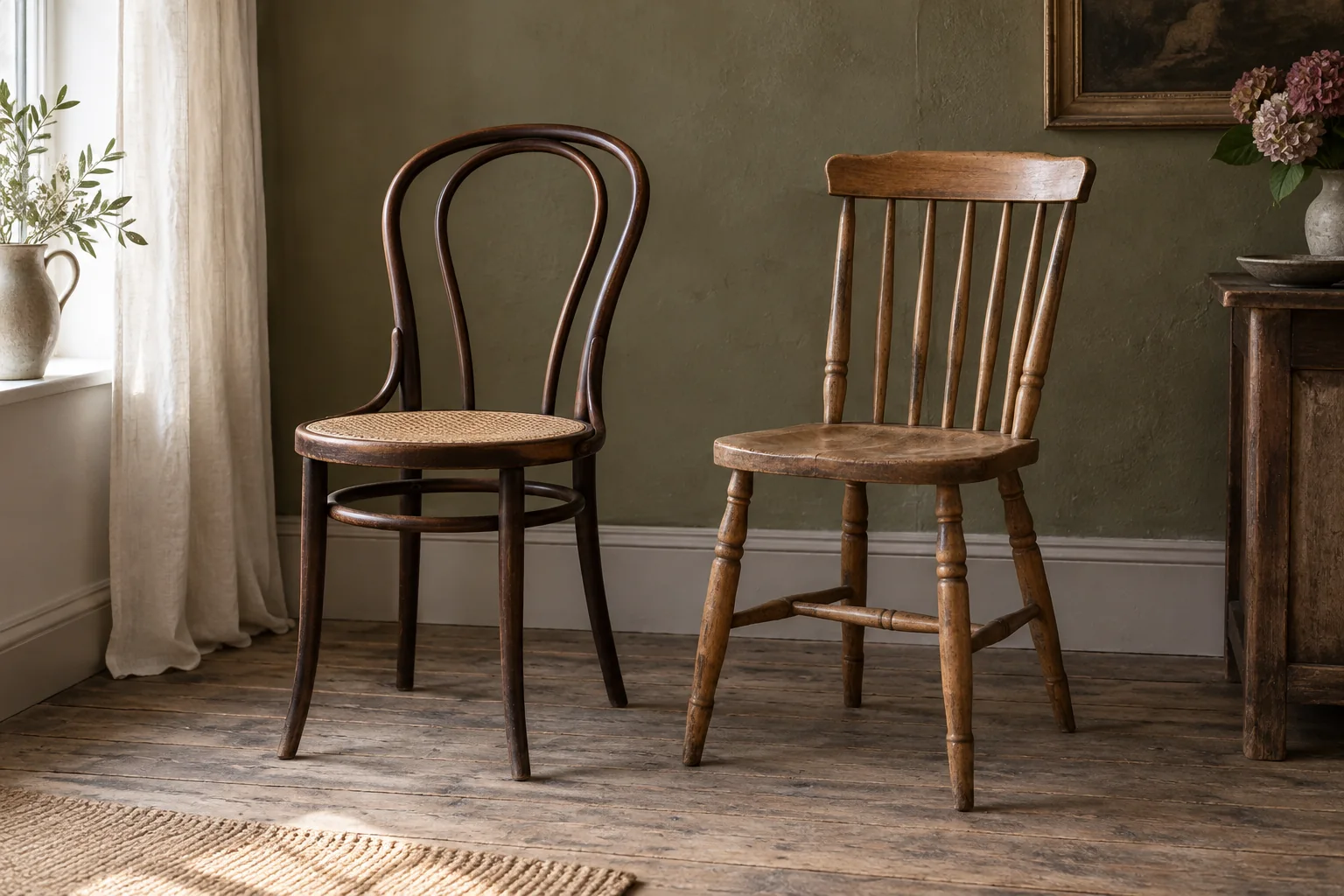
A complete matching set brings visual calm, but condition can vary considerably between its members. Inspect every chair rather than assuming the first represents the rest. One may have lived beside a sunny window or received a repair the others never needed. When the seller offers additional chairs, compare their dimensions as well as their outlines.
Finally, imagine the chairs pulled out, with coats draped over their backs and people moving between them. Slim frames may suit a busy kitchen; a generous upholstered pair might belong at the ends of a dining table used for lingering meals. The best choice is not necessarily the chair that looks most impressive on its own. It is the one that lets the evening continue without anybody thinking about their seat.