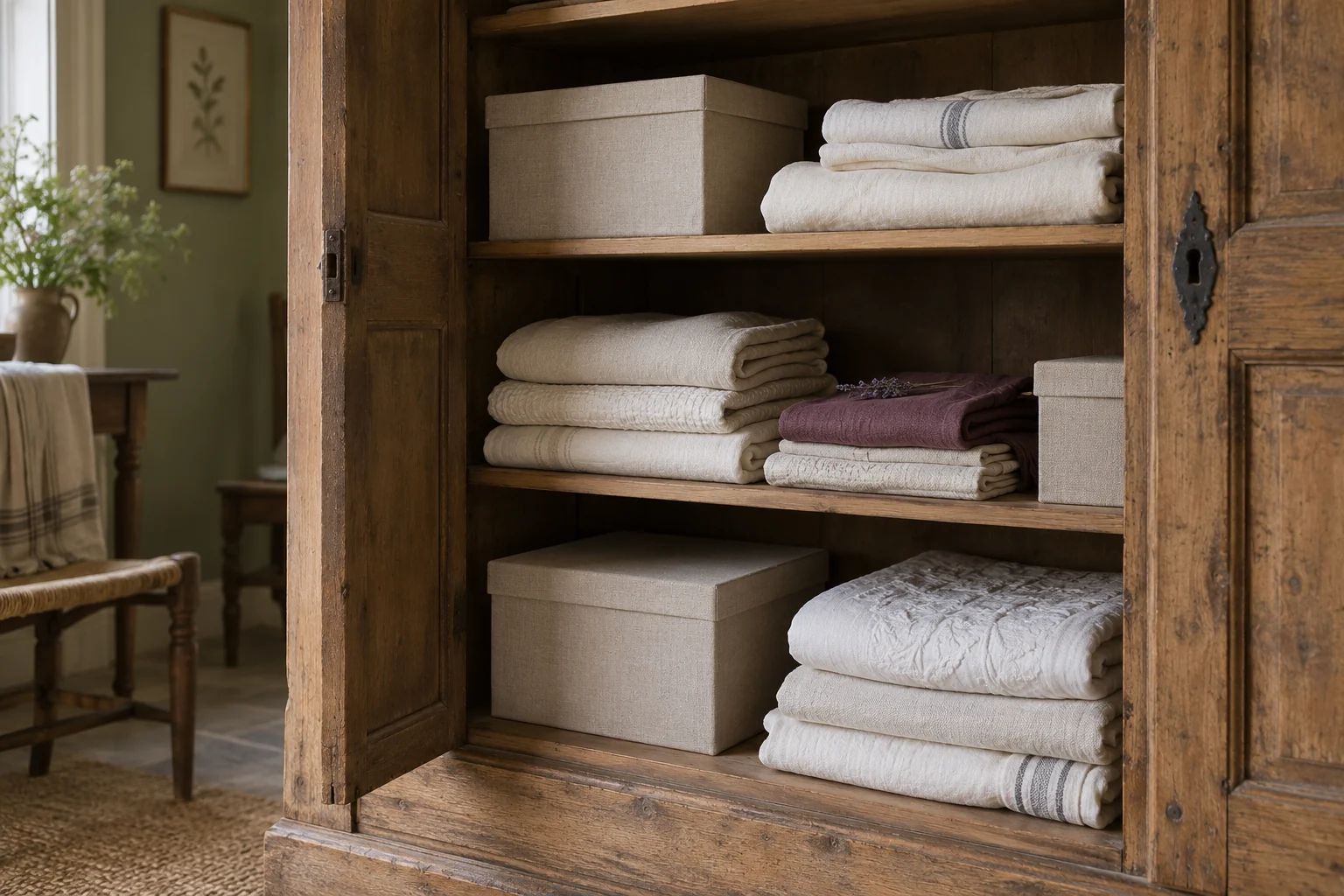
Organise the contents on the floor first
A linen cupboard is easiest to choose after you have sorted what it needs to hold. Separate bedding by bed, towels by use and table linen by size. The aim is not to create an immaculate display. It is to discover how much space each group occupies and which items you reach for most often.
Measure a realistically folded duvet cover or towel stack. A deep cabinet can accommodate impressive quantities while making the back half inconvenient to reach. If you regularly forget what sits behind the front row, a shallower cupboard may serve you better. Storage capacity and usable storage are not always the same thing.
Include the occasional awkward item, such as an oversized tablecloth, in this exercise. One unusually large piece can reveal whether a shelf arrangement will frustrate you.
Look for sensible shelf intervals
Closely spaced shelves suit modest stacks that stay manageable. A large gap encourages taller piles, which tend to become disordered when you retrieve something from the middle. Adjustable shelves offer choices, but check that the supports are present and sound. Do not assume that moving a fixed shelf is a minor alteration.
Think about the heaviest contents too. A shelf intended for light linen may not be suitable for a collection of crockery you later decide to add. Ask about condition and obtain an assessment if there is visible bowing or uncertainty about construction. It is easier to buy the right cupboard than to redesign your storage around an unreliable shelf.
Pay attention to the interior
Open the doors and examine the interior in good light. Look for rough patches, loose edges, staining and persistent odours. Ask about the cupboard's previous use and storage, but do not treat a reassuring story as a substitute for inspection. Textiles can pick up smells that were less noticeable during a quick viewing.
Decorative paper or fabric liners can conceal the original surface. Request a view beneath removable liners and decide whether the interior is suitable before planning a replacement lining. Avoid introducing strongly scented products to disguise a problem. If there is evidence of dampness or another condition concern, establish its cause and scope before bringing the cupboard into use.
Make putting things away straightforward
Allocate the easiest shelves to the things you use weekly. Spare blankets and special tablecloths can sit elsewhere, provided they remain accessible without climbing on furniture. Keep sets together in a way you find intuitive; a simple label on a removable container may help more than a complicated colour system.
The cupboard itself can be a calm presence in a bedroom, landing or dining room. Check door clearance in the actual position and arrange appropriate securing measures where needed. Then resist filling every remaining gap immediately. A little spare room lets you return a stack without compressing everything around it. The most useful linen cupboard is the one that makes a change of bedding uneventful, with no search for a matching pillowcase and no heap left to refold.
Before buying a tall piece for a landing, also consider whether an open door will obstruct the route between rooms. Everyday access should remain easy when someone is carrying a full laundry basket.