Imagine it in motion
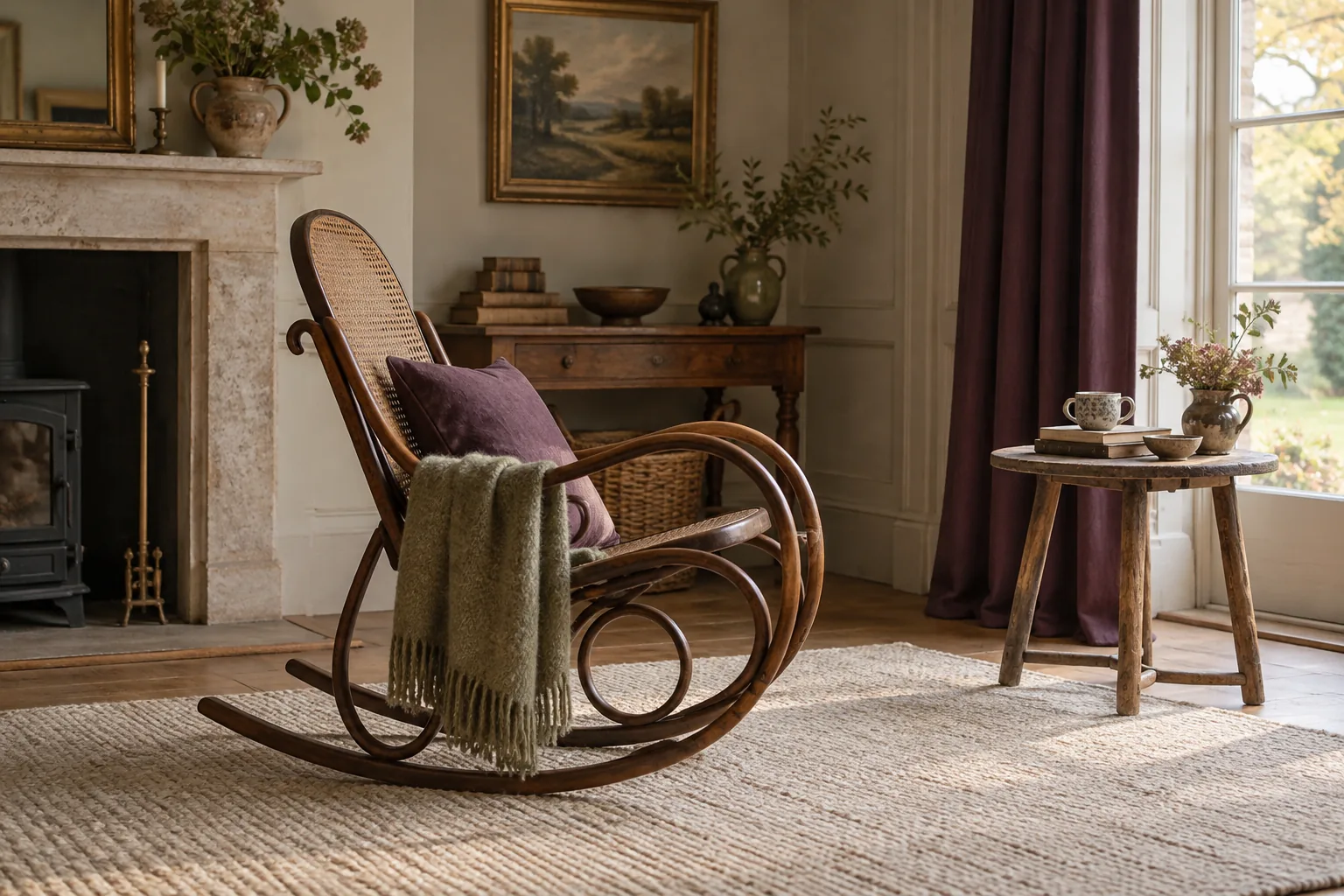
A rocking chair photographed at rest disguises its most important characteristic. It moves. The space behind its back and ahead of its runners belongs to the chair just as surely as the patch of floor directly underneath it. In a crowded sitting room, that extra territory can be the difference between a favourite seat and something everyone carefully walks around.
Mark a generous area in the intended position and consider the nearest wall, curtains and neighbouring furniture. If possible, ask the seller for a short video showing the chair moving normally. The video is useful for understanding space, although it cannot establish structural condition. A chair that looks compact from the front may have long runners extending well beyond the seat.
Comfort is in the whole shape
Seat height, depth, arm position and the angle of the back work together. Try the chair only after its condition has been checked, and notice whether your feet reach the floor comfortably. If you need to stretch forward to initiate movement, it may not suit you. The same chair can feel entirely different to somebody taller or shorter.
A cushion can change the sitting position, but it cannot remedy every proportion. A thick pad may raise you above comfortable arm height; a back cushion can make a shallow seat shallower still. If cushioning is part of your plan, bring something comparable when viewing. The aim is to test the arrangement you will use, rather than an idealised version you hope to create later.
Give the runners a careful look
Ask about repairs to the runners and the places where the legs meet them. Examine visible cracks, movement and worn areas with the seller rather than putting the chair through an enthusiastic rocking test. Structural questions should go to a furniture specialist. An attractive rocking chair offered for decorative use should remain a decorative object unless a competent assessment establishes otherwise.
Check the floor where it will stand. A rug can alter the feel of the movement, and a runner may travel towards the edge of a small rug during use. Avoid a position beside a step or where other people must pass immediately behind. In homes with children or pets, consider the moving runners as part of choosing the location, not merely a styling detail.
Find its ordinary use
The most convincing place for a rocker is somewhere you already want to pause: beside a window with a view, near a reading lamp, or in a quiet room used in the evening. If the chair's only purpose is to make an empty corner look complete, a stationary armchair may offer more useful seating in the same space.
Choose nearby furniture that accommodates movement. A drink should be within comfortable reach without placing a fragile table directly in the runner's path. A small shelf on the wall might work better than a low stool beside the seat. Once these details are resolved, let the chair remain relatively simple. Its changing silhouette and gentle movement provide plenty of character without the help of several cushions and a permanently draped blanket.
If you cannot identify a regular moment when you would sit there, pause the purchase. An appealing shape alone does not create a habit of using it.