A lamp is visible even when it is off
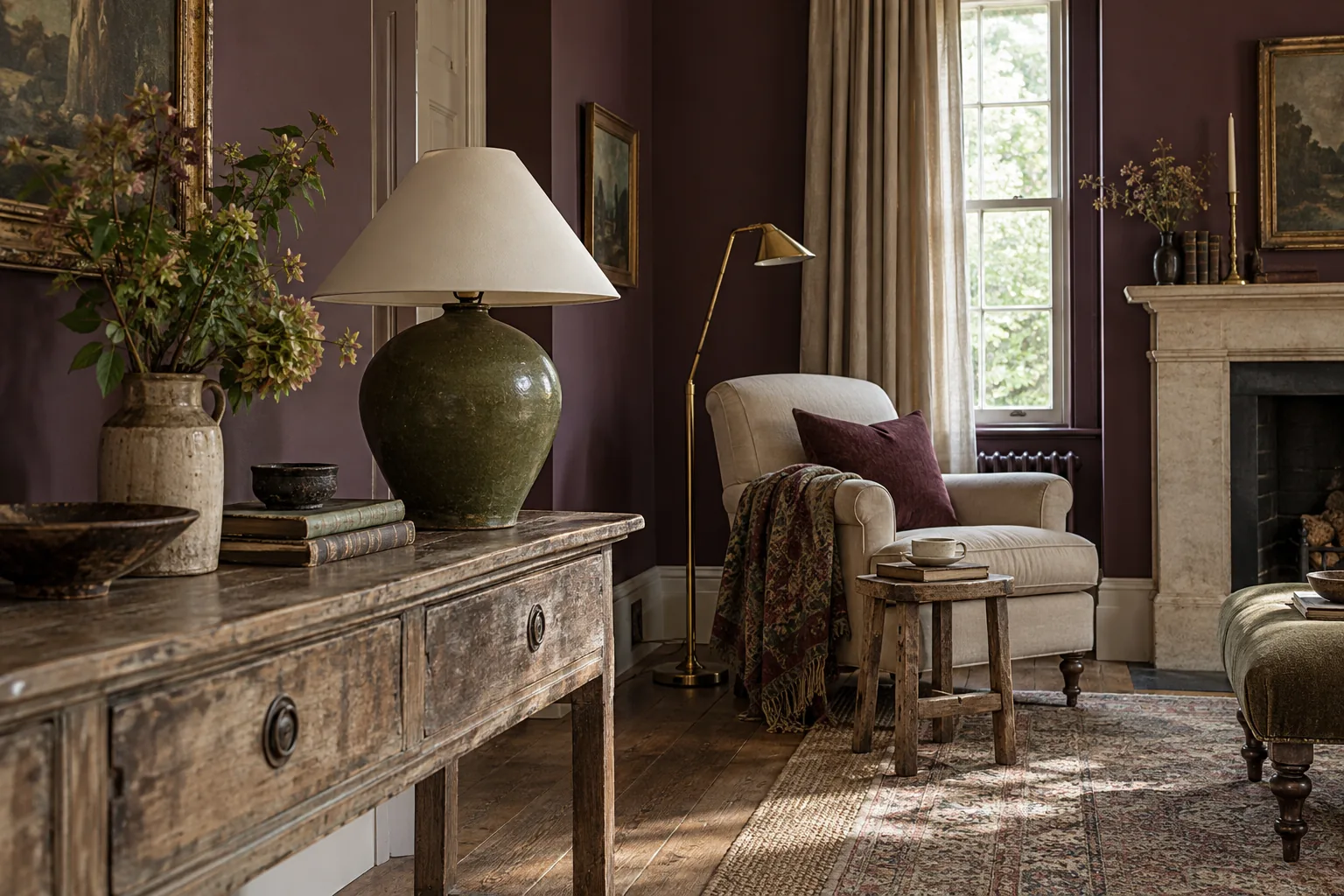
Table lamps are often chosen as decorative objects first. That is understandable: their outlines sit at a noticeable height, and a shade can introduce a broad patch of colour into the room. Look at a possible lamp as two related shapes, base and shade, before judging the details of either. A delicate base under an assertive shade creates a different balance from a substantial ceramic form with a quiet covering.
The surrounding furniture matters just as much. A small lamp can disappear on a broad chest, while a large one may consume the entire surface of an occasional table. Leave space for the other things that need to happen there, such as putting down a drink or opening a book. This is a composition made to be used.
Compare the outline with its neighbours
Place the lamp, or mark out its approximate size, beside the objects that will remain nearby. Notice whether its shade overlaps visually with a picture, competes with a tall vase or blocks part of a view. An overlap can be attractive, but several competing outlines often make the area feel muddled. Try removing the other tall object before deciding the lamp is wrong.
A curved base can soften the appearance of angular furniture; a simpler shape can give an elaborate cabinet a quieter companion. Matching period labels is less useful than looking at those relationships. Material also changes the effect. A glossy ceramic base feels different from a matt timber one even when their dimensions are similar. Consider how these finishes relate to the room's existing surfaces.
The shade changes both appearance and experience
A shade that looks beautiful in daylight may produce an effect you do not enjoy in the evening. Its material, shape and suitability for the fitting influence how the lamp looks when lit. Assess it from the chairs and places where people normally sit, not only while standing beside the table. A bright source in your line of sight can spoil an otherwise pleasing arrangement.
Follow the fitting's specifications for compatible shades and bulbs, and have older electrical lamps assessed by a qualified professional before use. An attractive cable or intact-looking plug is not evidence of safety. This article concerns decorative choices, not rewiring or technical conversion. Once suitability is established, you can judge the colour and outline with the confidence that the lamp is appropriate for its intended role.
Use repetition sparingly
Two matching lamps can create a formal balance, but different lamps may suit a more varied room. Connect them with one quiet feature: related shade colours, similar visual weight or a recurring material. They do not need to be the same height if they stand on different furniture and serve different areas.
Look across the room after dark to see how the arrangements relate. One corner may feel crowded while another lacks a comfortable place to sit and read. Move objects or reconsider the furniture grouping before adding decorative lighting simply to fill a visual gap. A collected room benefits from lamps that support its activities and contribute interesting shapes during the day. Their value lies in both roles, with neither requiring a matching set throughout the house.