Start with the fireplace as a whole
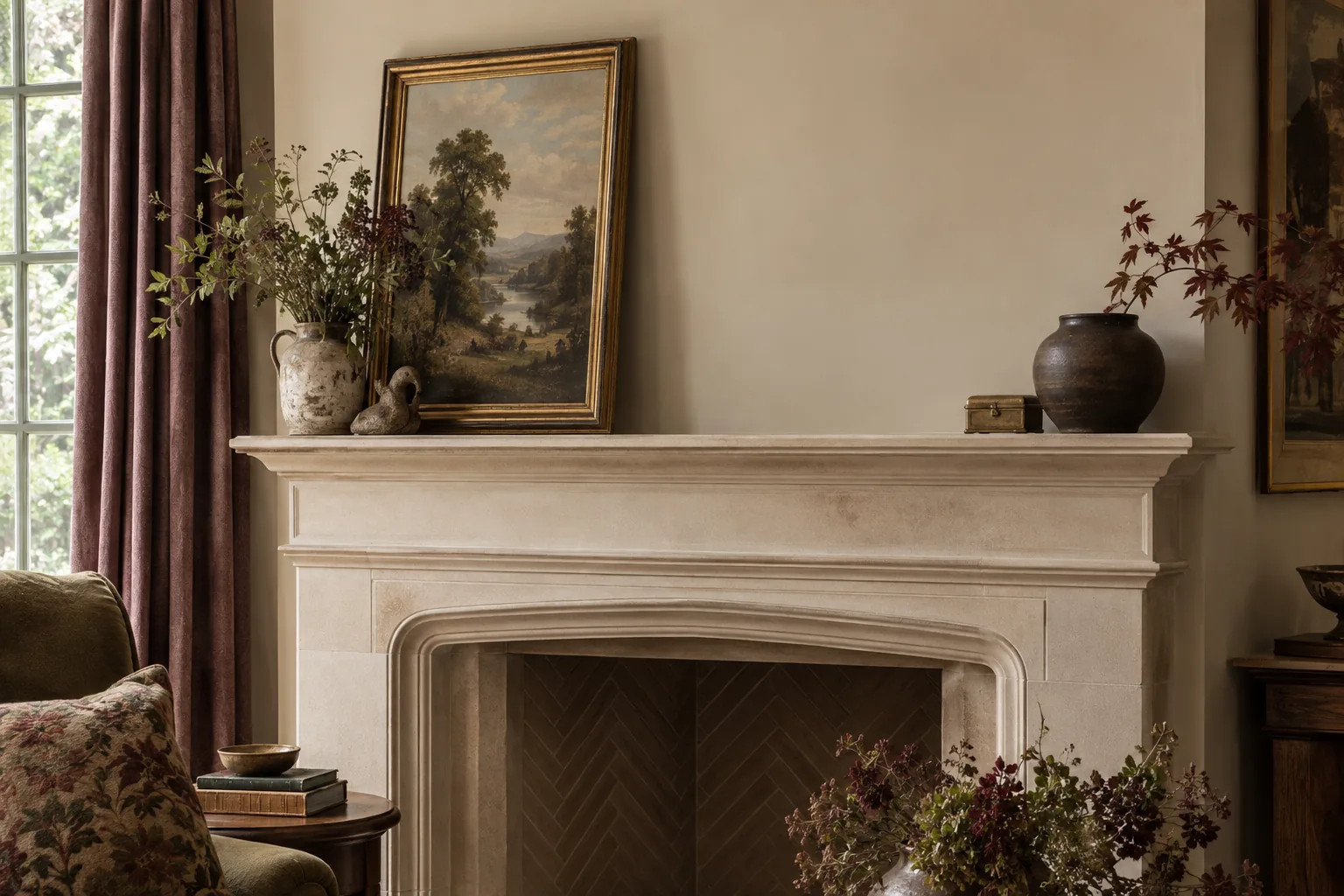
A mantel display sits within an existing composition: the surround, the wall above it and the opening below. Look at those proportions before choosing objects. An elaborate surround may need very little, while a plain one can support a stronger arrangement. If the fireplace is in use, respect the appliance's clearance and heat requirements and keep combustible or heat-sensitive items away from unsafe positions.
Even with a disused fireplace, check that the shelf and any objects are secure. The pleasing informality of an arrangement should come from its visual balance, not from frames leaning precariously or a vase balanced close to the edge.
Choose one leading shape
Begin with the object that gives the display its main outline. This could be an appropriately secured picture above the mantel, a substantial vessel or the shape of the surround itself. Let that decision guide the rest. Several equally assertive pieces can make the eye jump between them without finding a place to settle.
Notice width as well as height. A broad frame may already fill much of the composition, leaving little need for tall objects on both sides. A narrow vertical form might welcome a lower group beside it. You are arranging the relationship between shapes rather than filling a prescribed number of positions.
Balance weight, not head counts
Two objects on one side and one on the other can feel balanced if their visual weight is comparable. A dark bowl may hold its own against a taller, paler vase. Texture, colour and density all contribute, so matching heights alone will not tell you whether the arrangement works.
Move a piece a few centimetres and step back to judge the effect. Objects placed close together tend to read as a group, while a single isolated piece attracts more attention. Leave enough room around the main forms for their outlines to remain clear. A crowded mantel often needs one fewer object rather than a more complicated balancing act.
Make the small details belong
A little object can be meaningful without being highly visible from across the room. Place such pieces where they reward a closer look but do not clutter the main outline. One small ceramic beside a larger vessel may add intimacy; a long row of tiny ornaments can make the shelf feel busy and difficult to dust.
Look for a quiet link between neighbouring objects: a repeated curve, a colour in a picture or a similar surface finish. The connection need not be obvious to anyone else. Avoid using several unrelated items merely because each was left over after decorating another part of the room.
Judge it from the places you sit
A mantel can appear balanced while you stand directly in front of it and feel quite different from the sofa. Check the views you use most often, including the angle from the doorway. If a lamp elsewhere overlaps visually with the display, the room may already have more height and complexity than the mantel itself suggests.
Keep the arrangement easy to clean and safe around the fireplace's actual use. You can change one small element when you want a different mood without rebuilding everything. The strongest compositions often have a stable outline and a little flexibility within it, leaving the mantel recognisably yours rather than permanently staged for a season.