The chair is the beginning
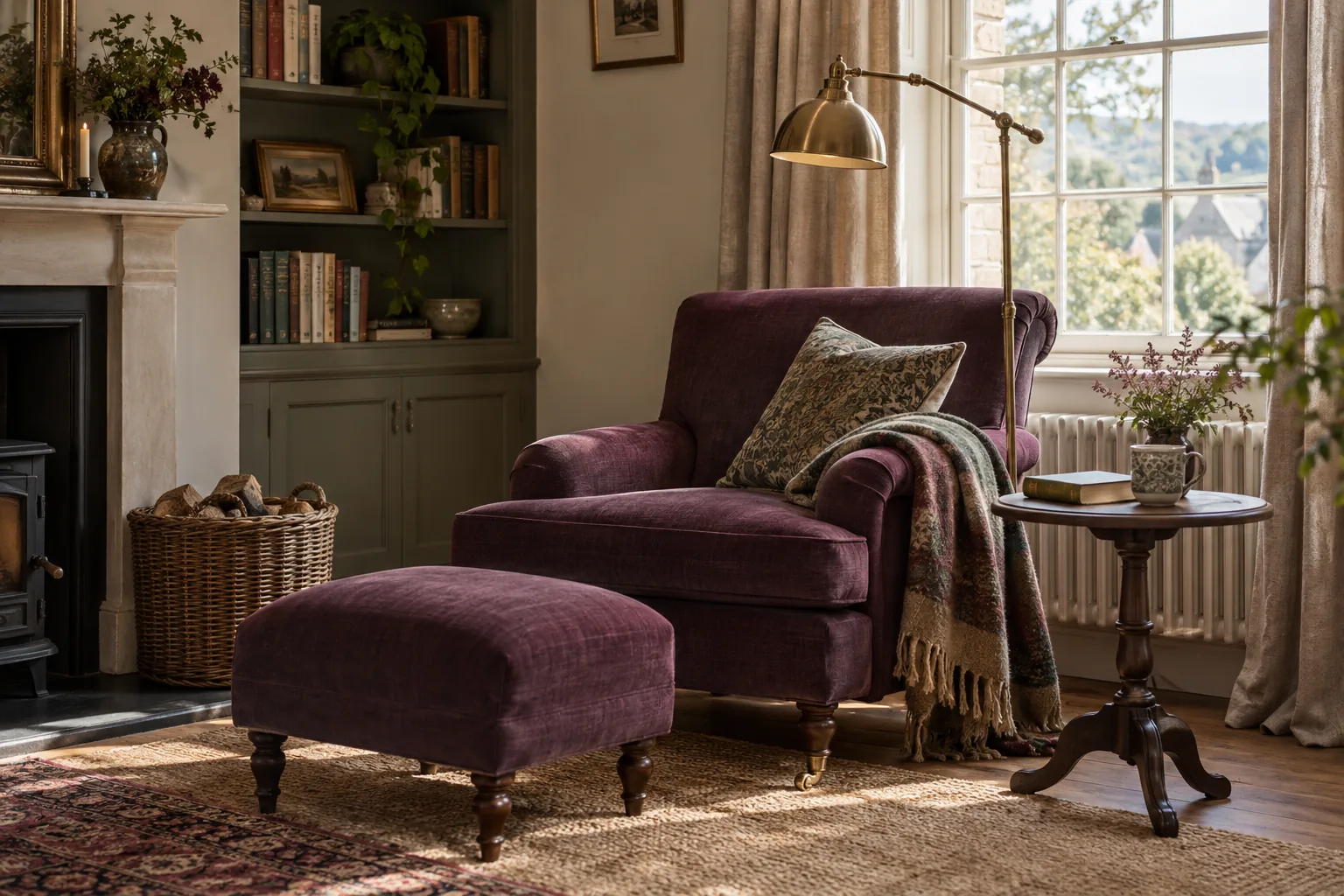
There is a difference between a chair that looks inviting and one you want to occupy for an hour. A reading corner begins with the second. Try the chair in the position you naturally adopt with a book, noticing the support, seat depth and space for your arms. An older chair may be beautifully made yet wrong for your body or preferred posture. Its age is not a reason to compromise.
If the room already has a comfortable chair, use it as the starting point. Character can come from the table, a textile or the books themselves. A reading corner does not need every component to be vintage in order to feel personal.
Find a position with a little shelter
A chair placed directly in a busy route may remain empty however appealing it looks. Look for a position that feels connected to the room without being in the middle of its movement. A wall behind the chair, the edge of a bookcase or a view towards a window can help the space feel settled.
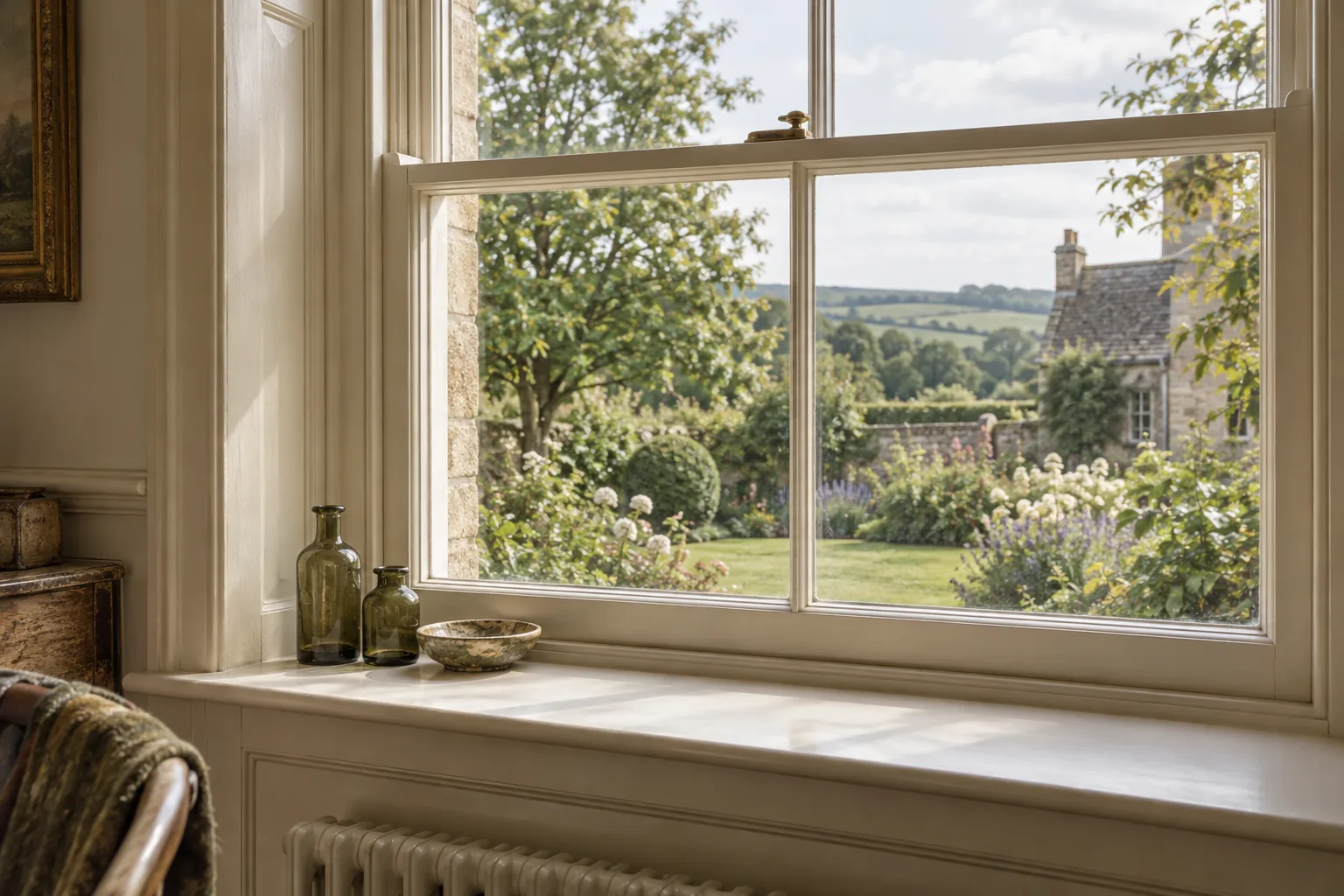
Check what happens at different times of day. A bright window may be pleasant in the morning and produce uncomfortable glare later. Keep window access and necessary ventilation clear, and avoid crowding curtains with furniture. The best position is one that remains useful during the hours when you actually have time to read.
Put the small essentials within reach
A nearby surface needs room for a book and a drink, with perhaps glasses or a notebook as well. It does not need to hold a complete decorative arrangement. A small wooden table or stable stool can work if its height and position make reaching easy. Keep fragile objects away from the area where your hand naturally lands.
Place suitable lighting so the page is comfortable to see without an exposed bright source dominating your view. Any older electrical fitting needs proper safety assessment before use. Choose a shade for the quality and direction of the light as well as its appearance; a handsome lamp is only useful here if it helps you read.
Let books make the space specific
Keep a modest selection of books close by rather than using the corner as overflow for every volume in the house. A short stack of current reading or one shelf of favourites gives the place purpose. Arrange them so a book can be removed without dismantling a tower or shifting a vase.
A textile can make the chair more inviting, but choose one you will use. A throw folded over the arm is easier to pick up than a complicated cushion arrangement. If a cushion improves comfort, keep it; if it regularly ends up on the floor, the chair may be better without it.
Leave the arrangement slightly unfinished
A good reading corner allows for a half-read book, a cardigan and the small signs of someone spending time there. Resist styling every centimetre until there is no space left for occupation. After a week, notice which objects have stayed and which you keep moving out of the way. Those movements are useful information.
You may find that the corner needs less than expected: one comfortable seat, a clear surface and a pleasing view across the room. Its atmosphere comes from being used, not from looking permanently ready for a photograph. Give yourself permission to leave the book open and come back later.