Begin with what you want to see at bedtime
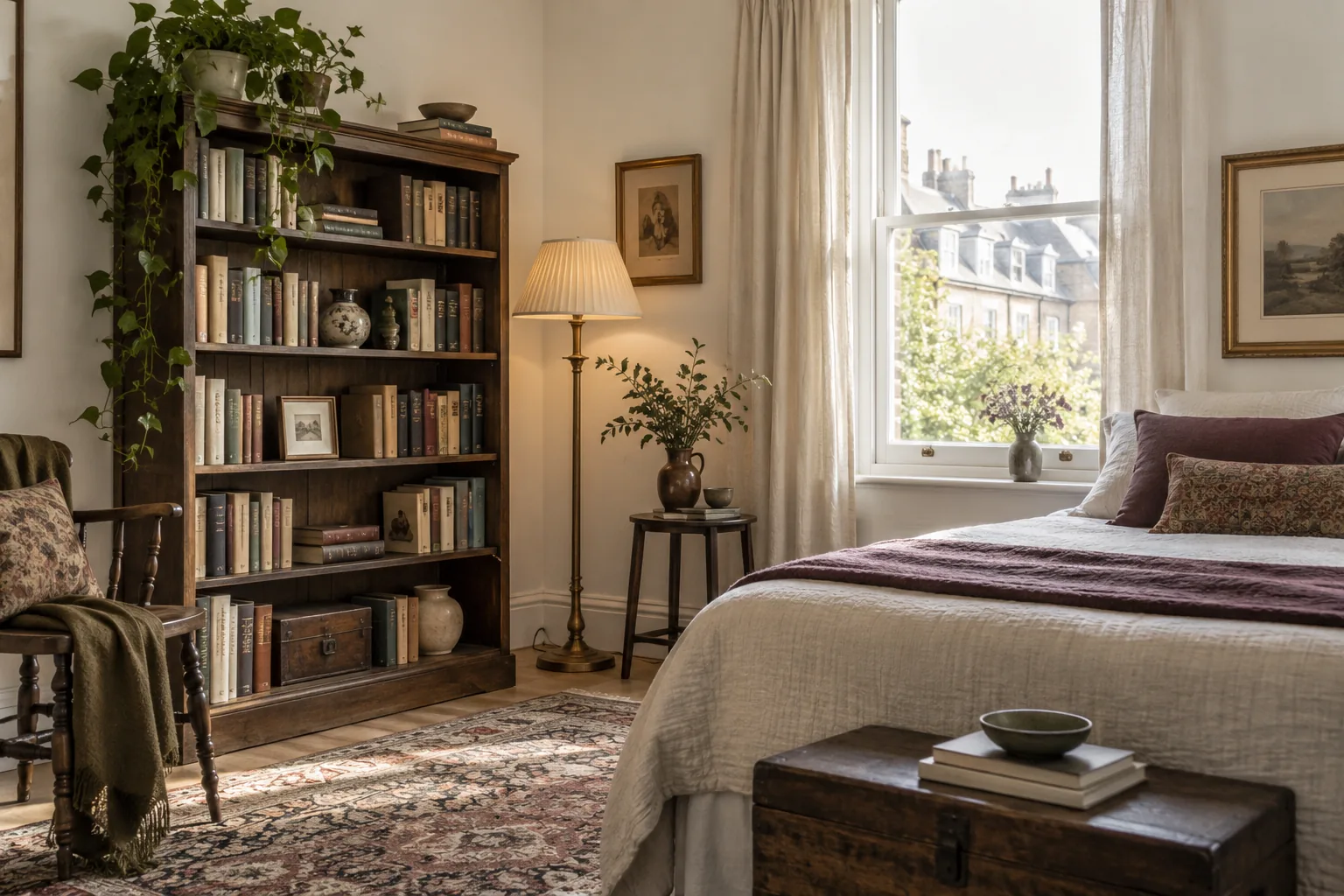
A bedroom can hold beautiful furniture and still feel restless. The difficulty is often the number of competing details: patterned curtains, a busy quilt, framed pictures, jewellery and clothes all within the same glance. Start from the bed and look around at the view you actually have before turning out the light. Decide which two or three elements you enjoy most. An older chest, a gentle textile and a favourite picture may provide all the character the room needs, leaving other surfaces free to support ordinary routines.
Give the bed a simple setting
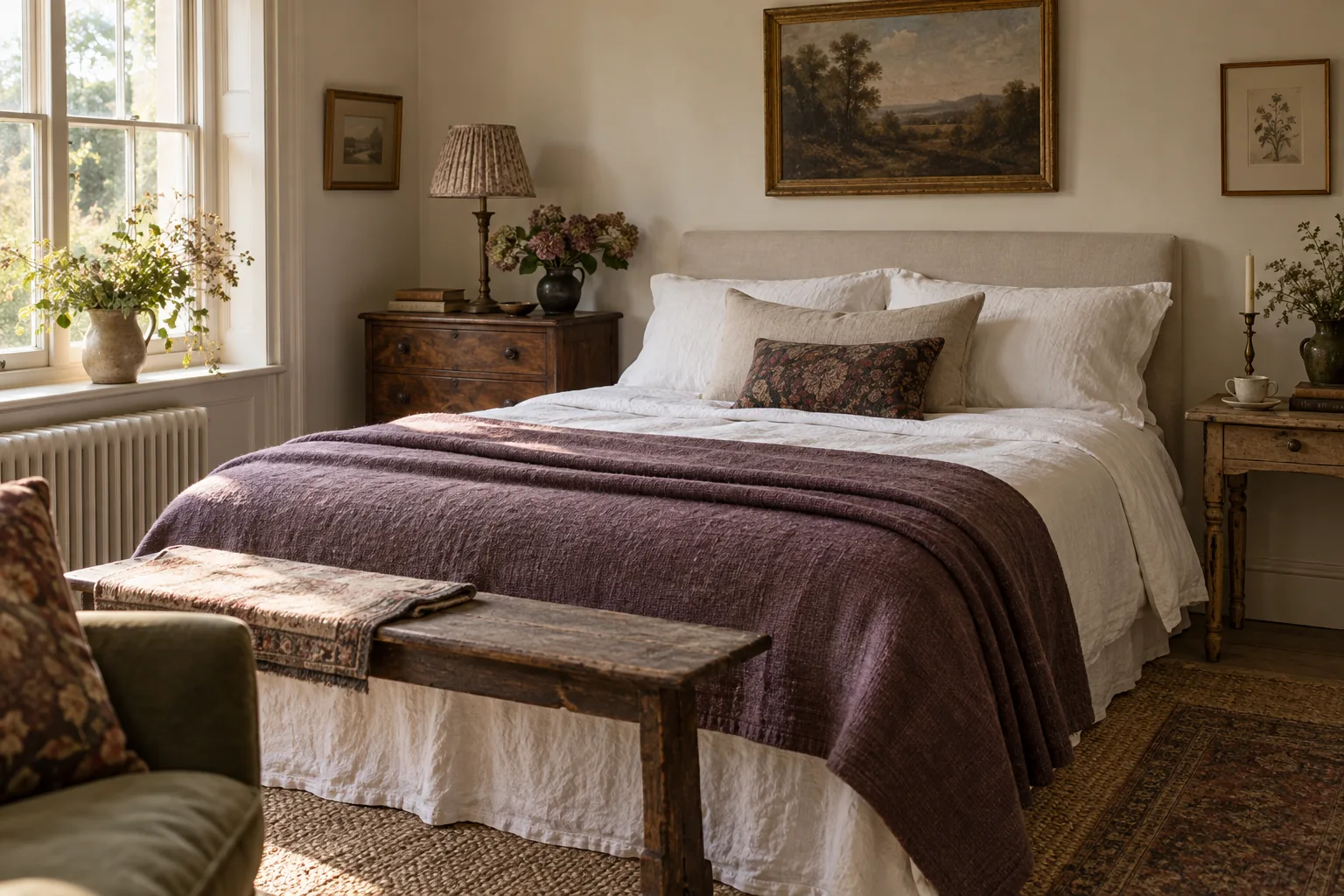
The bed usually occupies the largest area, so its surroundings establish the mood quickly. Plain bedding does not have to mean stark white; warm cream, faded blue or a quiet green can sit comfortably beside older timber. If you love a patterned bedspread, let it be the main pattern and keep neighbouring details easier on the eye. A vintage textile can also be folded at the foot instead of covering everything. This makes its colour and workmanship visible while allowing the rest of the bed to feel generous and unhurried.
Bedside tables need not be twins
Two different bedside pieces can work well when they have similar visual weight or share a material. A small chest and a modest table may be a more useful pairing than matching cabinets with inadequate storage. Check their relationship to the mattress so that reaching a book or glass feels comfortable. Reserve enough surface for the things you keep beside you. A lovely arrangement that requires moving a vase each night will soon become irritating, and the vase will probably end up somewhere less secure than its original position.
Let storage look settled
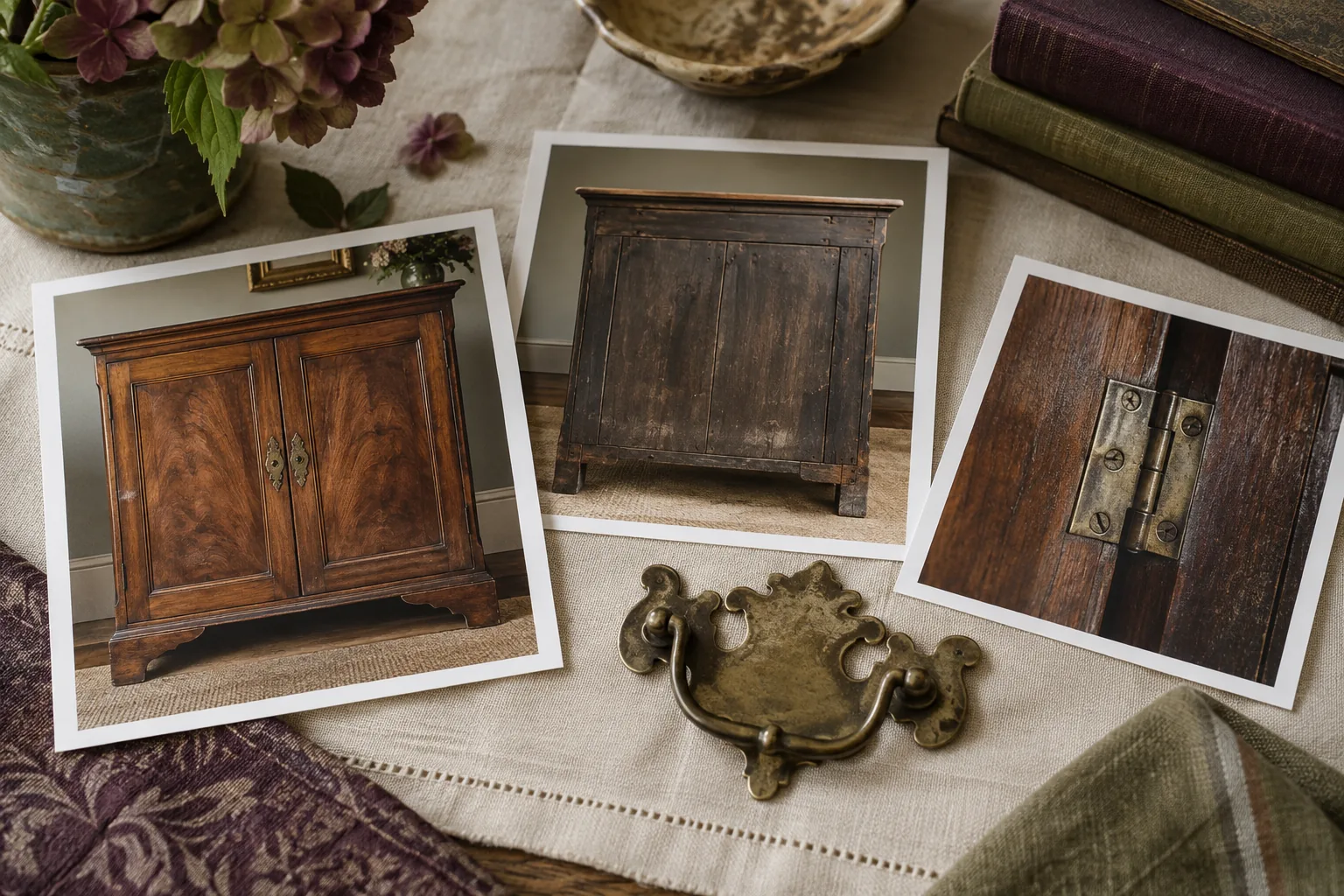
An old chest often brings more personality than a series of small decorative purchases. Assess how its drawers work for the clothes or bedding you intend to keep there; shallow compartments and stiff runners can change its usefulness. Keep the top from becoming an overflow wardrobe by leaving a specific place for temporarily worn clothes elsewhere. On the chest itself, try one framed image and a practical container before adding anything else. A broad, partly empty surface helps the substantial piece read as furniture rather than a platform for a collection.
Choose softness in layers
Restfulness is a personal response, but an all-hard room often benefits from a few textiles that soften its appearance. Curtains, a bedside rug and a throw can each contribute a different texture without requiring several patterns. Think about the transitions between them: a rougher weave against smoother bedding, or a matt cotton beside polished timber. Avoid introducing so many cushions that getting into bed becomes a nightly clearing exercise. The best layers earn their place through comfort, warmth or usefulness as well as the way they look together.
Keep one corner out of the story
Not every part of the bedroom needs to display something. A quiet stretch of wall or an uncluttered chair can make the more expressive pieces easier to appreciate. If the room doubles as a work space, give papers and equipment a defined place to be put away when the day ends. This is less about achieving a perfect photograph than changing what asks for your attention. Spend a few nights with the simpler arrangement before adding more. What first appears slightly bare may turn out to be exactly the amount of breathing space you wanted.