Work with the room you have
A rented home may come with a wall colour you would not have chosen or a fixed cupboard that refuses to blend into the background. It helps to separate what can change from what needs to be accommodated. Note the dominant colours, the available floor space and any restrictions in your agreement. Then look for older pieces that make the existing room feel more intentional. A warm wooden table may soften cool walls, while a coloured textile can give a plain sofa a clearer relationship with the rest of your belongings.
Build around useful portable furniture
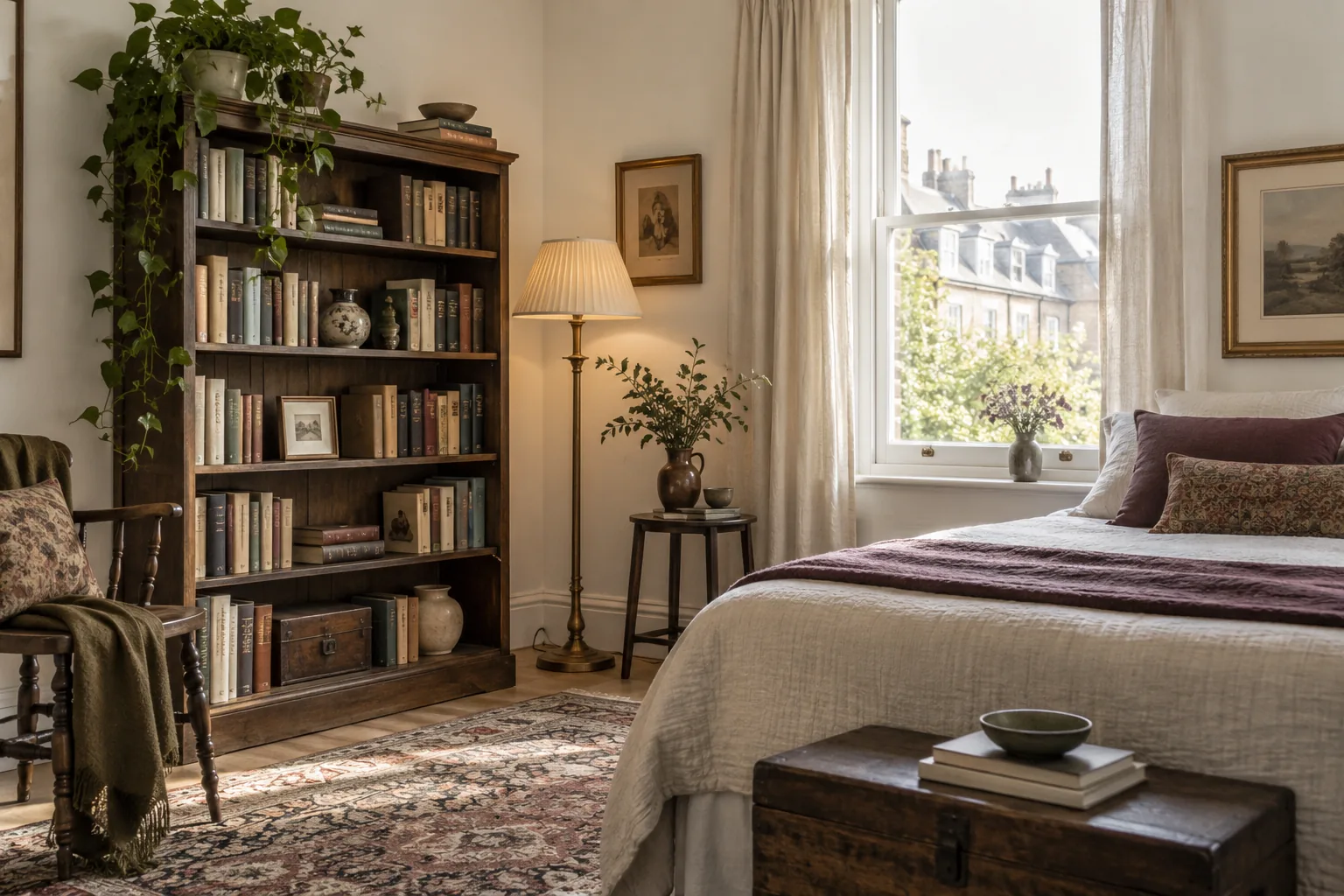
A modest chest, a freestanding bookcase or an occasional table can provide both function and a sense of permanence without becoming part of the building. Choose proportions that suit more than one possible room if you expect to move. Extremely wide or deep pieces can be difficult to rehome, even when they fit the present flat. Consider access as well as the final position: stairs, doorways and awkward turns all matter. Freestanding does not automatically mean safe without restraints; follow appropriate anti-tip guidance and obtain permission for any necessary fixings.
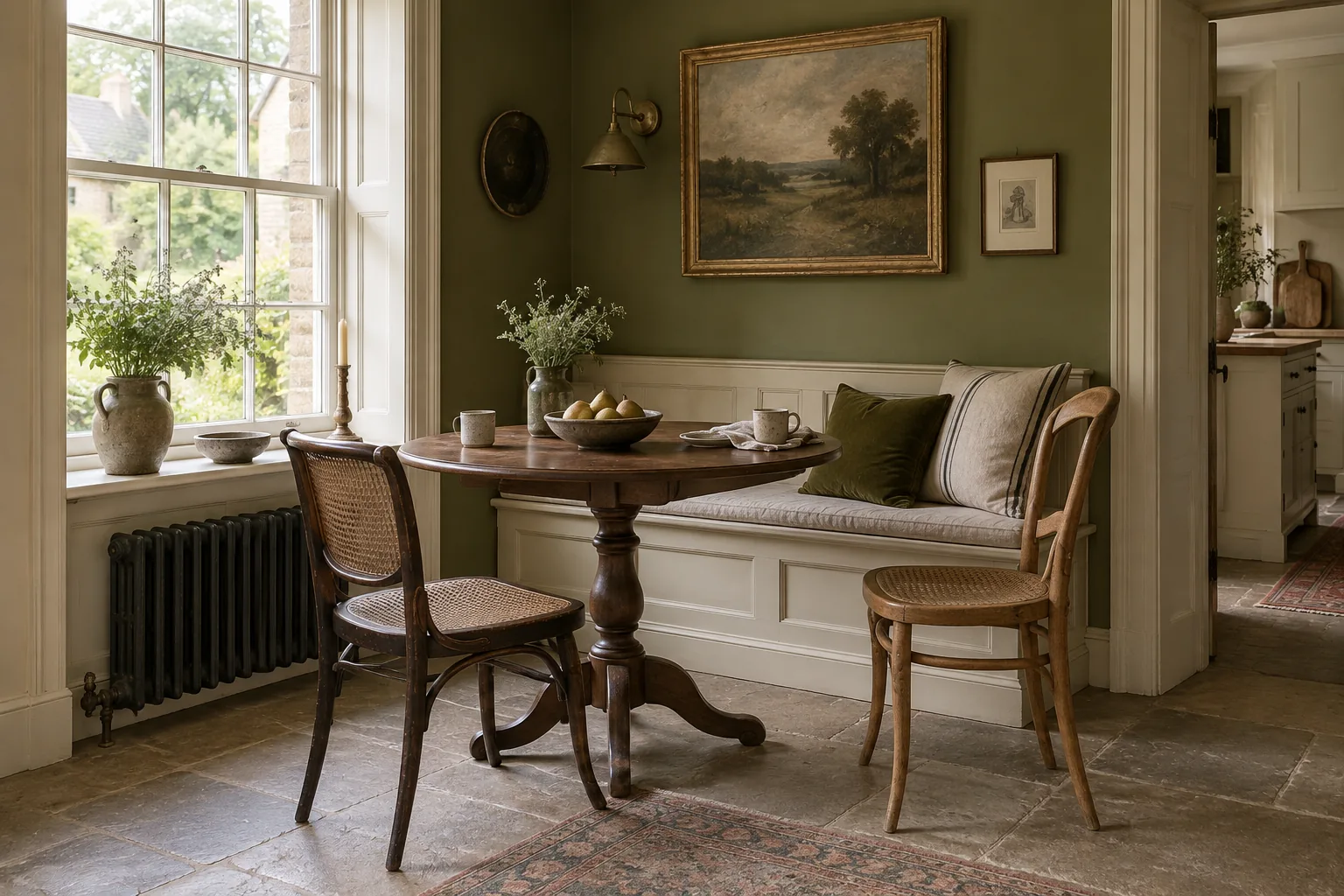
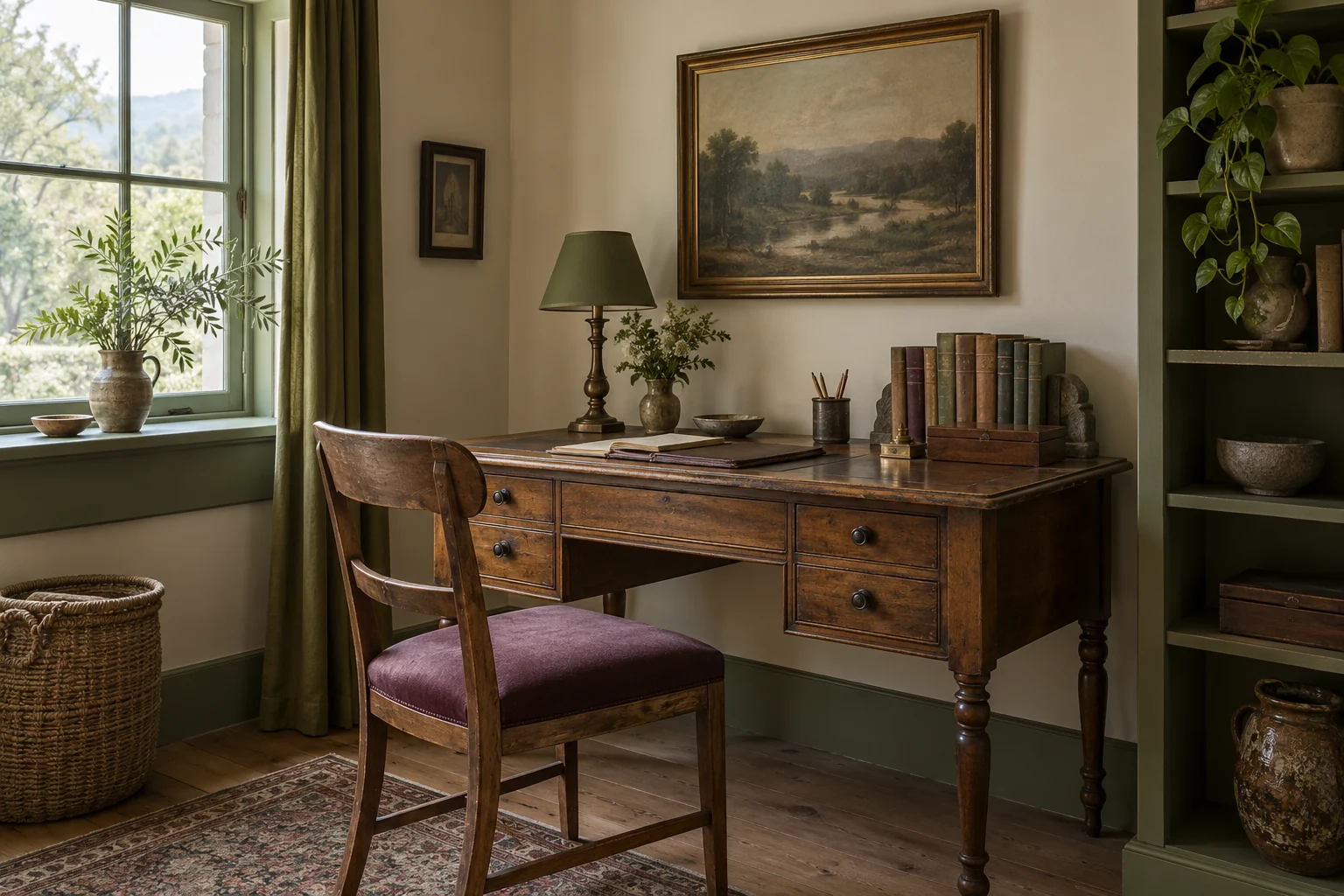
Think about how a piece could change jobs after a move. A small table used for breakfast now might become a desk or bedside surface later, provided its dimensions and condition suit those uses. A cabinet chosen for one exact alcove offers less flexibility. This does not mean every purchase must be plain; a distinctive outline can remain appealing in several settings.
Let textiles do some of the connecting
Textiles are useful when the room's fixed elements feel unrelated. A rug can bring together colours from the flooring and your furniture, while a throw changes the visual weight of an upholstered piece. Use a small number of recurring colours so the effect stays coherent. Before replacing curtains or adding fittings, check what is permitted and retain anything supplied with the property. You can often achieve a more personal result simply by introducing texture at bed or sofa level, where it is easy to change and enjoy every day.
Display without overloading the walls
Pictures do not all need to occupy a wall. A small framed print on a stable shelf can sit beside books and a single ceramic object, provided it cannot slip or be knocked into a walkway. Keep vulnerable or heavy items away from precarious leaning arrangements. If you want to hang art, agree a suitable method with the landlord rather than assuming a particular adhesive will leave no mark. A few thoughtful displays will usually feel more personal than spreading objects over every available surface merely to disguise an unfamiliar room.
Give anonymous corners a purpose
A rental starts to feel like home when its corners support your habits. Put a comfortable chair near the books you read, make a clear surface for correspondence, or create a small place for breakfast beside the best daylight. The furniture need not be expensive or perfectly coordinated. What matters is that the arrangement makes sense for you. An older table with a pleasing shape becomes part of the room's identity through regular use, especially when it is allowed to remain practical instead of being reserved for decorative objects.
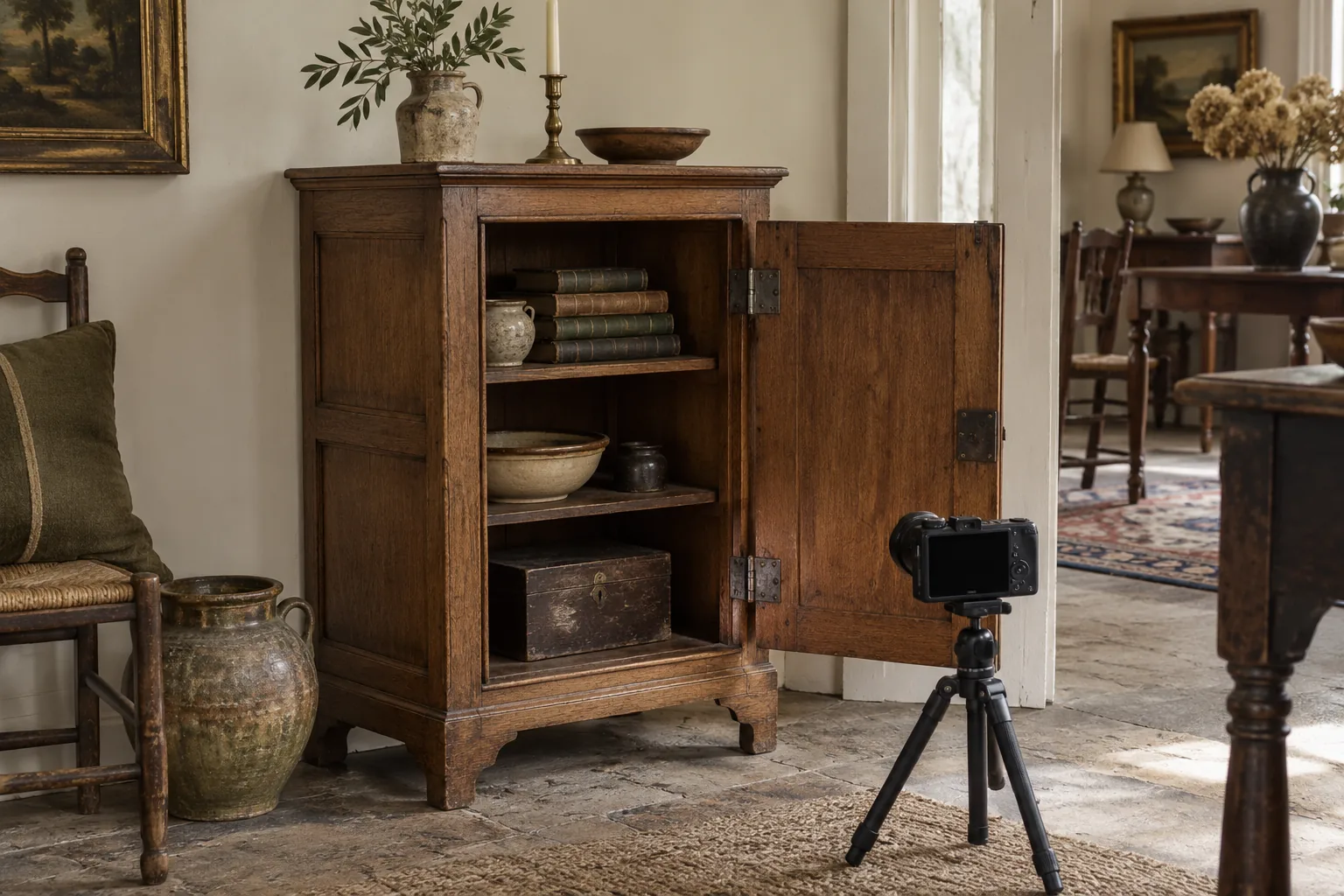
An awkward fixed cupboard can become the quiet background for an area you enjoy rather than the problem every choice tries to disguise. If its colour is warm, try relating it to one textile or wooden surface elsewhere. If its shape is emphatic, give nearby objects simpler outlines. These experiments cost little when you begin with things you own, and they avoid turning a temporary room into an expensive campaign against its permanent features.
Keep a record for the next move
Photograph arrangements you enjoy and note the dimensions of the pieces that work particularly well. This small record makes it easier to rebuild a familiar atmosphere in another home without copying the layout exactly. Keep removable changes reversible and store supplied fittings carefully. The goal is not to erase every sign of the original property; it is to make a comfortable relationship between its character and yours. A room with a few well-used, well-chosen belongings often feels more settled than one filled quickly in an attempt to make every imperfection disappear.