Start with an ordinary evening
Before choosing a cabinet or moving the sofa, picture what happens in the room on a normal Tuesday. Perhaps two people watch television while someone else reads, or perhaps the space doubles as a place to eat supper. These habits tell you more than the room's measurements alone. Write down the seats, surfaces and storage you actually use. A small sitting room can accommodate considerable personality, but it becomes difficult to enjoy when every object is competing with an activity that needs to happen there.
Try drawing two versions of the room: one with a central coffee table and one with smaller surfaces beside the seats. Mark where somebody walks while another person is seated. The second plan might open a useful route, or it might leave nowhere convenient for a shared board game. Choose according to the evenings you actually spend there, rather than assuming one layout is inherently better for every small room.
Let one substantial piece earn its space
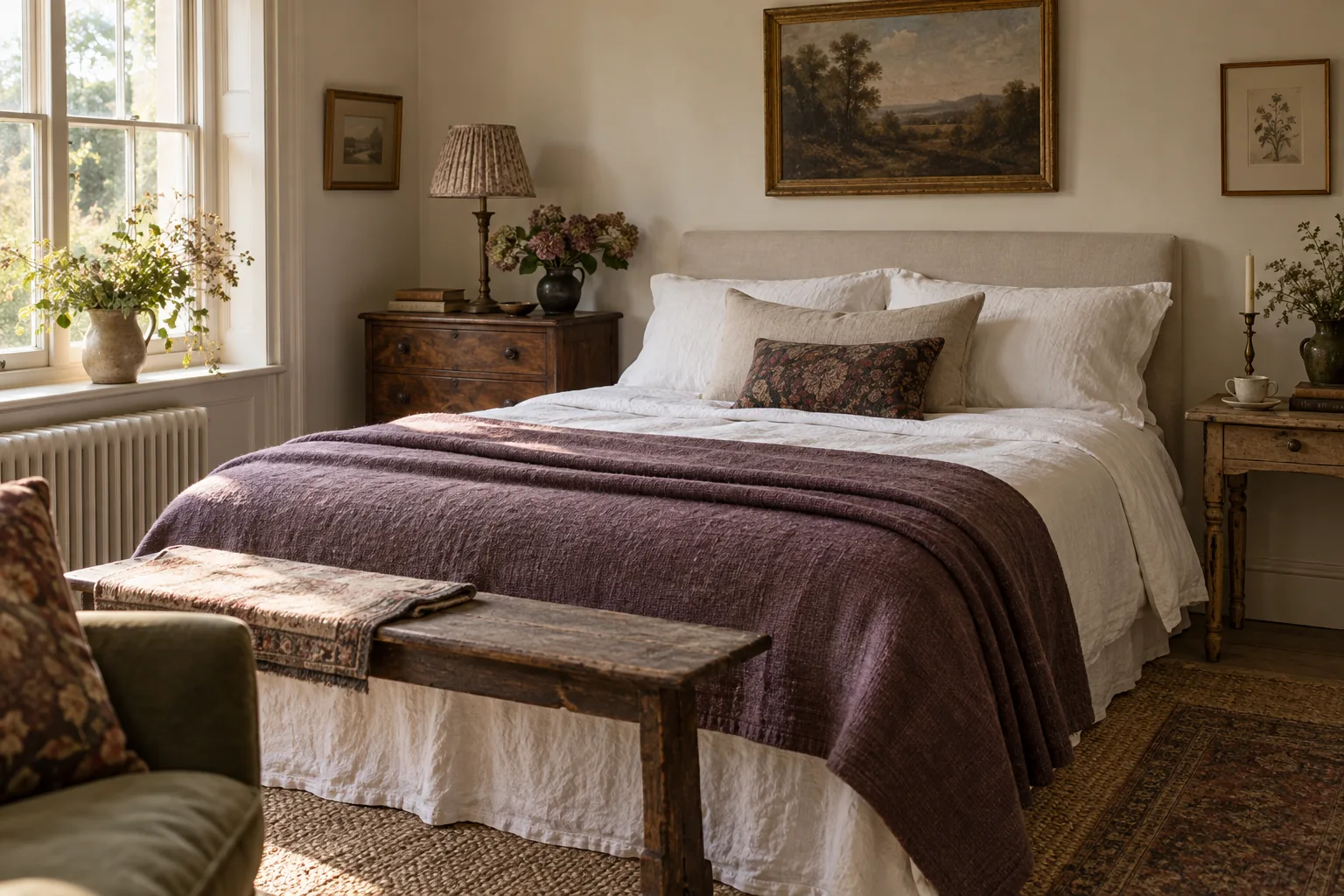
Small rooms do not necessarily need a collection of small furniture. A well-proportioned vintage chest can hold more and look calmer than several little units scattered around the perimeter. Check its depth, the space needed to open drawers and the route past it. Where possible, place the biggest storage piece against an uninterrupted wall. Its top then becomes a useful surface for a lamp and a few objects, rather than another zone requiring extra furniture. The aim is a room with a clear structure, not a room furnished entirely in miniature.
Compare the total footprint of a substantial cabinet with the collection of smaller pieces it could replace. A chest that holds paperwork, games and spare textiles may do more useful work than a narrow console, two baskets and a small cupboard scattered around the room. Include doors and drawers in that comparison. Consolidating storage only helps if the new cabinet remains easy to open and does not dominate the main route.
Choose what the eye travels through
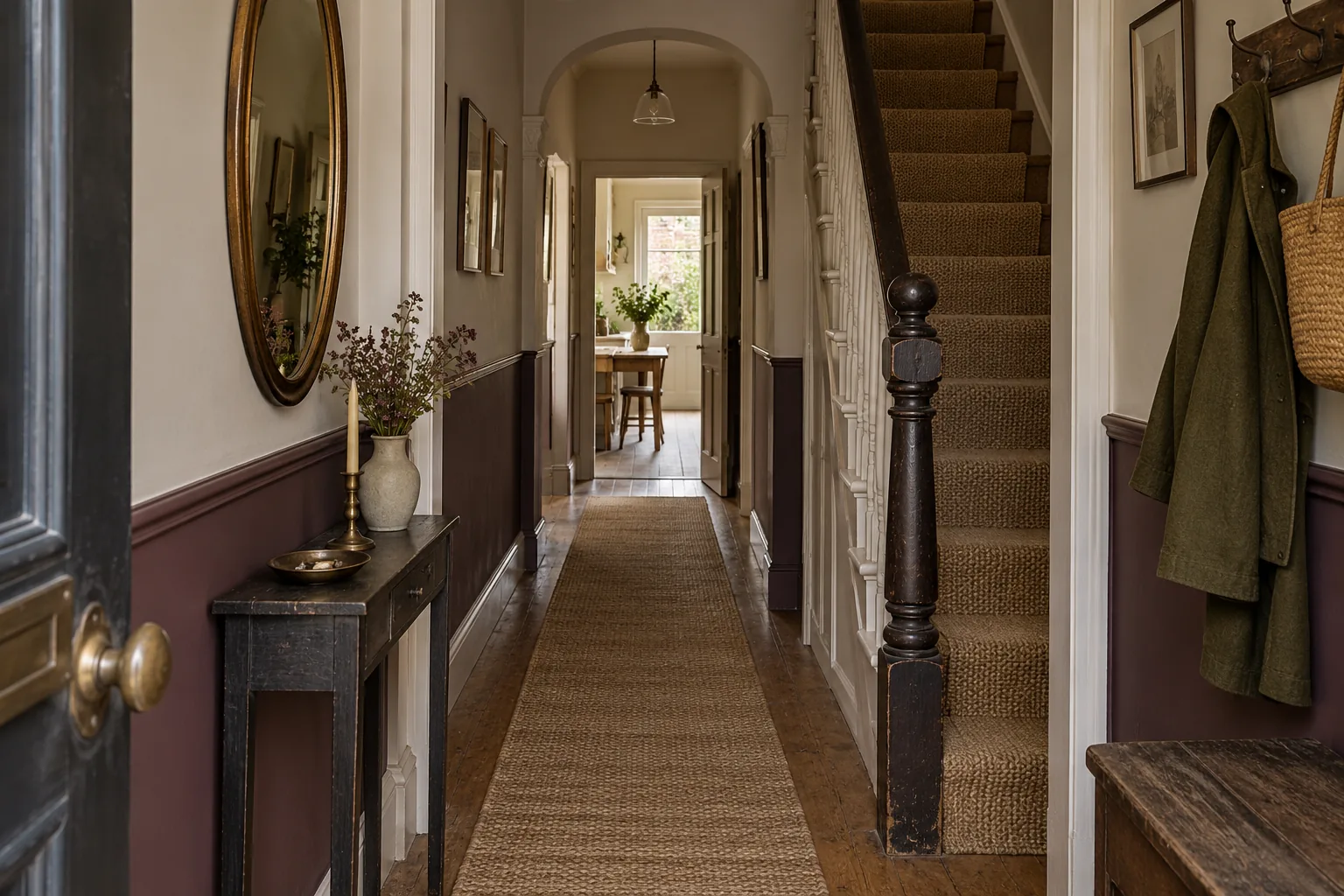
An occasional chair with an open back reveals more of the room than an equally wide upholstered chair with a solid skirt. A table raised on slender legs lets the floor continue beneath it. These visual gaps can help, although comfort and stability still matter more than appearances. You need not make every piece airy. Pairing an open chair with a heavier chest creates a useful contrast. Look across the room from its doorway and notice whether you can see patches of floor between the main pieces.
Keep surfaces close to the seats
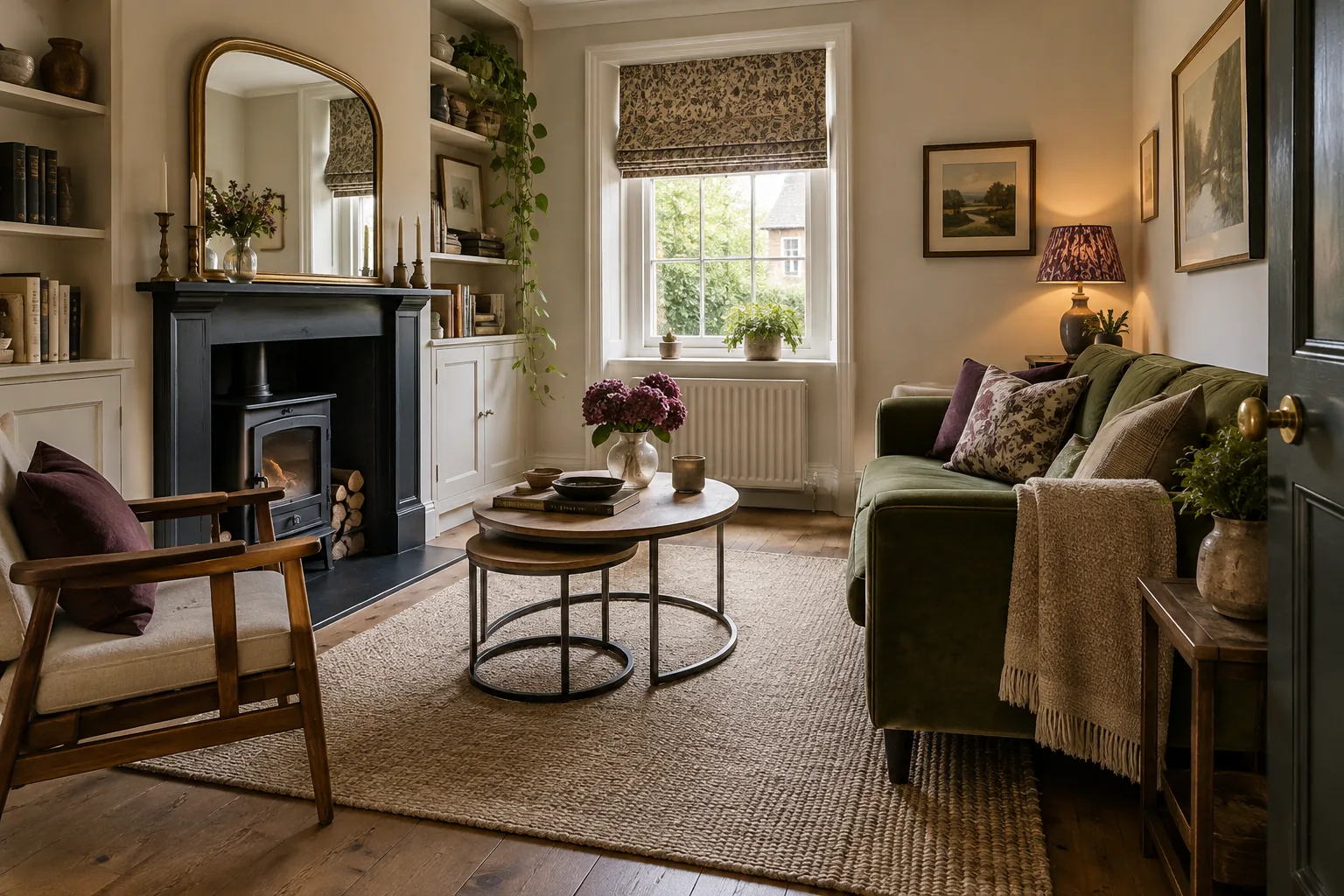
A beautiful table is frustrating if you have to stand up each time you put down a cup. Arrange occasional tables in relation to the people using them, rather than placing them symmetrically for a photograph. A compact wooden stool may work beside one chair, while a narrow table serves the sofa. Leave enough room to walk and sit without turning sideways. If a central coffee table makes circulation awkward, try removing it for a week and using the surfaces you already own before deciding what is missing.
Make the collection smaller, not quieter
A small room can carry strong colour and interesting objects. The trick is to give them a readable arrangement. Instead of distributing six decorative pieces across six surfaces, gather three on one chest and put the others away for another season. Repeat a colour from a painting in a cushion or a book spine, but leave some connections loose. Objects do not have to match to belong together. A few deliberate relationships will give the room character without requiring every corner to provide something new to inspect.
Check it from the sofa
Once the arrangement looks promising, spend an evening in it. Notice whether the lamp is pleasant to sit beside, whether doors open comfortably and whether bags have somewhere to go. Look at the room from sitting height, where shelves and tabletops appear differently from a standing photograph. Move one thing at a time so you can understand what improves the space. The most successful compact rooms feel easy to inhabit. Their charm comes from furniture and objects that have a reason to be there, with enough room left for daily life.
Pay particular attention to the transition between daytime and evening. The corner that looked spacious in daylight may become the place where everyone leaves bags after work. A lamp might need the socket currently hidden behind a cabinet. A table that works beside an empty chair may feel too far away once you sit with a book. Write down these small failures instead of immediately buying another accessory.
Then make one practical change and give it a few days. Move the bag storage, adjust the side table or reduce the objects around the lamp. A compact room improves through these specific corrections. The useful question is often what interrupted a comfortable evening, rather than what additional decoration would make the next photograph more interesting.