There is more than one kind of warmth
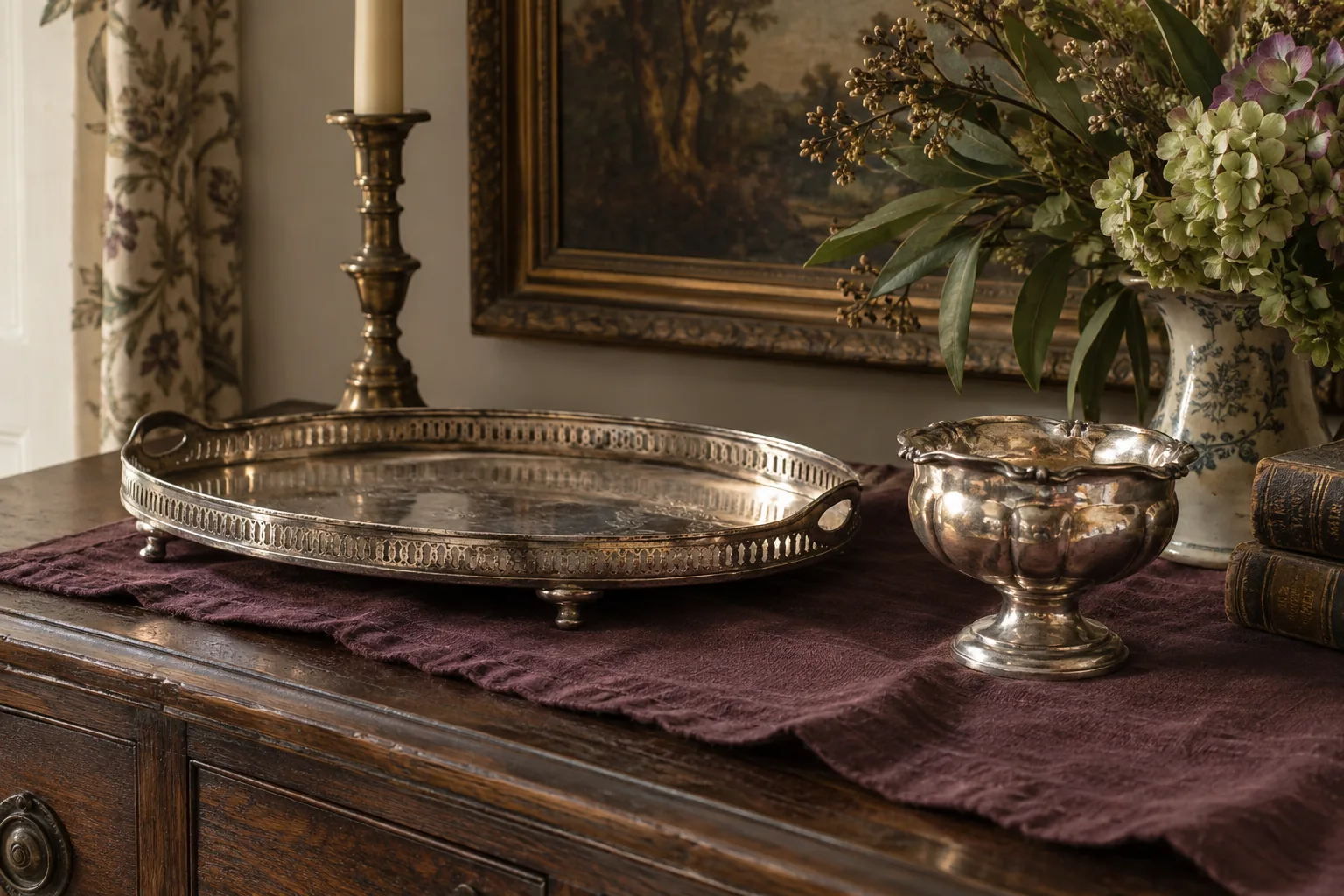
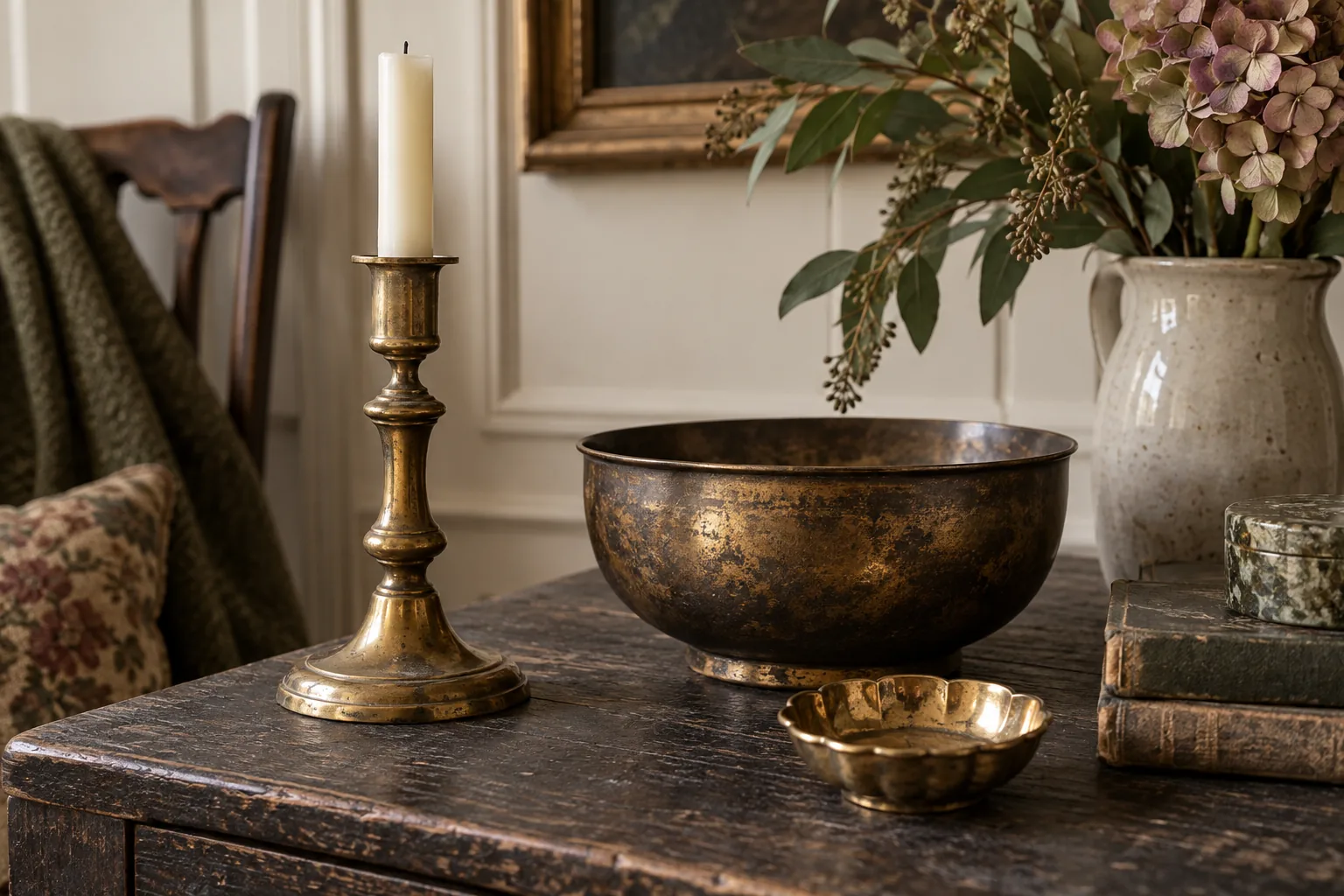
Brass is often described as warm, but that word covers very different appearances. A bright, reflective bowl can feel lively and sharp; a darker object with a subdued surface may sit quietly beside wood. Before buying, decide which quality your room needs. The same yellowish colour does not make every piece interchangeable.
Look at the object in ordinary light. Shop spotlights can turn a restrained surface into a brilliant one, while a dark listing photograph can hide patchy wear. Ask for an unfiltered daylight image when appearance matters. It is easier to choose the finish you enjoy now than to buy something on the promise that a vigorous polish will transform it.
Ask what the surface is
A brass-coloured object might be solid metal, plated, lacquered or made from several materials. Ask the seller what is known and which parts are uncertain. Do not infer composition from weight or colour alone. Labels attached to online listings may describe a visual style more confidently than the material itself.
Existing coatings and repairs can affect appropriate care. The Canadian Conservation Institute advises considering the whole metal object and its vulnerabilities, rather than treating cleaning as a cosmetic operation. If a finish is flaking, sticky or unfamiliar, seek advice before applying a product. A general household polish is not a sensible first experiment on an object whose surface you cannot identify.
Make the metal count
A small amount of reflective metal can have a strong effect. One brass-coloured object beside matte pottery may feel more deliberate than several scattered around the room. Place it where its outline is clear and compare the view with the overhead lights on and off. Reflections can become much more assertive after dark.
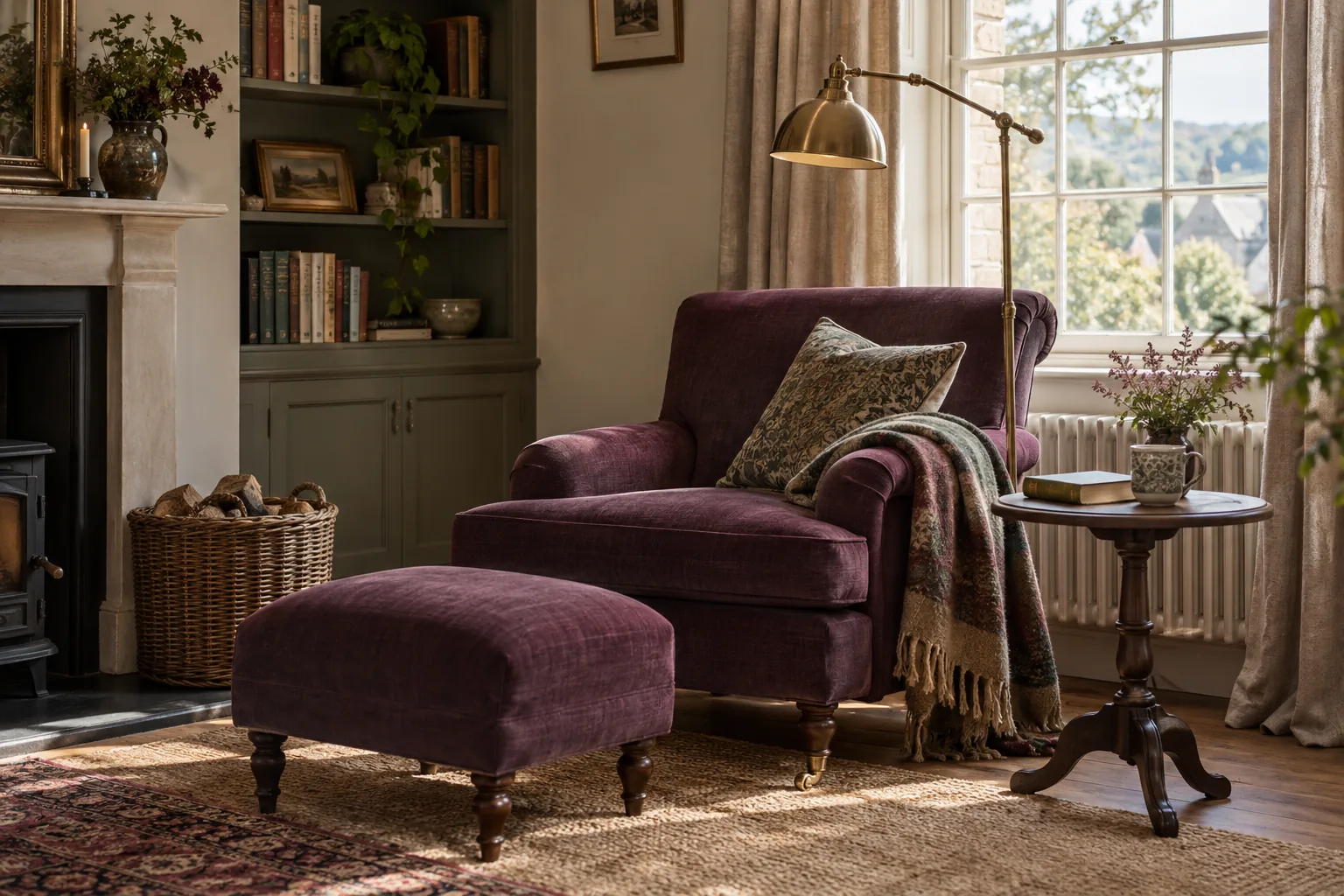
Dark wood, plain fabric and painted walls all offer useful contrasts. You do not need matching metal on every handle and lamp fitting. Repeating a tone once can establish a relationship; repeating it everywhere can flatten the room. Try moving an existing object before buying another to bridge a supposed gap in the scheme.
Keep familiar forms interesting
Bowls, small trays and candlesticks are easy to imagine in a home, but compare their proportions closely. A broad bowl with a shallow curve creates a different impression from a narrow upright vessel. Choose the form that adds something absent from the surface where it will stand.
Inspect bases, joints and handles as carefully as the decorative face. A tilted base can make a piece impractical even when the metal itself is sound. Ask about loose parts and any visible repair. For an object you want to use rather than display, establish suitability separately; an attractive old metal vessel should not automatically become a food container.
Let maintenance influence the purchase
If you dislike maintaining a highly polished surface, choose something whose quieter appearance already appeals. Do not buy a labour-intensive object simply because a styling photograph suggests every room needs a flash of brass. Your preference for a softer finish is a valid design decision, provided it is not used to dismiss active deterioration that needs assessment.
Keep a photograph of the surface when the object arrives and make a brief note of known coatings or repairs. This makes later changes easier to recognise. Set the piece on a suitable stable surface and leave it enough room to be handled. Well-chosen brass need not dominate a room or demand a ritual; it can be one satisfying detail amongst many.