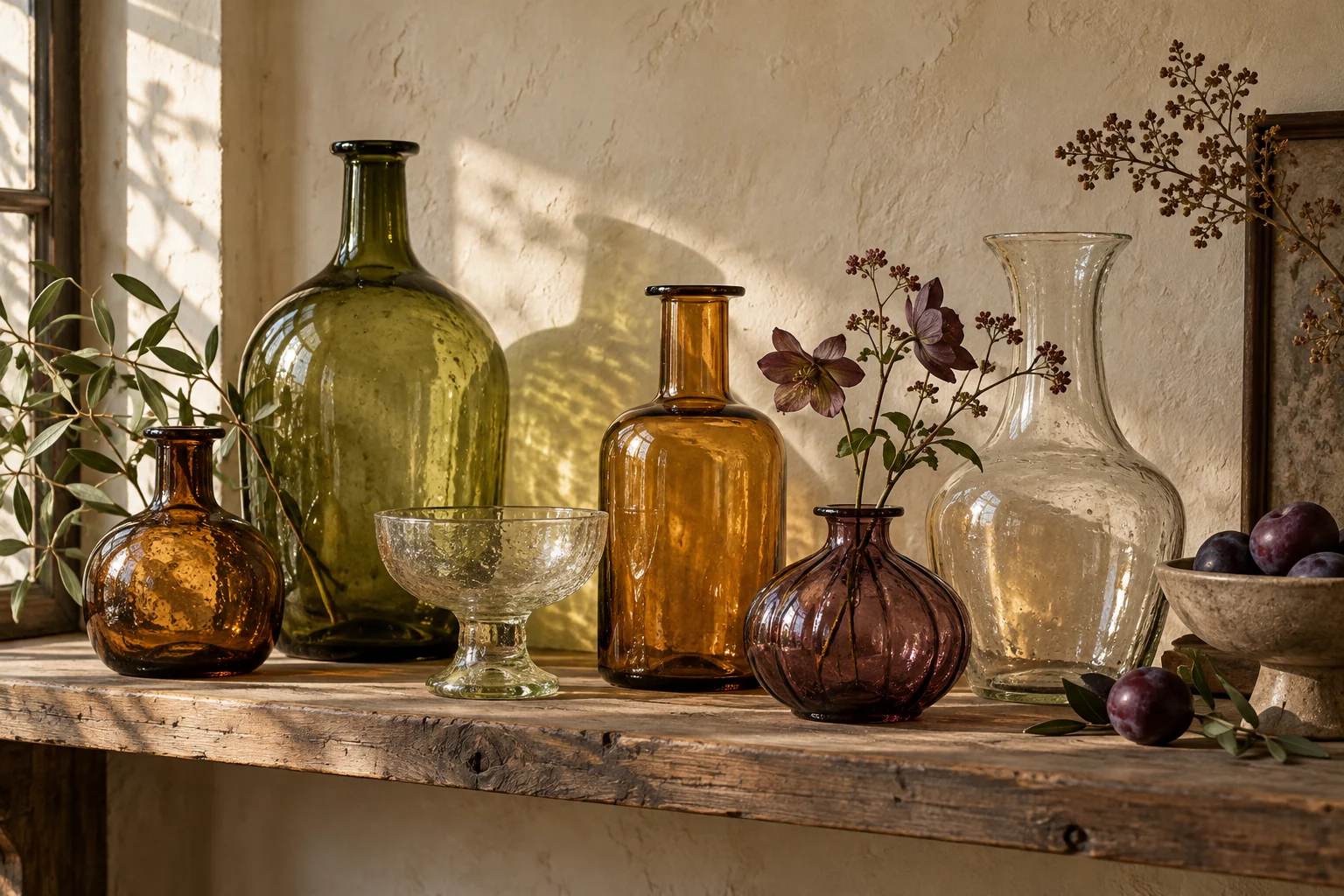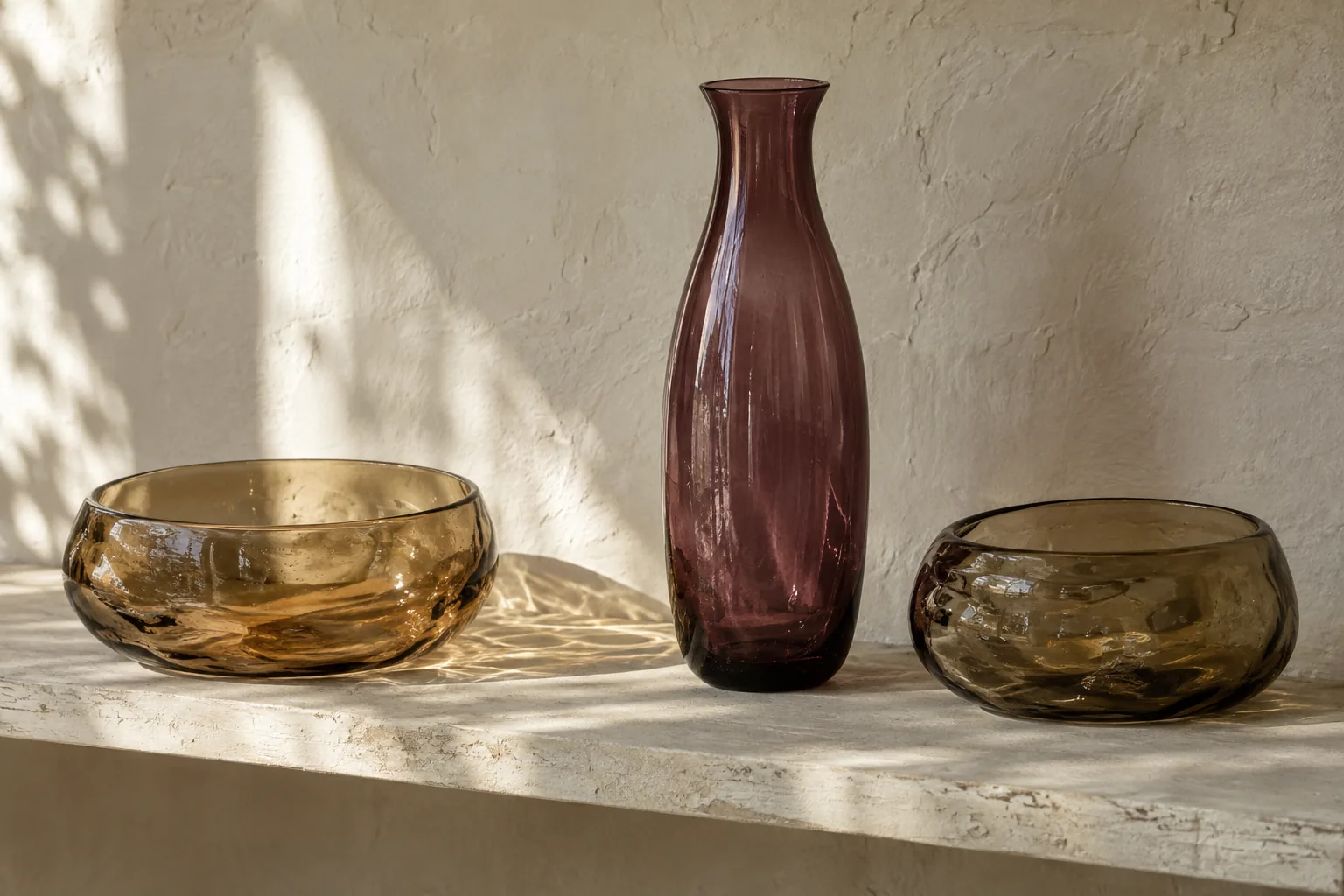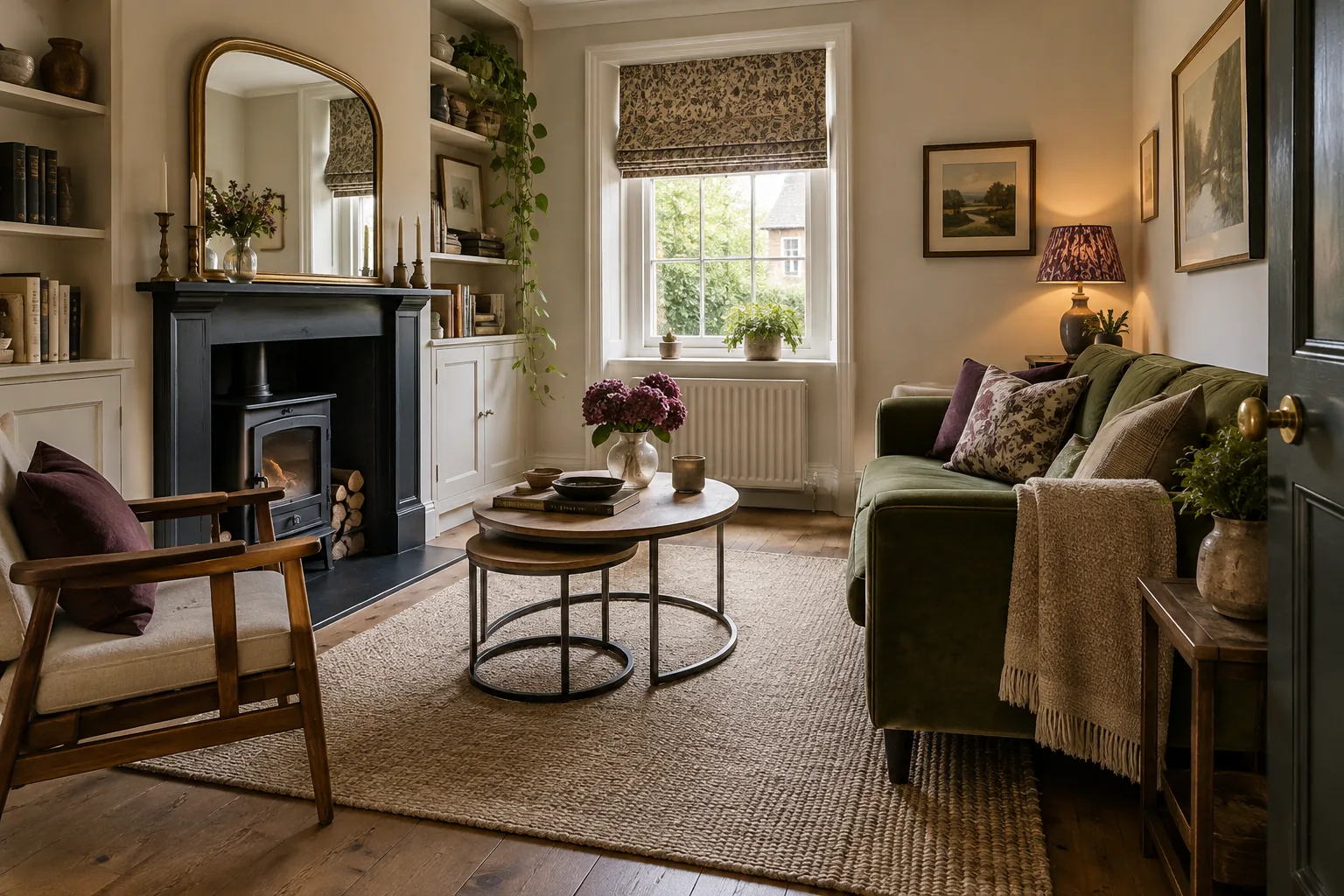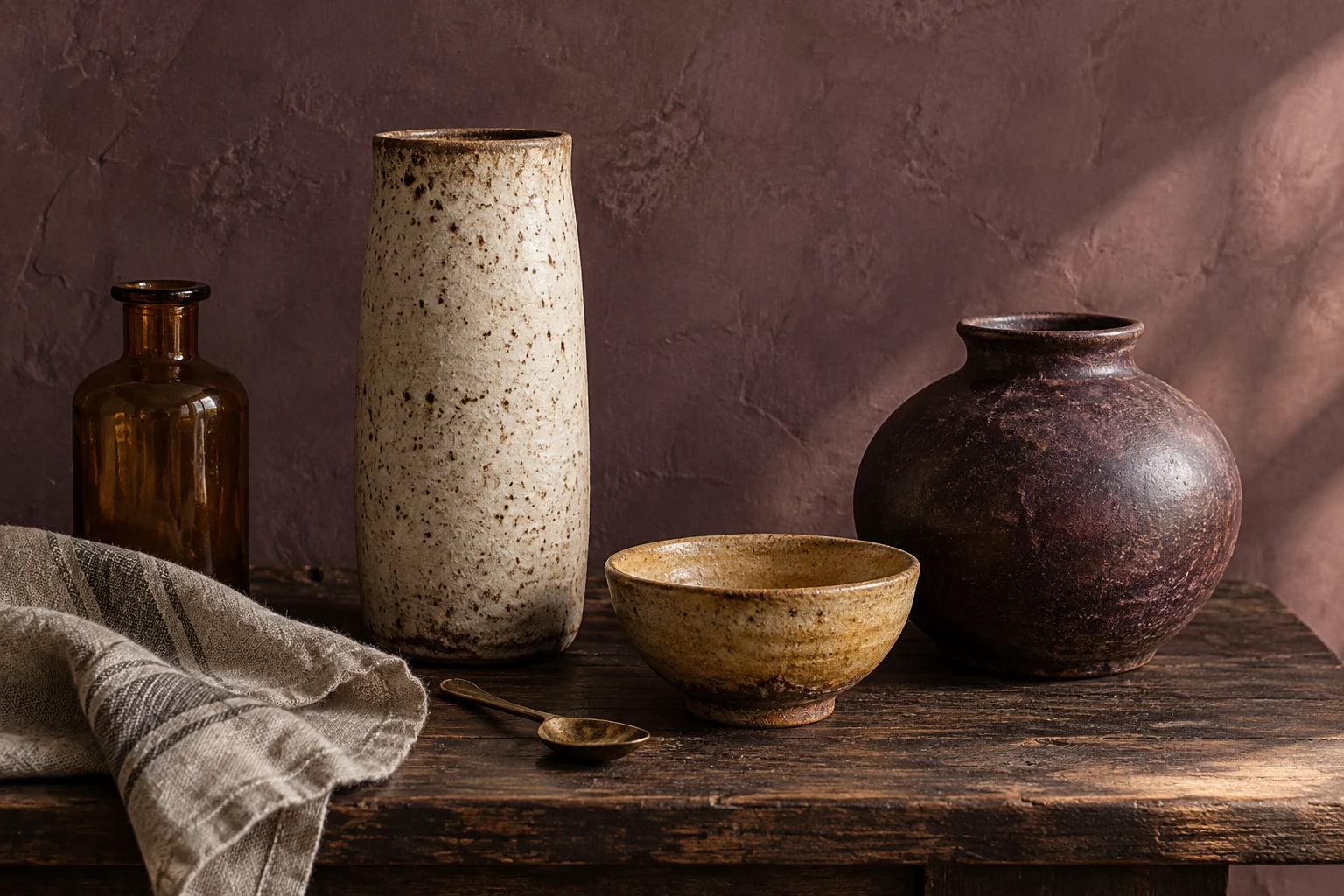
Begin with the piece you keep looking at
A good pottery shelf rarely starts with a shopping list. It starts with the jug whose handle makes an unusually generous curve, or a little bowl with a glaze that looks almost grey until the afternoon light reaches it. Put that piece on the empty shelf first. It gives you something real to respond to, rather than an idea of how a collection ought to look.
Notice which part deserves attention. A painted front needs to face the room; a sculptural pot may look better slightly turned. Leave enough room beside a handle for its shape to remain visible. These small decisions often make more difference than buying another object.
Use differences with a purpose
Try setting a tall, narrow form beside a squat one. Their outlines make each other easier to read. Three pots of almost identical height can become a parapet, especially on a shallow shelf. If similar sizes are what you own, a wider gap or a change of orientation may solve the problem without introducing a precarious stack.
Colour need not match exactly. A cream pot, an oatmeal bowl and a dark brown jug can belong together because their surfaces feel quiet. Conversely, one vivid green vessel may be enough colour for the whole shelf. Choose whether shape or colour is leading, then let the other element play a smaller part.
Give the shelf a useful limit
Decide how much empty surface you want to retain before adding the smaller pieces. A collection that fills every available inch becomes awkward to dust and difficult to change. Keep objects clear of the front edge, and make sure you can lift each one without threading it through a forest of neighbouring handles.
Ceramic objects are vulnerable to knocks even when they look substantial. The Canadian Conservation Institute recommends supporting the body rather than lifting by handles or spouts. In practice, a display that makes this easy is also likely to look more relaxed. Avoid placing a favourite pot where a curtain, cupboard door or passing sleeve regularly catches it.
Choose a background that earns its place
A busy wallpaper can swallow delicate painted decoration but make a plain pale pot look wonderfully crisp. Dark shelving might give pale pottery presence while making brown vessels disappear. Test what you already have in daylight before considering paint. A photograph taken from the doorway helps reveal whether the display has become one indistinct patch.
Do not assume every object needs a book beneath it. Books introduce another colour, texture and outline, and they can make a small shelf look contrived. Where a riser really is needed, choose a stable support intended for display and large enough for the object's entire base.
Make a plain shelf and a patterned shelf behave differently
On a plain painted shelf, a decorated pot can provide most of the interest. Try giving it a broad gap on one side and placing a quieter, lower vessel on the other. The difference lets the pattern remain legible. You do not need to answer every painted flower with another ornament.
A shelf backed by books is a different setting. Lettering and coloured spines already create detail, so a plain pot with a strong outline may make more sense. If a decorated piece disappears there, moving it to a quieter shelf might be more effective than surrounding it with matching colours. Judge the object in relation to the actual background rather than deciding it has somehow lost its appeal.
On a set of three shelves, avoid repeating the same arrangement automatically at every level. One could hold books and a single pot, another a small group with generous gaps, and the third mostly practical storage. That variation gives the whole unit a rhythm. Check which objects are visible from your chair; the top shelf's arrangement may need to be simpler because you see it from below.
Let the arrangement change slowly
Live with the shelf for a week. The piece you barely notice might need a new position, or it might belong in another room. Remove one object before adding another and see whether the whole group becomes clearer. Photograph successful arrangements so a seasonal change does not mean starting again.
There is no obligation to show an entire collection at once. Keeping a few pieces safely stored allows favourites to return with fresh appeal. A shelf becomes personal through repeated looking and choosing. It does not need to announce a theme, prove an object's age or resemble a dealer's cabinet to be satisfying.