Have the purchase information nearby
Before delivery, gather the listing, condition photographs, item reference and any agreed details about included parts. You should be able to identify the object and compare it with what was described without searching through several message threads. A short note of keys, shelves or other separate components is particularly useful.
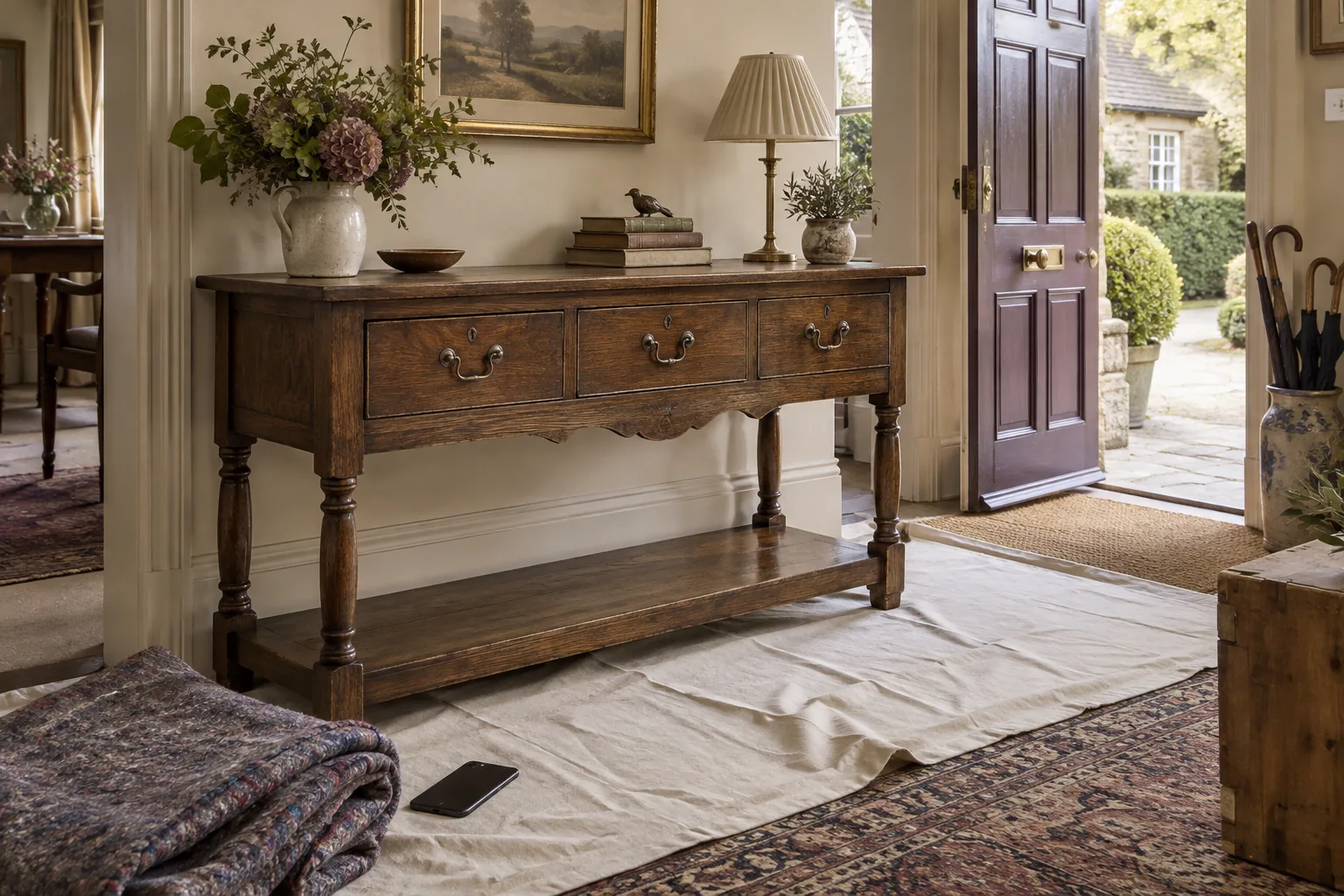
Clear an appropriate receiving area and understand the delivery service's scope. Some services include positioning while others have more limited arrangements, so confirm this in advance. Keep the route and working area safe for the people handling the item. A calm handover begins with practical preparation, not with trying to inspect a large object while everyone waits in a crowded doorway.
Check identity before fine detail
First establish that the delivered item is the correct one and that the agreed components are present. Compare recognisable features with the listing photographs, especially if several similar pieces were available. Then look at overall condition and the areas already mentioned in the description.
Do not confuse a disclosed old mark with new damage simply because it is more visible in your room's light. Equally, do not assume an unfamiliar problem must have been there all along. Use the records to distinguish what was documented from what needs clarification. If packaging prevents a proper view, follow the delivery arrangements and the seller's instructions while keeping a record of what could and could not be checked at that point.
Photograph facts, not just impressions
If you notice a concern, take clear photographs of the relevant area and a wider view showing its position. Include the packaging where it may help explain what was observed, and record the date and item reference. Avoid photographs so close that the scale and context disappear.
Describe the issue neutrally in writing: the location, appearance and how it differs from the available records. A factual note is more useful than an immediate conclusion about who caused it. There may be a misunderstanding, an omitted detail or damage requiring further discussion. Keeping the first record precise gives the seller and carrier something concrete to respond to.
Read before acknowledging
Read any handover document or digital acknowledgement presented to you. If it includes statements about condition or completeness, ask how to record any concern or inspection limitation accurately. Do not sign a statement you know to be untrue merely because the process feels hurried.
Follow the agreed reporting procedures and keep copies of the relevant documents. Contact the appropriate party promptly where a problem arises, identifying the purchase and the issue clearly. For a significant or disputed problem, seek current advice appropriate to the transaction. A practical record helps explain what happened, but this article does not attempt to determine legal rights or the outcome of a dispute.
Finish the record while it is fresh
Once the delivery team has left, save the photographs and notes with the purchase information. Check the item more fully as appropriate, without unsafe handling or dismantling. Retain relevant packaging if needed while a concern is being addressed, subject to practical and safety considerations.
If everything is as expected, the same record still has value. It documents the object's condition on arrival and the components that accompanied it. You can then move on to placing and enjoying the piece rather than leaving the administrative details scattered across messages. A few organised facts at handover are usually more useful than a large collection of vague photographs taken only after something becomes difficult to remember.