Separate the first task from the final decision
An inherited collection can arrive with practical pressure: a house needs clearing, cupboards are full and nobody is sure what deserves attention. The first task is not necessarily to decide the future of every object. It is to establish what is there, what needs prompt care and what information should be preserved before it is lost.
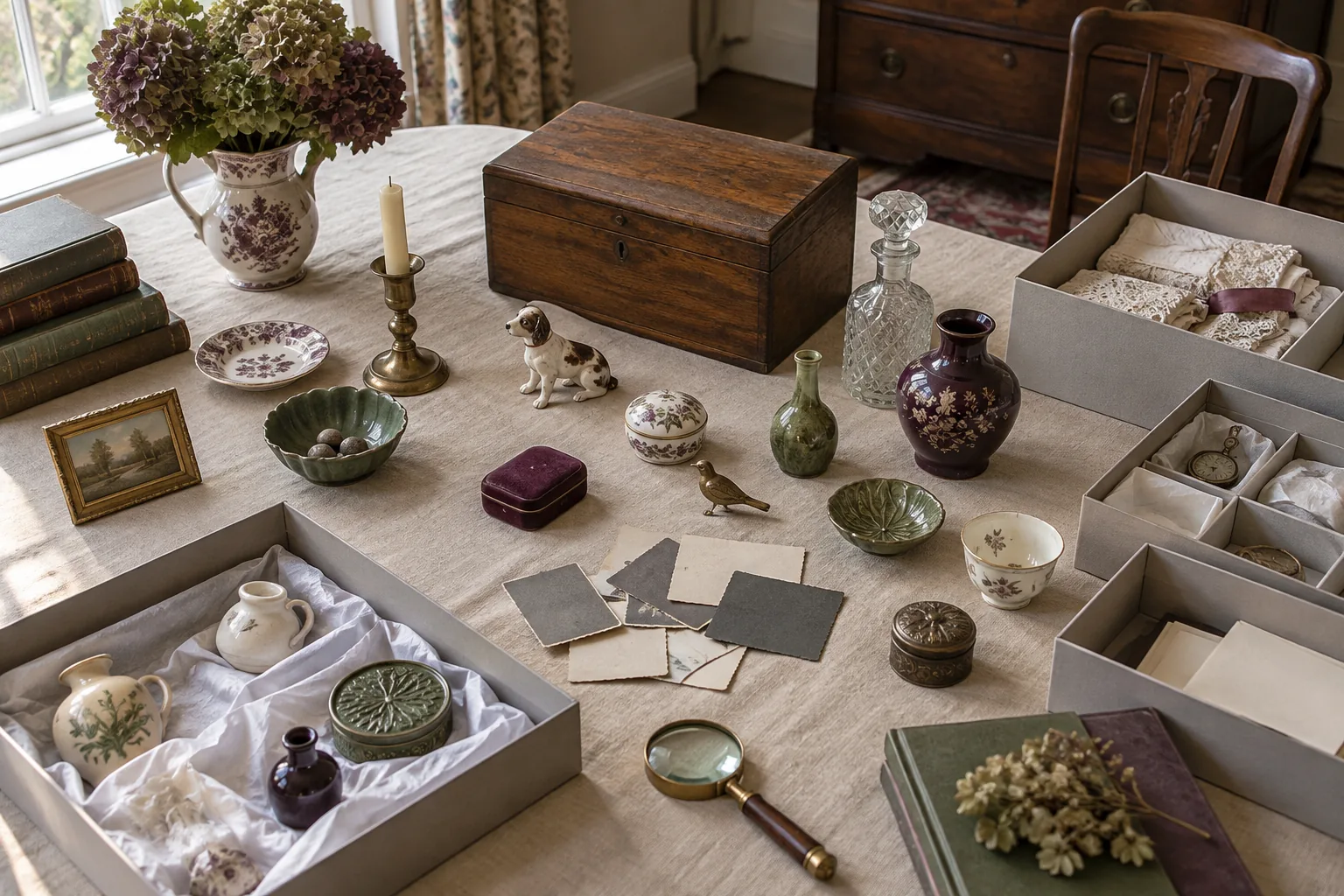
Create a simple list of groups rather than attempting expert identification immediately. Table linen from the bedroom cupboard, ceramics from the dresser and papers from the desk are useful beginnings. Photograph how things were arranged where that can be done safely. The original grouping may contain clues that disappear during packing.
Keep people and memories in the record
Ask relatives what they know while the questions can still be answered. Record who supplied each detail and distinguish memory from documentation. A story can be meaningful without being certain. Wording such as remembered by Helen as a wedding gift preserves the account more honestly than an unsupported statement of provenance.
Look for photographs, letters, receipts and notes that connect to the objects. Keep their associations clear without attaching paper directly to fragile surfaces. If a note is already attached in a way that may be damaging, document it and seek advice before removal.
Do not discard unattractive boxes automatically. A label, handwritten description or packaging may contain useful context. Photograph and assess it before deciding what can be safely separated from the object. This does not mean keeping every scrap forever; it means making the decision with the information visible.
Prioritise condition concerns
Objects affected by water, possible pests, unstable parts or other active problems need appropriate advice before they are mixed into new storage. Do not start a general cleaning campaign to make everything easier to sort. Different materials and finishes can require different care, and a rushed treatment may erase evidence or cause damage.
Choose relevant specialists according to the objects involved. A furniture conservator, paper conservator and textile conservator bring different expertise. Icon's directory can help locate accredited practitioners by specialism. Explain that the immediate need may be a survey or prioritisation rather than full treatment of every item.
Ask which concerns need prompt action and which objects can remain safely as they are while decisions continue. That distinction can reduce both expense and anxiety. A collection does not have to become a simultaneous programme of restoration simply because it has changed hands.
Choose temporary storage that remains understandable
Group and label objects in a way that preserves their relationships and allows safe access. Seek material-specific advice on packing and enclosures for vulnerable items. A temporary arrangement should not depend on fragile things being stacked together or on heavy boxes being lifted repeatedly to find one small object.
Keep an inventory outside the containers and record their locations. If several family members take items home, note who has what and transfer the relevant information with each object. The Canadian Conservation Institute's guidance on dissociation highlights the importance of maintaining connections between objects and their records.
Do not let an uncertain identification become the only label. A description and photograph are enough to keep an object recognisable while research continues. You can revise a record later without pretending that the first guess was a fact.
Allow different kinds of value
One object may matter because it was used every Sunday, another because of its workmanship, and another because it fits comfortably into a new home. These values can coexist without every piece being rare or expensive. If financial valuation is needed, obtain it from an appropriate valuation specialist rather than expecting a care assessment to answer that question.
Give yourself permission to keep a representative group rather than an entire arrangement you cannot accommodate. Thoughtful transfer to another family member or suitable recipient can be part of caring for a collection. Share the history and condition information so that the next decision begins with more knowledge, not less.
Finish with records as well as objects
After decisions are made, retain a clear account of where significant items went and what information accompanied them. Back up photographs and notes in a form other family members can access when appropriate. An object that leaves your home need not disappear from the family's documented history.
The process may remain incomplete for a while, and that is manageable if the interim arrangements are safe and organised. A carefully labelled box awaiting research is a better outcome than a hurried cleaning or an irreversible decision made simply to empty a table. Sorting well means giving both the objects and their stories enough structure to move into their next lives.